

The 2026 Hyundai Tucson near Lexington, GA
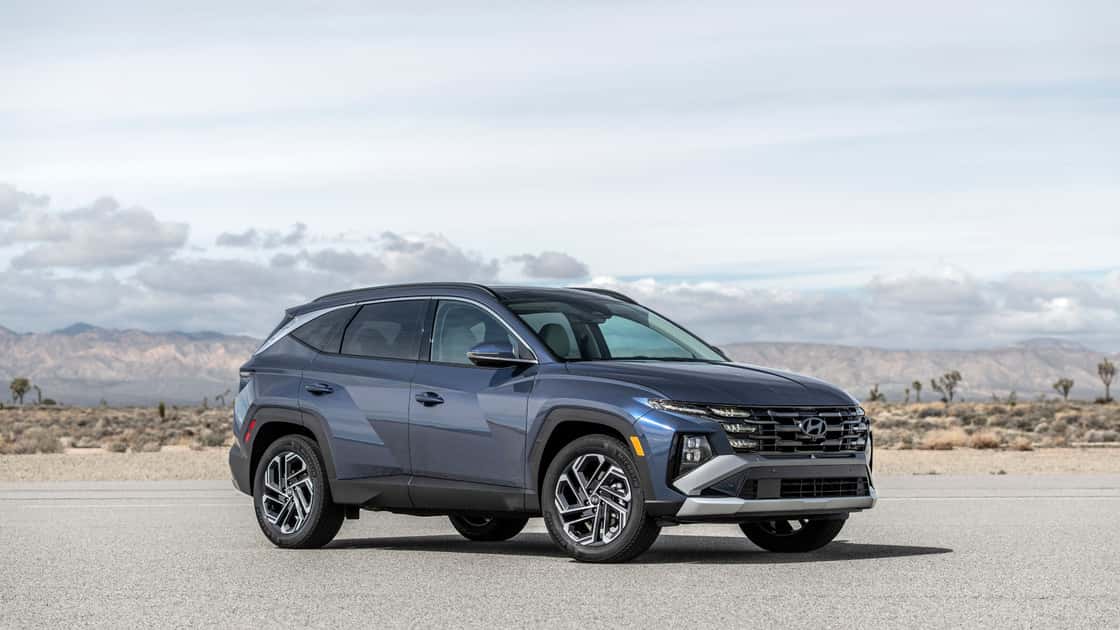
The 2026 Hyundai Tucson is engineered to support a wide range of driving requirements through its gas, hybrid, and plug-in hybrid powertrain options. The model lineup combines Smartstream® engine technology, advanced transmission systems, all-wheel drive capability, and modern driver assistance technologies within a compact SUV platform. Hyundai designed the 2026 Hyundai Tucson with a focus on efficient packaging, practical interior dimensions, and integrated digital systems while maintaining strong mechanical specifications across all trim levels.
The 2026 Hyundai Tucson Gas-powered models use a Smartstream® 2.5-liter GDI and MPI DOHC 16-valve inline 4-cylinder engine with a displacement of 2,497 cc. This engine includes Continuously Variable Valve Timing and produces 187 horsepower at 6,100 rpm with 178 lb-ft of torque at 4,000 rpm. The engine uses an aluminum block and head composition and operates on regular unleaded fuel. Hyundai pairs this engine with an 8-speed automatic transmission using a torque converter. Idle stop-and-go functionality is also included on gas models to improve operational efficiency during stationary conditions.
The 2026 Hyundai Tucson Hybrid and Plug-In Hybrid models use a Smartstream® 1.6-liter Turbo-GDI DOHC 16-valve inline 4-cylinder engine. This turbocharged engine has a displacement of 1,598 cc and uses Continuously Variable Valve Duration technology. Gas-engine output measures 178 horsepower at 5,500 rpm and 195 lb-ft of torque from 1,500 to 4,500 rpm. The wide torque band supports stronger low-speed responsiveness and consistent acceleration throughout the power range.
Hybrid and Plug-In Hybrid Electrical Integration
The 2026 Hyundai Tucson Hybrid combines the turbocharged 1.6-liter engine with a permanent magnet synchronous electric motor for a total system output of 231 horsepower and 271 lb-ft of torque. The electric motor independently generates 47.7 kW, equal to 64 horsepower, and produces 195 lb-ft of torque at 1,700 rpm. Hyundai equips the hybrid system with a lithium-ion battery operating at a maximum voltage of 270V and a system capacity of 1.49 kWh.
The 2026 Hyundai Tucson Plug-In Hybrid configuration increases total system output to 268 horsepower while maintaining 271 lb-ft of torque. Its electric motor produces 72 kW, equal to 97 horsepower, along with 224 lb-ft of torque. The Plug-In Hybrid system uses a 13.8-kWh lithium-ion battery with a maximum voltage of 360V. Hyundai includes a charging port and a 7.2-kW onboard charger operating on 240V power. Estimated charging time is approximately two hours.
The electrified 2026 Hyundai Tucson models use a 6-speed automatic transmission with a torque converter. Paddle shifters come standard on hybrid and plug-in hybrid variants, providing additional manual-style gear control. HTRAC all-wheel drive is standard on Hybrid and Plug-In Hybrid models, while gas-powered versions, offer front-wheel drive as standard with available HTRAC AWD.
Chassis Engineering and Suspension Design
The 2026 Hyundai Tucson uses a unibody construction formed with advanced high-strength steel and high-tensile steel. This structure supports rigidity, passenger protection, and suspension stability. Hyundai combines this platform with a front MacPherson® strut suspension system using coil springs and a rear multi-link suspension design. Gas-pressurized shock absorbers and stabilizer bars are included in the front and rear across all models.
Motor Driven Power Steering uses a column-mounted rack-and-pinion configuration with an overall steering ratio of 13.7:1. Steering travel measures 2.41 turns lock to lock. The 2026 Hyundai Tucson has a curb-to-curb turning diameter of 38.6 feet, allowing improved maneuverability in parking environments and urban traffic conditions.
Brake components include ventilated front disc brakes measuring 12.8 inches by 1.2 inches and solid rear disc brakes measuring 12.0 inches by 0.4 inches. Hyundai integrates Electronic Brake-force Distribution, Brake Assist, Hillstart Assist Control, Downhill Brake Control, and an electronic parking brake with Automatic Vehicle Hold functionality. Anti-lock Braking System operation uses four wheels, four channels, and four sensors across the lineup.
Exterior Structure and Functional Styling Details
The 2026 Hyundai Tucson measures 182.7 inches in overall length with a wheelbase of 108.5 inches. Overall width measures 73.4 inches. Height reaches 65.6 inches on front-wheel-drive models and 66.3 inches on all-wheel-drive models when equipped with roof rails. Ground clearance measures 7.1 inches on 2WD versions and 8.3 inches on AWD variants.
Wheel configurations vary by trim level. SE models use 17-inch alloy wheels paired with 235/65R17 tires. SEL trims use 18-inch alloy wheels with 235/60R18 tires. XRT and Limited trims use 19-inch alloy wheels fitted with 235/55R19 tires. Gas models include a compact temporary spare tire, while hybrid and plug-in hybrid versions use a Tire Mobility Kit depending on trim configuration.
Lighting systems include Bi-LED headlights with integrated LED front turn signals and LED daytime running lights. XRT and Limited trims add premium half mirror-type daytime running lights, while Limited models use projector-type Bi-LED headlights. Automatic headlights and High Beam Assist are standard across all trims. LED taillights and LED license plate lights are available on higher trim levels.
Exterior styling includes body-color bumpers, body-color door handles, gloss black B and C pillars on XRT and Limited trims, dark chrome accent grilles, and trim-specific fascia designs. Roof side rails are standard on SEL, XRT, and Limited models, with bridge-type rails appearing on XRT trims. A panoramic sunroof with one-touch open operation and a rear shade is available on the Limited trim.
Hands-free Smart Liftgate functionality with auto-open and adjustable height settings is included on SEL, XRT, and Limited trims. Trailer pre-wiring is standard across the lineup, and tow hitch capability is available through accessory configurations.
Cabin Dimensions and Passenger Accommodation
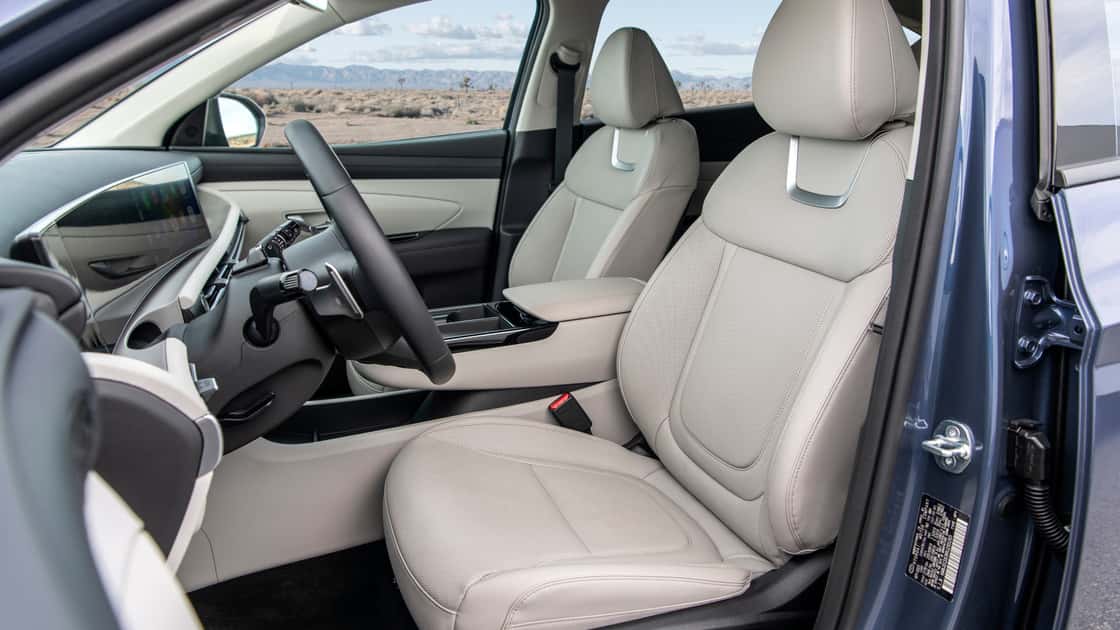
The 2026 Hyundai Tucson interior supports seating for five occupants. Cloth-trimmed seats with stain-resistant and odor-resistant material are standard on SE and SEL trims. H-Tex® leatherette seating surfaces appear on XRT trims and are available on SEL Convenience configurations. Limited models use leather-trimmed seating surfaces.
Driver seating begins with a 6-way adjustable seat on SE trims. The SEL, XRT, and Limited models add an 8-way power-adjustable driver seat with lumbar support. Heated front seats are included on SEL, XRT, and Limited trims, while Limited models add ventilated front seats and an 8-way power-adjustable front passenger seat. Limited trims also include an integrated memory system controlling driver’s seat and mirror positions.
The rear seating uses a 60/40 split-folding and reclining seatback system with adjustable head restraints. Heated rear seats are included on the Limited trim. Remote release rear seat folding functionality is integrated into the cargo area across all trims.
Front legroom measures 41.4 inches on all configurations. Rear legroom measures 41.3 inches on gas and hybrid models and 39.5 inches on Plug-In Hybrid variants. Shoulder room measures 57.6 inches in the front and 56.0 inches in the rear. Interior headroom dimensions vary depending on roof and sunroof configuration.
Cargo Management and Interior Utility
Cargo flexibility remains a primary feature of the 2026 Hyundai Tucson platform. Gas-powered models provide 38.7 cubic feet of SAE cargo volume behind the rear seats and 74.8 cubic feet with the rear seats folded. Maximum measured cargo capacity reaches 80.3 cubic feet.
Hybrid models provide 38.7 cubic feet behind the second row and 74.5 cubic feet with the rear seats folded. Maximum cargo volume reaches 80.0 cubic feet. Plug-In Hybrid models provide 31.9 cubic feet behind the rear seats and 66.3 cubic feet with the rear seats folded using SAE measurements. Maximum cargo volume reaches 71.8 cubic feet.
The interior also includes a dual-level cargo floor on gas and hybrid models, six cargo tie-down anchors, rear seatback bag hooks, cupholders, center console storage, and retractable cargo cover availability. The 2026 Hyundai Tucson incorporates practical storage areas throughout the cabin to support passenger convenience and cargo organization.
Digital Displays and Multimedia Systems
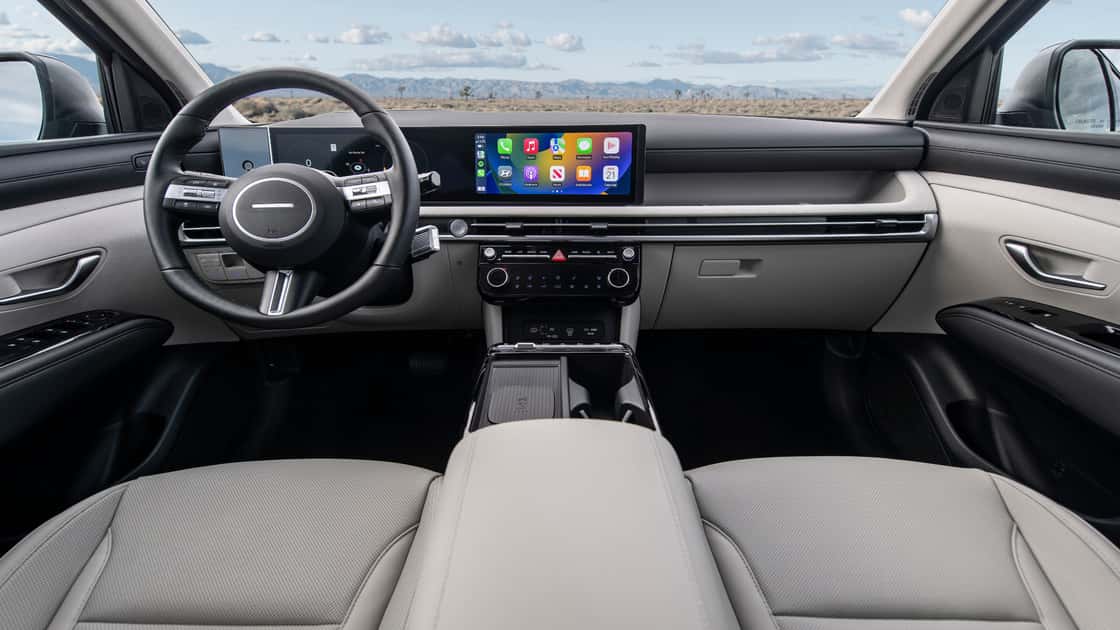
The 2026 Hyundai Tucson uses a 12.3-inch touchscreen display across the lineup. Standard multimedia features include AM/FM radio, HD Radio™ technology, SiriusXM® satellite radio compatibility, and wireless Apple CarPlay® and Android Auto™ integration. SE and SEL models use a 6-speaker audio system, while Limited trims include a Bose® Premium Audio System with an 8-channel digital amplifier and eight speakers.
Navigation capability is available on SEL Convenience and standard on Limited trims. Dynamic Voice Recognition and over-the-air map and multimedia software updates are also included on higher trim levels. Hyundai equips every 2026 Hyundai Tucson with front dual USB Type-C ports and second-row USB charging ports with 27W charging capability.
Instrumentation includes either a 4.2-inch Multi-Information Display or an available 12.3-inch fully digital instrument cluster. The system displays vehicle operating data including speedometer readings, tachometer information, fuel level, coolant temperature, Smart Cruise Control operation, lane-keeping indicators, and safety system notifications.
Climate Systems and Driver Convenience Technologies
Manual air conditioning is standard on SE gas models, while dual automatic temperature control with Auto Defogger functionality is included on Hybrid SE trims and higher grades. The climate system uses capacitive-touch controls with temperature adjustment knobs. Rear air vents, rear heater ducts, cabin air filtration, and rear window defrosters with timers are included throughout the lineup.
Convenience technologies include Smart Cruise Control with Stop and Go, proximity key entry with push-button start, remote keyless entry, remote hood release, and wireless device charging on select trims. Limited models include rain-sensing windshield wipers, Remote Smart Parking Assist, and an auto-dimming rearview mirror with HomeLink integration.
Hyundai Digital Key 2 Premium functionality is available on upper trims using NFC, BLE, and UWB connectivity systems. Bluelink®+ connected vehicle services are standard across all the 2026 Hyundai Tucson trims, while Hyundai Pay capability appears on select configurations.
Advanced Driver Assistance and Safety Technologies
The 2026 Hyundai Tucson incorporates a full range of active and passive safety systems. Standard airbag protection includes advanced front airbags, front side-impact airbags, side curtain airbags with rollover sensors, and rear side airbags. Seatbelt systems include pretensioners, load limiters, adjustable shoulder anchors, and five-position seatbelt reminders.
Driver assistance technologies include Forward Collision-Avoidance Assist with Pedestrian, Cyclist, and Junction Turning Detection. Blind-Spot Collision Warning, Rear Cross-Traffic Collision-Avoidance Assist, Driver Attention Warning, Lane Keeping Assist, Lane Following Assist, Intelligent Speed Limit Assist, and Safe Exit Warning are standard throughout the lineup.
Higher trim levels add Parking Collision-Avoidance Assist Reverse, Parking Distance Warning, Surround View Monitor, Blind-Spot View Monitor, and Highway Driving Assist 1. Navigation-based Smart Cruise Control with Curve Control is available on select trims, along with Forward Attention Warning using an in-cabin monitoring camera.
The 2026 Hyundai Tucson also includes Vehicle Stability Management, Electronic Stability Control with Traction Control, Tire Pressure Monitoring with individual tire indicators, rear occupant alerts, and integrated anti-theft systems.
Schedule a Test Ride near Lexington, GA
Drivers interested in advanced powertrain technology, digital connectivity, and integrated safety systems can examine the full 2026 Hyundai Tucson lineup at ALM Hyundai of Athens near Lexington, GA. The available gas, hybrid, and plug-in hybrid configurations provide multiple performance options within the same compact SUV platform. Interior technology includes large-format digital displays, wireless smartphone integration, available Bose® premium audio, and connected vehicle functionality. The chassis design, HTRAC all-wheel drive capability, and suspension tuning support stable operation across varying road conditions. A test drive also allows shoppers to evaluate seating comfort, cargo flexibility, driver assistance technologies, and overall system integration directly from the driver seat.