

The 2026 Hyundai IONIQ 5 N near Lexington, GA
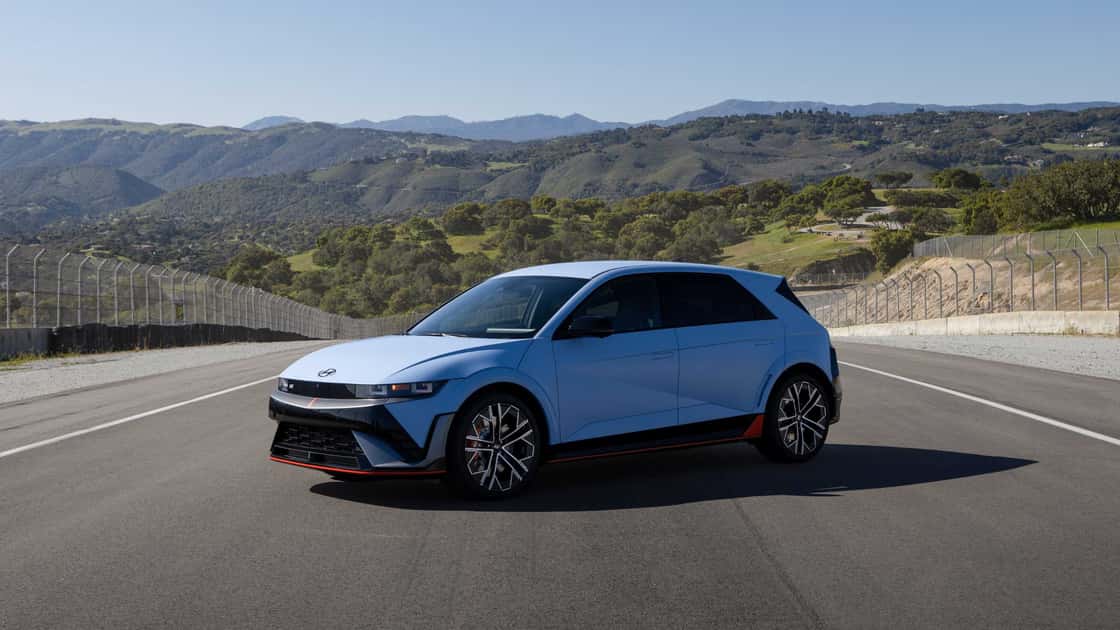
The 2026 Hyundai IONIQ 5 N is a high-performance all-electric vehicle that combines dual-motor all-wheel-drive capability with advanced chassis engineering, dedicated N performance technologies, and a comprehensive suite of comfort and safety systems. Developed as a performance-focused variant within the IONIQ 5 lineup, it integrates specialized powertrain hardware, electronically controlled suspension components, large-capacity braking systems, and N-exclusive equipment designed to support dynamic driving characteristics. The vehicle also incorporates extensive connectivity, digital displays, charging technologies, and interior functionality.
Electric Powertrain and Performance
The 2026 Hyundai IONIQ 5 N utilizes a dual permanent-magnet synchronous motor configuration paired with an all-wheel-drive system. This setup produces a maximum output of 448 kW, equivalent to 601 horsepower, while N Grin Boost increases output to 478 kW, or 641 horsepower. Maximum torque is rated at 740 Nm, or 545 lb-ft, and increases to 770 Nm, or 568 lb-ft, when N Grin Boost is activated. The electric powertrain is designed to provide strong acceleration while maintaining consistent power delivery across a broad operating range. A maximum vehicle operating speed of 162 mph further highlights the vehicle’s performance-oriented engineering.
Acceleration and Drive System
The performance specifications of the 2026 Hyundai IONIQ 5 N demonstrate the capabilities of its dual-motor architecture. The vehicle accelerates from 0 to 37 mph in 2.0 seconds, or 1.9 seconds with N Grin Boost engaged. Acceleration from 0 to 60 mph is achieved in 3.25 seconds with N Grin Boost, while 0 to 62 mph takes 3.5 seconds, or 3.4 seconds with N Grin Boost. The vehicle also records a 50 to 75 mph acceleration time of 1.9 seconds, reduced to 1.8 seconds with N Grin Boost. A 400-meter acceleration run is completed in 11.7 seconds, or 11.5 seconds with N Grin Boost, illustrating the performance potential available from the electric drivetrain.
The drivetrain uses a single-speed reduction gear transmission combined with shift-by-wire operation. Front and rear gear ratios measure 2.263 and 2.265 respectively, while the final drive ratio is 4.706. A front dog-clutch disconnector is incorporated into the drivetrain architecture, while the rear drive unit does not use a clutch. Drive mode selection includes Eco, Normal, Sport, N, N Custom 1, and N Custom 2 settings, all accessible through steering wheel-mounted controls. These systems allow drivers to select operating characteristics that suit different driving preferences and conditions.
Battery System and Charging Technology
The battery and charging systems of the 2026 Hyundai IONIQ 5 N form a major component of the technical package. The vehicle utilizes a lithium-ion battery with a capacity of 84.0 kWh and an operating voltage of 697 volts. Battery output is rated at 535 kW during discharge and 432 kW during charging. The battery assembly weighs 1,071 pounds and incorporates a battery preconditioning function designed to prepare the battery for charging and performance operation. This system architecture supports both high-output driving and rapid charging capability.
Charging Capability
The charging system is designed to support a variety of charging environments. The vehicle uses a NACS charge port positioned on the passenger-side rear quarter panel. AC Level II charging from 10 percent to 100 percent requires approximately 7 hours and 20 minutes using a standard 240-volt connection. DC fast charging at 150 kW can charge the battery from 10 percent to 80 percent in approximately 30 minutes. When connected to a 350 kW, 800-volt DC fast charger, charging from 10 percent to 80 percent can be completed in approximately 18 minutes.
The onboard charging system has a maximum capacity of 10.9 kW and an output density of 1.4 kVA per liter. An ultra-fast charging system rated for up to 800 volts and 350 kW is included as standard equipment. These charging technologies provide flexibility across different charging infrastructures while supporting reduced charging times under appropriate conditions.
Disclaimer: Approximately 18 minutes to charge from 10% to 80% on a 350-kW, 800V DC ultra-fast charger. Actual charging time varies based on a number of factors, including current battery charge level, output of the charging unit, vehicle and battery settings, battery temperature and outside temperature. Ultra-fast charging stations are provided by independent companies and availability is not guaranteed.
Chassis Engineering, Steering, and Suspension
The 2026 Hyundai IONIQ 5 N uses a unibody structure constructed primarily from advanced high-strength steel and high-tensile steel. This body architecture provides the foundation for the vehicle’s performance-oriented suspension and steering systems. The chassis integrates electronically controlled suspension components, performance dampers, and specialized steering calibration intended to support responsive handling characteristics. Together, these systems contribute to the vehicle’s dynamic behavior while maintaining everyday usability.
Steering System
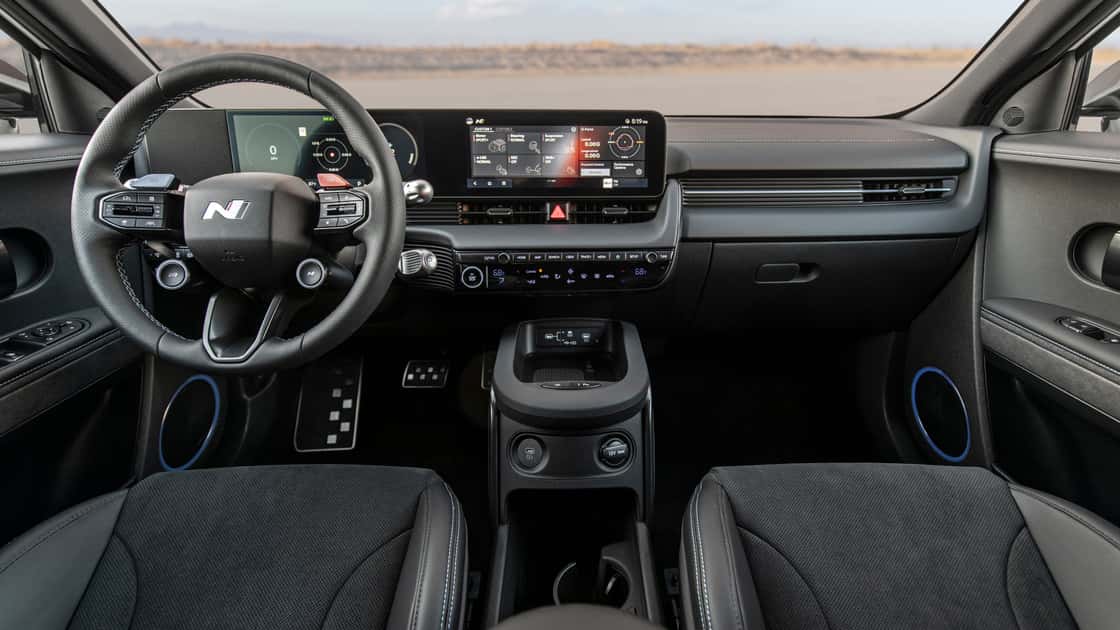
The steering system utilizes a rack-and-pinion design with rack-mounted motor-driven power steering. The overall steering ratio is 12.54:1, contributing to responsive steering input and directional control. The steering system requires 2.29 turns from lock to lock and features a turning diameter of 40.7 feet measured curb to curb. A 14.5-inch steering wheel provides driver input through a compact design that supports performance-oriented operation. Steering wheel-mounted controls also integrate access to drive modes, cruise control functions, audio controls, and regenerative braking adjustments.
Suspension Configuration
The front suspension uses a MacPherson® strut design, while the rear suspension employs a multi-link five-link configuration. Electronic Controlled Suspension dampers are installed at both the front and rear. These electronically managed dampers are designed to adjust suspension characteristics while working alongside the vehicle’s performance systems. The combination of independent front and rear suspension layouts supports vehicle stability, ride control, and handling precision across a variety of driving conditions.
Braking Systems, Wheels, and Tires
The braking system of the 2026 Hyundai IONIQ 5 N combines large mechanical brake components with advanced electronic control systems. Ventilated disc brakes are used at all four corners, providing substantial thermal capacity for repeated braking events. The vehicle also incorporates regenerative braking functionality, allowing energy recovery during deceleration while supplementing traditional braking performance. Multiple electronic braking technologies are integrated to support control and stability during operation.
Performance Braking Hardware
Front brakes utilize four-piston fixed calipers paired with ventilated discs measuring 400 mm by 34 mm, equivalent to 15.7 inches by 1.3 inches. Rear brakes use ventilated discs measuring 360 mm by 20 mm, or 14.2 inches by 0.8 inches, combined with single-piston sliding calipers. An Integrated Electronic Brake system serves as the brake booster, while Electronic Parking Brake functionality includes automatic vehicle hold capability. Anti-lock braking technology is supported by Electronic Brake-force Distribution, utilizing four wheels, four channels, and four sensors.
Wheel and Tire Specification
The vehicle rides on forged alloy wheels measuring 21 x 9.5J. Each wheel weighs approximately 32 pounds, reflecting the performance-focused design of the wheel assembly. Tire specification consists of 275/35R21 Pirelli P ZERO PZ4 HN-spec tires incorporating PNCS and ELECT+ technologies. Instead of a conventional spare tire, the vehicle includes a Tire Mobility Kit. This wheel and tire package supports the braking, handling, and performance objectives established throughout the vehicle’s engineering program.
Exterior Design and Functional Equipment
The exterior of the 2026 Hyundai IONIQ 5 N combines performance-oriented styling with functional aerodynamic and convenience features. N-exclusive design elements distinguish the vehicle while also contributing to airflow management and visual identity. Exterior equipment emphasizes visibility, accessibility, and everyday functionality. Several components are specifically designed to support the vehicle’s performance character while maintaining practicality.
Lighting and Aerodynamic Features
Standard lighting equipment includes LED daytime running lights, projector-type LED headlights, automatic headlights, LED taillights, and High Beam Assist. An N-exclusive LED center high-mounted stop lamp is integrated into the rear spoiler assembly. Active grille shutters and active front air flaps contribute to airflow management. These systems work alongside the vehicle’s aerodynamic body design, which achieves a coefficient of drag of 0.313.
Exterior Equipment and Trim
The vehicle features gloss black exterior mirrors with heating, power-folding capability, integrated turn signal indicators, and Blind-Spot Collision-Avoidance Assist indicators. Gloss black bumpers and side skirts incorporate luminous orange accents, while N-exclusive side sills and body-color wide fender arches further distinguish the vehicle. Flush-type door handles operate automatically and maintain a clean exterior appearance. Additional equipment includes a hands-free Smart Power Liftgate, a power-operated charge port door, a black shark-fin antenna, an acoustic windshield, laminated front and rear glass, privacy glass, and rain-sensing windshield wipers.
Interior Comfort and Passenger Accommodations
The cabin of the 2026 Hyundai IONIQ 5 N is configured to accommodate five occupants while incorporating performance-oriented seating and practical storage solutions. Interior materials, seating design, climate controls, and convenience features are intended to support daily usability and long-distance comfort. Several N-specific components reinforce the vehicle’s performance identity without compromising passenger accommodations. The interior layout balances functionality, visibility, and occupant support.
Seating and Cabin Design
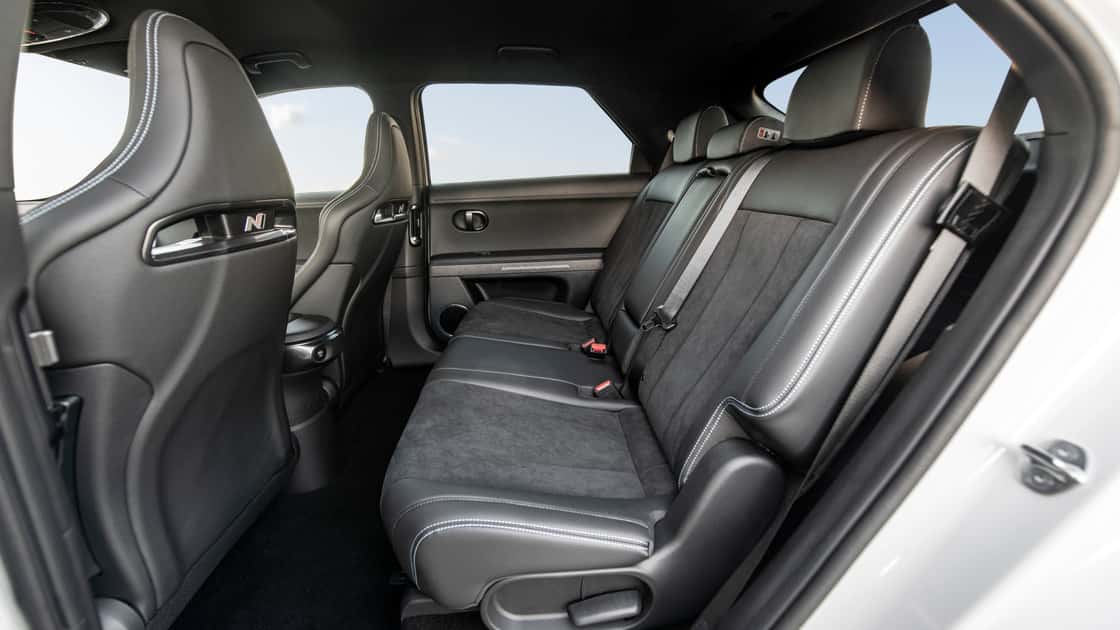
Eco Alcantara and H-Tex® seating surfaces are used throughout the cabin. N lightweight sport bucket seats with illuminated N logos are fitted in the front row and include heating and ventilation functions. Driver and front passenger seats feature six-way manual adjustment. The second row incorporates a 60/40 split-folding bench seat with manual sliding capability and reclining seatbacks. Adjustable rear head restraints provide additional flexibility for passenger comfort.
Climate Control and Interior Utility
Dual automatic temperature control includes a Driver Only mode and is complemented by rear air vents, a PTC heater, a heat pump, a cabin air filter, and a rear window defroster with a timer. Interior storage includes front and rear door pockets, bottle holders, center console storage, cupholders, and a glove compartment with damping and illumination. Cargo functionality is supported by tie-down anchors and available cargo management accessories. Ambient interior lighting with 64 selectable colors adds additional customization to the cabin environment.
Technology, Connectivity, and Digital Interfaces
The 2026 Hyundai IONIQ 5 N incorporates a broad range of digital technologies focused on connectivity, information display, entertainment, and vehicle operation. Multiple screens, connected services, charging interfaces, and smartphone integration features are integrated throughout the cabin. These systems are designed to provide access to vehicle information while supporting communication and media functions. The result is a highly connected interior environment that emphasizes usability and accessibility.
Infotainment and Audio Systems
A 12.3-inch touchscreen serves as the central interface for navigation, audio, and vehicle functions. The system includes AM/FM radio, SiriusXM®, HD Radio™ capability, onboard navigation, Dynamic Voice Recognition, wireless Android Auto™, and wireless Apple CarPlay® compatibility. Audio reproduction is provided by a Bose® premium sound system with eight speakers and an external amplifier. Bluetooth® functionality supports multiple-device connections for up to two devices simultaneously.
Instrumentation and Convenience Technology
A 12.3-inch digital instrument cluster includes N mode displays and EV-specific information screens. The display provides information such as speed, power usage, charge level, odometer readings, trip data, regenerative braking level, and drive mode status. Five USB Type-C ports are distributed throughout the cabin, and a 15-watt wireless phone charger is included. Additional technology features include Hyundai Digital Key 2 Premium, Wi-Fi hotspot capability, Hyundai Pay, Bluelink®+ Connected Car services, remote charge access, and Vehicle-to-Load functionality using an external adapter.
Safety and Driver Assistance Systems
The 2026 Hyundai IONIQ 5 N incorporates a comprehensive range of passive and active safety technologies. These systems are designed to assist occupants during everyday driving while supporting collision avoidance, occupant protection, and vehicle stability. Multiple sensors, cameras, radar systems, and electronic control modules work together to monitor the vehicle’s surroundings and operational status. The result is an extensive collection of safety and driver assistance technologies integrated throughout the vehicle.
Occupant Protection and Structural Safety
The vehicle includes advanced front airbags, front seat-mounted side-impact airbags, and side curtain airbags with rollover sensors. Occupant Classification System technology utilizes seat weight and seat track sensors to manage passenger airbag operation. Three-point seatbelts are provided for all seating positions, and outboard seats incorporate pretensioners and load limiters. Additional protection features include rear child safety locks, LATCH anchors, bodyside reinforcements, front crumple zones, an immobilizer, and an integrated anti-theft system.
Driver Assistance Technologies
Driver assistance features include Blind-Spot Collision-Avoidance Assist, Blind-Spot View Monitor, Rear Cross-Traffic Collision-Avoidance Assist, Surround View Monitor, Parking Distance Warning, and Parking Collision-Avoidance Assist in reverse. Forward Collision-Avoidance Assist 2 adds detection and intervention functions for vehicles, pedestrians, cyclists, junction scenarios, lane-change situations, and evasive steering assistance. Additional systems include Lane Keeping Assist, Lane Following Assist, Intelligent Speed Limit Assist, Driver Attention Warning, Forward Attention Warning, Safe Exit Assist, Highway Driving Assist 2, Navigation-based Smart Cruise Control with Curve Control, High Beam Assist, and Advanced Rear Occupant Alert. These technologies complement the vehicle’s Electronic Stability Control, Traction Control System, Vehicle Stability Management, and Tire Pressure Monitoring System.
Dimensions, Interior Space, and Cargo Capacity
The dimensions of the 2026 Hyundai IONIQ 5 N support a spacious passenger compartment while maintaining a performance-oriented exterior footprint. The vehicle measures 185.6 inches in overall length, 76.4 inches in width, and 62.4 inches in height. Wheelbase measures 118.1 inches, while the minimum ground clearance is 5.6 inches. Front and rear tread widths measure 65.6 inches and 65.8 inches, respectively, contributing to the vehicle’s stance and packaging.
Passenger and Cargo Measurements
Passenger accommodations include 39.8 inches of front headroom and 38.7 inches of rear headroom. Front and rear legroom measurements are 41.7 inches and 39.9 inches, respectively, while shoulder room measures 57.7 inches in front and 57.9 inches in the rear. Total interior volume is rated at 133.2 cubic feet, including a passenger volume of 107.0 cubic feet. Cargo capacity measures 26.1 cubic feet with the rear seats upright and expands to 59.3 cubic feet with the rear seats folded. These measurements support both passenger comfort and practical cargo-carrying flexibility.
Visit ALM Hyundai of Athens for a Test Ride
We invite you to experience the 2026 Hyundai IONIQ 5 N firsthand at ALM Hyundai of Athens near Lexington, GA. Our team can help you explore the dual-motor performance system, advanced suspension technology, digital interfaces, comfort features, and extensive driver assistance technologies. A test drive provides an opportunity to evaluate the vehicle’s acceleration, handling characteristics, cabin layout, and technology integration. You can also experience the seating comfort, visibility, braking response, and connectivity features in person. Contact our team to schedule a visit and learn more about the capabilities of the 2026 Hyundai IONIQ 5 N.