

2025 Hyundai Tucson vs. 2025 Kia Sportage near Loganville, GA
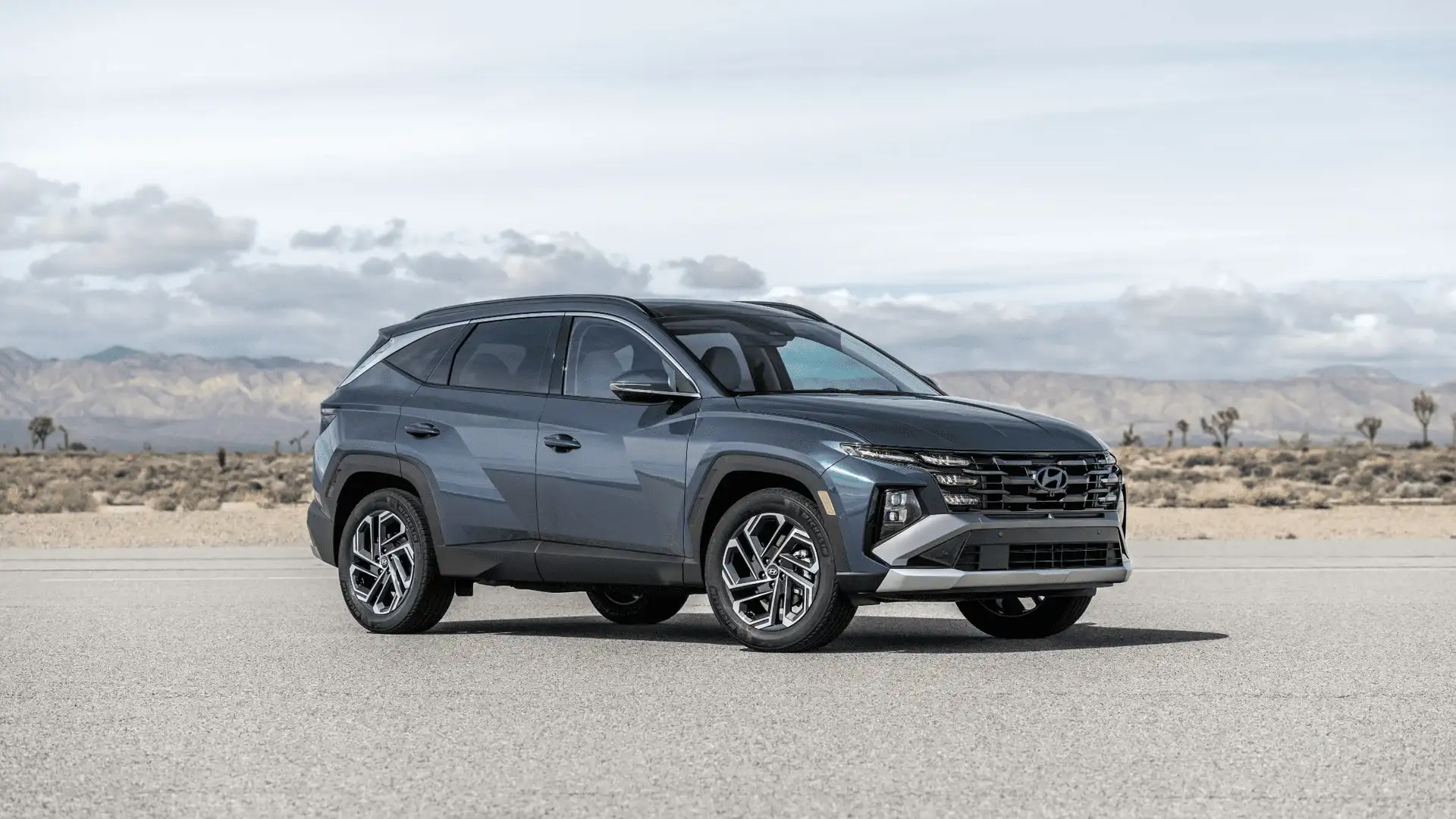
The 2025 Hyundai Tucson brings together advanced mechanical systems, modern design elements, and well-integrated technology features. Engineered with a focus on functional performance and user adaptability, the design and drivetrain architecture of the 2025 Hyundai Tucson reflect a methodical approach to compact SUV development.
Engine Configuration and Power Output
The 2025 Hyundai Tucson offers two primary engine systems. The standard gasoline option is a 2.5-liter GDI and MPI dual-injection inline four-cylinder. It produces 187 horsepower at 6100 rpm and 178 lb-ft of torque at 4000 rpm. The engine features an aluminum block and head, continuously variable valve timing, and a compression ratio of 13.0. The Hyundai hybrid system pairs a 1.6-liter turbocharged GDI engine with a permanent magnet synchronous motor. This hybrid setup generates a total of 231 horsepower and 271 lb-ft of torque, while the plug-in hybrid model delivers 268 horsepower and maintains torque at 271 lb-ft. Both hybrid configurations use a lithium-ion battery system, with the PHEV offering a 13.8 kWh capacity at 360V and the hybrid operating on a 1.49 kWh system at 270V.
The 2025 Kia Sportage uses the same 2.5-liter GDI engine for its internal combustion version, matching the 187 horsepower and 178 lb-ft of torque of the 2025 Hyundai Tucson. Its hybrid and plug-in hybrid variants also use a 1.6-liter turbocharged engine, but the 2025 Kia Sportage hybrid delivers a total of 227 horsepower, and the PHEV version reaches 261 horsepower. Both hybrid variants match the torque performance of the 2025 Hyundai Tucson. Engine layout and construction in both models follow a similar pattern, though the 2025 Hyundai Tucson’s plug-in hybrid shows a marginal gain in output.
Transmission and Drivetrain Mechanics
2025 Hyundai Tucson gasoline models utilize an 8-speed automatic torque converter transmission. The hybrid and plug-in hybrid variants use a 6-speed automatic transmission. Front-wheel drive is standard on gasoline versions, with HTRAC all-wheel drive available. Hybrid and plug-in hybrid variants use active on-demand AWD systems as optional configurations. Drive mode selection is available across all trims, offering functional adaptability to different terrains.
The 2025 Kia Sportage follows a similar layout. Its gasoline variant uses an 8-speed automatic, and the hybrid systems rely on a 6-speed automatic transmission. All-wheel drive is available on all variants. Functional equivalence is high between both models in terms of transmission architecture, though the 2025 Hyundai Tucson introduces shift-by-wire controls and paddle shifters in hybrid configurations, which are not present across all 2025 Kia Sportage variants.
Structural Dynamics and Suspension
The 2025 Hyundai Tucson is built on a unibody chassis using advanced high-strength steel. The front suspension uses a MacPherson® strut system with a stabilizer bar and gas-pressurized shock absorbers. The rear configuration employs a multi-link suspension with a similar stabilizer bar and shock absorber design. These components are standard across all variants.
The 2025 Kia Sportage also applies a unibody structure and uses MacPherson® strut and multi-link configurations for front and rear suspension, respectively. The component design is similar, although specific materials and damper calibrations are proprietary to each manufacturer. The ride stability of the 2025 Hyundai Tucson is influenced by its use of structural reinforcement and tuning specific to trim levels, including added features such as active brake control systems and a standard electronic parking brake with automatic vehicle hold.
Braking Systems and Steering Specifications
The 2025 Hyundai Tucson is equipped with front ventilated disc brakes measuring 325 mm in diameter and 30 mm in thickness. Rear solid discs measure 300 mm by 10 mm. All trims feature anti-lock braking systems with electronic brake-force distribution, four-wheel disc coverage, and electronic stability controls. Additional braking technologies include downhill brake control and hill-start assist, both standard. The 2025 Hyundai Tucson uses a column-mounted motor-driven power steering system with a steering ratio of 13.7:1 and a turning diameter of 38.6 feet.
The 2025 Kia Sportage uses a similar front disc brake size and layout, with minor differences in rear disc specifications depending on the trim. Steering systems follow a column-type Motor Driver Power Steering, comparable in control characteristics. Brake assist and stability management are similarly integrated, although the automatic vehicle hold function and selectable downhill control of the 2025 Hyundai Tucson provide slight enhancements to driver engagement and hill descent management.
Exterior Composition and Functional Details
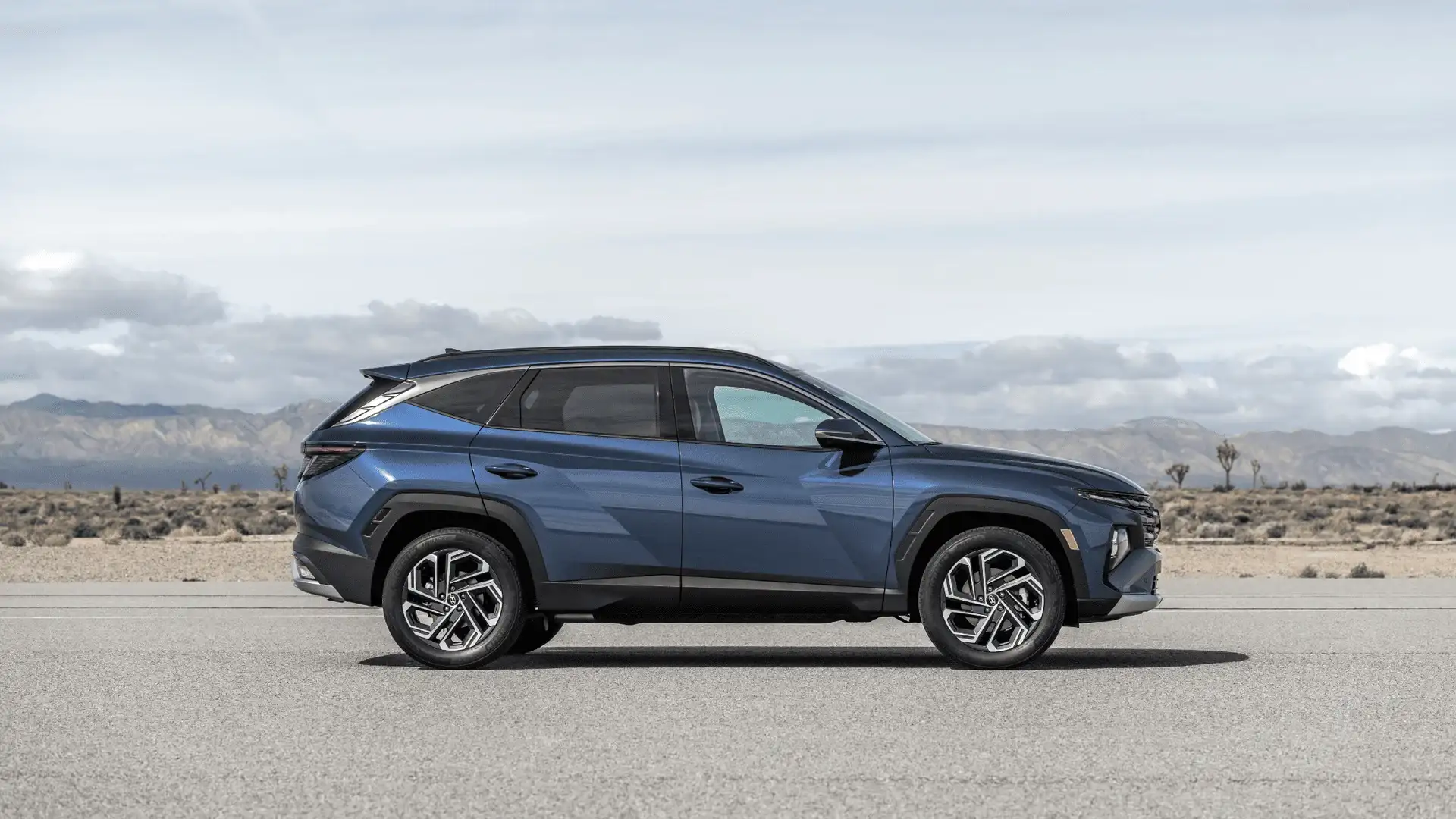
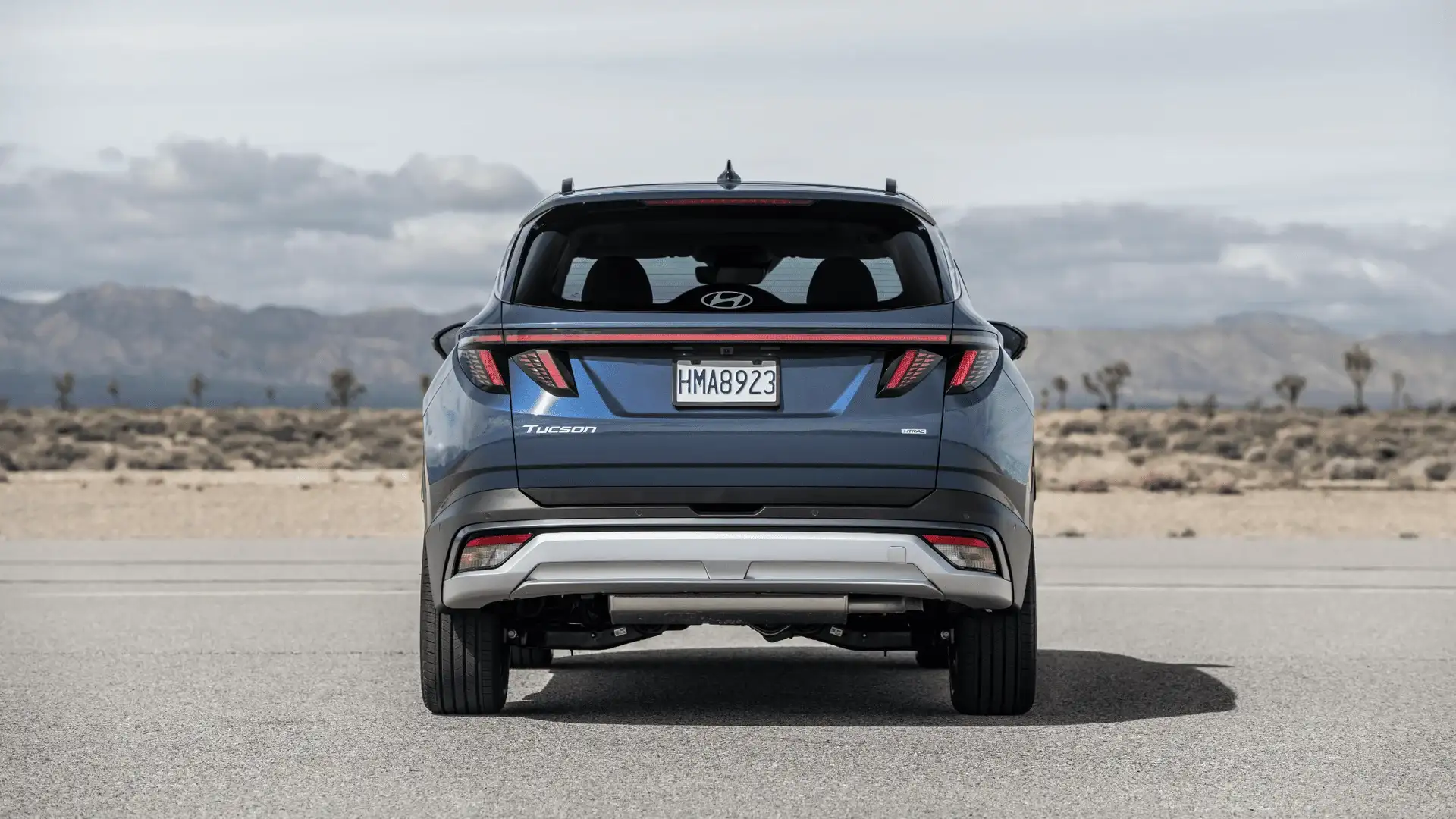
The 2025 Hyundai Tucson features trim-dependent alloy wheel options in 17, 18, or 19-inch configurations, paired with corresponding tire dimensions. Roof rails are included from SEL trims upward. Headlight systems use bi-LED projector beams across all models, and LED taillights are present from the SEL and above. Heated mirrors, turn signal indicators, and blind-spot detection indicators are included in base trims. Premium daytime running lights, automatic headlights, and high beam assist are standard across all versions.
The 2025 Kia Sportage offers wheel options in similar size classes, also dependent on trim. Lighting systems include LED headlights and DRLs as standard, with LED taillights and turn signal mirrors available on most trims. While functional features are closely aligned, the 2025 Hyundai Tucson integrates solar glass, acoustic laminated windshields, and hands-free smart liftgate systems in lower trims than the 2025 Kia Sportage does.
Interior Dimensions and Seating Functions
The 2025 Hyundai Tucson provides a passenger volume of 108.2 cubic feet in internal combustion variants, with slightly reduced volume in hybrid and plug-in models. Headroom reaches 40.1 inches in the front without the sunroof and 39.5 inches in the rear. Legroom remains consistent across variants at 41.4 inches in front and up to 41.3 inches in the rear. Cargo capacity reaches a maximum of 80.3 cubic feet with seats folded and 41.2 cubic feet with seats up in gasoline versions. Hybrid variants offer comparable cargo volume, with plug-in models slightly more restricted.
The 2025 Kia Sportage interior volume aligns closely, though it is slightly below the 2025 Hyundai Tucson in cargo space when the rear seats are folded. Rear legroom is comparable, and front headroom is marginally higher due to roof design adjustments. The dual-level cargo floor, seatback map pockets, and available remote seatback release of the 2025 Hyundai Tucson provide functional advantages in cabin configuration.
Climate and HVAC Controls
Manual air conditioning is included on base 2025 Hyundai Tucson trims, while dual-zone automatic climate control is standard from SEL trims upward. Ventilation includes rear ducts and console-mounted rear vents across the lineup. Cabin air filtration and after-blow logic are standard. The 2025 Hyundai Tucson integrates voice-controlled HVAC operation and capacitive-touch interfaces in higher trims.
The 2025 Kia Sportage mirrors many of these HVAC features, offering dual-zone climate control and rear ventilation across its mid to upper-level trims. The 2025 Hyundai Tucson differentiates itself with software-controlled HVAC elements and more frequent inclusion of rear seat heating and integrated air quality management.
Technology Systems and Connectivity Features
The 2025 Hyundai Tucson features a 12.3-inch color touchscreen standard, with a 6-speaker audio system and SiriusXM® included. Navigation is available starting at SEL trims and is integrated with over-the-air update capabilities. Wireless Apple CarPlay® and Android Auto™ are supported across all trims. USB-C charging ports are standard in both front and rear rows, and 15W wireless charging is available from SEL trims upward. The Limited trim adds a Bose® 8-speaker audio system with digital processing.
The 2025 Kia Sportage offers a similar touchscreen interface and supports wireless smartphone integration. Charging ports and wireless charging are distributed comparably. OTA updates and navigation functions vary by trim. The 2025 Hyundai Tucson infotainment system is enhanced with fingerprint authentication and Hyundai Digital Key in upper trims, features not mirrored in the 2025 Kia Sportage at the same trim levels.
Safety Architecture and Assistance Systems
The 2025 Hyundai Tucson includes forward collision-avoidance assist with pedestrian, cyclist, and junction detection on all trims. Blind-spot collision warning, rear cross-traffic avoidance, and lane-keeping assist are standard. The 2025 Hyundai Tucson also includes highway driving assist, safe exit warning, and intelligent speed limit assist as part of its standard suite. Limited trims add features such as blind-spot view monitors, a surround view monitor, and parking distance warning sensors. Radar-based advanced rear occupant alert is available in hybrid and plug-in hybrid versions.
The 2025 Kia Sportage matches core safety functions such as lane-keeping assist, blind-spot monitoring, and collision-avoidance systems. Surround view monitoring and advanced rear alert systems are trim-dependent. The 2025 Hyundai Tucson holds a technical advantage with more consistent integration of advanced features in base and mid-level trims, along with expanded occupant detection capabilities.
Fuel Efficiency and Range Performance
The 2025 Hyundai Tucson fuel economy reaches 28 miles per gallon combined in its gasoline FWD format. Hybrid models reach 38 MPG combined, and the plug-in hybrid variant records an equivalent of 77 MPGe with 32 miles of all-electric range. The fuel tank capacities of the 2025 Hyundai Tucson range from 14.3 gallons in ICE to 11.1 gallons in PHEV.
The 2025 Kia Sportage ICE models offer similar economy figures, while hybrid variants reach up to 43 MPG combined and 84 MPGe in the PHEV format. The figures for the 2025 Hyundai Tucson are closely competitive, particularly in AWD variants and plug-in configurations.
Disclaimer: 2025 TUCSON: FWD 25 City/33 Hwy/28 Combined MPG. HTRAC AWD 24 City/30 Hwy/26 Combined MPG. All figures are EPA estimates and for comparison purposes only. Actual mileage may vary with options, driving conditions, driving habits and vehicle’s condition.
Schedule a Test Drive Today
Drivers interested in exploring advanced hybrid performance, AWD capabilities, and integrated safety systems can experience the 2025 Hyundai Tucson by visiting ALM Hyundai of Athens near Loganville, GA. The 2025 Hyundai Tucson offers an efficient engine lineup, consistent feature availability across trims, and reliable connectivity systems. Its safety features and digital systems are tuned for daily function. Schedule a test drive to examine the difference in ride quality, seat configuration, and cabin interface. The 2025 Hyundai Tucson provides a technical benchmark within the compact SUV category.