

2025 Hyundai Tucson vs. 2025 Ford Escape near Loganville, GA
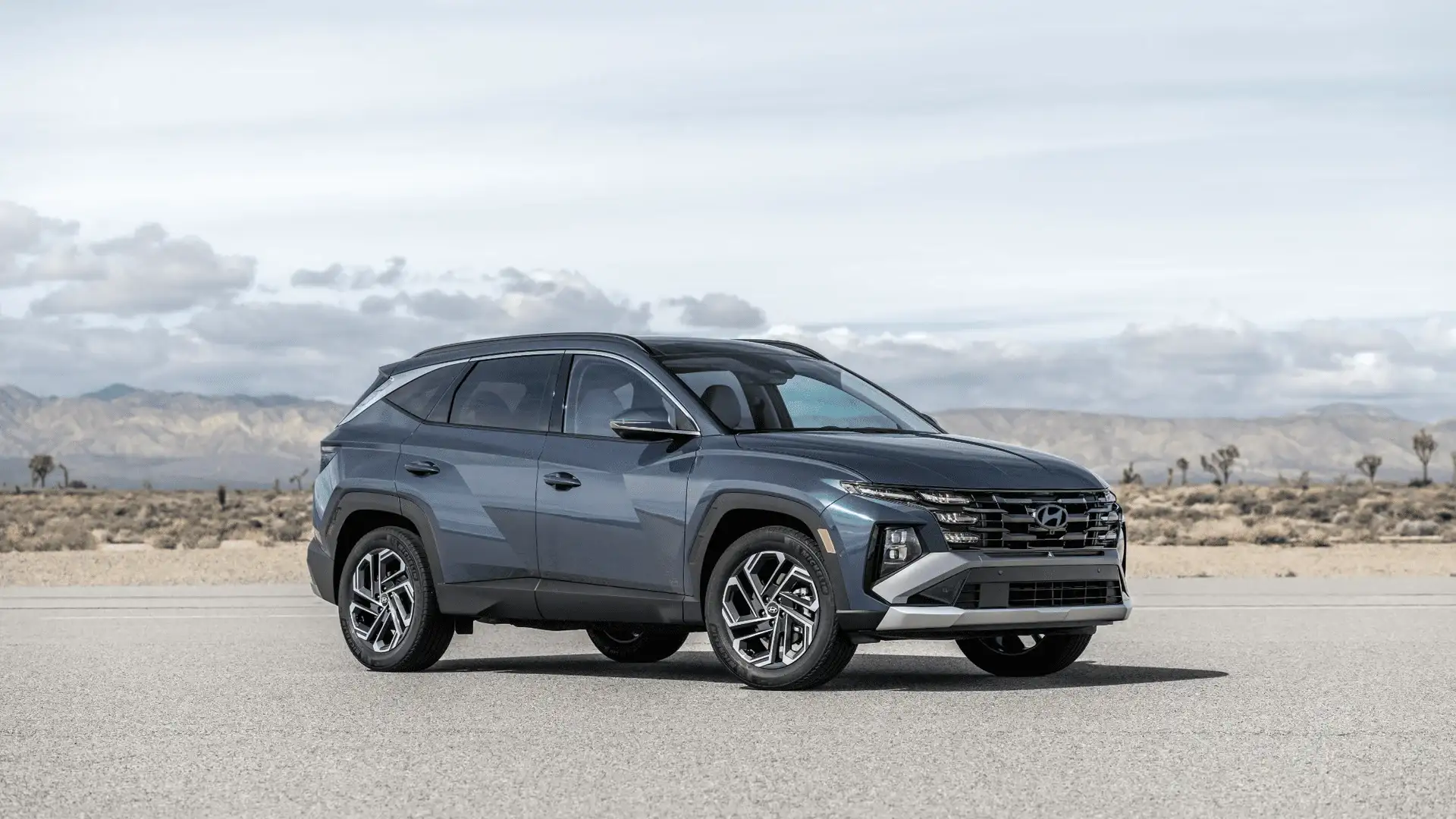
The 2025 Hyundai Tucson continues to focus on engineering precision and multi-functional design. Built with advanced high-strength steel and offered in internal combustion, hybrid, and plug-in hybrid configurations, it provides a technically versatile structure aimed at efficiency and durability. The model features MacPherson® front suspension and multi-link rear suspension systems across all trims, paired with gas-pressurized shock absorbers for consistent road behavior. Combined with available HTRAC all-wheel drive and standard drive mode selection, the 2025 Hyundai Tucson positions itself as a highly adaptable SUV. In contrast, the 2025 Ford Escape® also offers a multi-powertrain range and technical configurations that emphasize power and driving customization, with various EcoBoost® and hybrid options integrated into its design.
Engine Architecture and Powertrain Output
The 2025 Hyundai Tucson is available with three powertrain types. The 2.5-liter gas-powered Smartstream® inline-four engine delivers 187 horsepower at 6100 rpm and 178 lb-ft of torque at 4000 rpm. This version uses a variable intake system and has a compression ratio of 13.0. The hybrid option includes a 1.6-liter turbocharged GDI engine paired with a permanent magnet synchronous motor. This system produces a total output of 231 horsepower and 271 lb-ft of torque. The plug-in hybrid model, also based on the 1.6-liter turbo, increases total system horsepower to 268 while maintaining the same torque output. Its electric motor alone generates 72 kW or 97 horsepower and 224 lb-ft of torque.
The 2025 Ford Escape® offers four powertrains, beginning with a 1.5-liter EcoBoost® I3 engine delivering 180 horsepower. Its hybrid system includes a 2.5-liter Atkinson-cycle engine combined with an electric motor for a total output of 192 horsepower. The plug-in hybrid model boosts this to 210 horsepower. The highest output comes from the 2.0-liter EcoBoost® engine, which delivers 250 horsepower at 5500 rpm and 280 lb-ft of torque. The 2025 Hyundai Tucson maintains consistent torque across its hybrid models, unlike the 2025 Ford Escape®, which delivers greater torque only in its most powerful gasoline engine setup.
Transmission Design and Drivability Features
2025 Hyundai Tucson models with the 2.5-liter engine are equipped with an 8-speed automatic transmission using a torque converter, while hybrid and plug-in hybrid variants use a 6-speed automatic. The vehicle includes standard drive mode selection through a center-console-mounted control. Paddle shifters and shift-by-wire systems are available in hybrid trims. The 2025 Ford Escape® provides an automatic transmission across its lineup and includes selectable drive modes labeled Eco, Sport, Slippery, and Normal. These are designed to adjust gear shifting, throttle response, and stability control depending on conditions. While the driving modes of the 2025 Ford Escape® add tuning flexibility, the mechanical features of the 2025 Hyundai Tucson, including Downhill Brake Control and Hillstart Assist Control, enhance control during variable terrain driving.
Structural Components and Suspension Layout
The 2025 Hyundai Tucson uses a unibody frame constructed with advanced high-strength steels and high-tensile materials. Suspension systems include MacPherson® struts in the front and a multi-link setup in the rear. These are standard across internal combustion, hybrid, and plug-in hybrid trims. Ventilated front disc brakes measure 12.8 inches in diameter, with solid rear discs at 12 inches. The structure of the 2025 Ford Escape® also employs a unibody layout with independent suspension, although fewer details are available regarding materials and suspension geometry. The turning diameter of the 2025 Hyundai Tucson is 38.6 feet, supported by column-mounted motor-driven power steering with a 13.7:1 ratio and 2.41 turns lock to lock.
Electric Components and Charging Systems
The 2025 Hyundai Tucson hybrid models use a 270V lithium-ion battery, while plug-in hybrids use a 360V system with 13.8 kWh capacity. The plug-in variant supports a 7.2 kW onboard charger with a full charge achievable in approximately two hours. The 2025 Ford Escape® plug-in hybrid includes a level 1 mobile power cord for standard 120V outlets and achieves an EPA-estimated electric range of 37 miles. The 2025 Hyundai Tucson PHEV range is 32 miles. Both models are capable of regenerative braking and switching between electric and hybrid modes during operation. The hybrid battery is rated for 64 kW, while the plug-in version increases battery power output to 88 kW.
Disclaimer: 2025 TUCSON Plug-in Hybrid. 32-mile All-Electric Range based on a fully charged battery pack and 77 combined MPGe. MPGe is the EPA-equivalent measure of gasoline fuel efficiency for electric-mode operation. 35 Combined MPG (gas). All figures are EPA estimates and for comparison purposes only. Actual range and mileage will vary with options, driving conditions and habits, vehicle and battery’s condition, battery temperature, outside temperature and other factors.
Interior Space and Cargo Capacity
The 2025 Hyundai Tucson offers consistent passenger space with front and rear legroom measured at 41.4 and 41.3 inches, respectively, in gas and hybrid trims. Cargo capacity behind the rear seats is 38.7 cubic feet, expanding to a maximum of 80.3 cubic feet with seats folded in ICE models. The PHEV model offers a slightly reduced maximum cargo volume of 71.8 cubic feet. The 2025 Ford Escape® features a sliding second-row seat that allows up to 5.9 inches of adjustability, though total cargo space maxes out at 65.4 cubic feet. The rear seatbacks also recline and fold flat via remote release from the cargo area.
Infotainment Systems and Connectivity
The 2025 Hyundai Tucson is equipped with a 12.3-inch touchscreen system paired with a 12.3-inch digital instrument cluster in higher trims. It includes Apple CarPlay® and Android Auto™ as standard and supports wireless connections across all trims. Audio output in premium trims is delivered through a Bose® 8-speaker setup with digital amplification and dynamic speed compensation. The 2025 Hyundai Tucson system is supported by the Hyundai ccNC platform with full over-the-air update capability for maps and software. The 2025 Ford Escape® features a 13.2-inch LCD touchscreen using SYNC® 4, offering wired and wireless smartphone integration. A B&O® 10-speaker sound system is available in upper trims. The system of the 2025 Hyundai Tucson further includes features like fingerprint recognition for ignition and infotainment access in select models.
Exterior Design and Functional Components
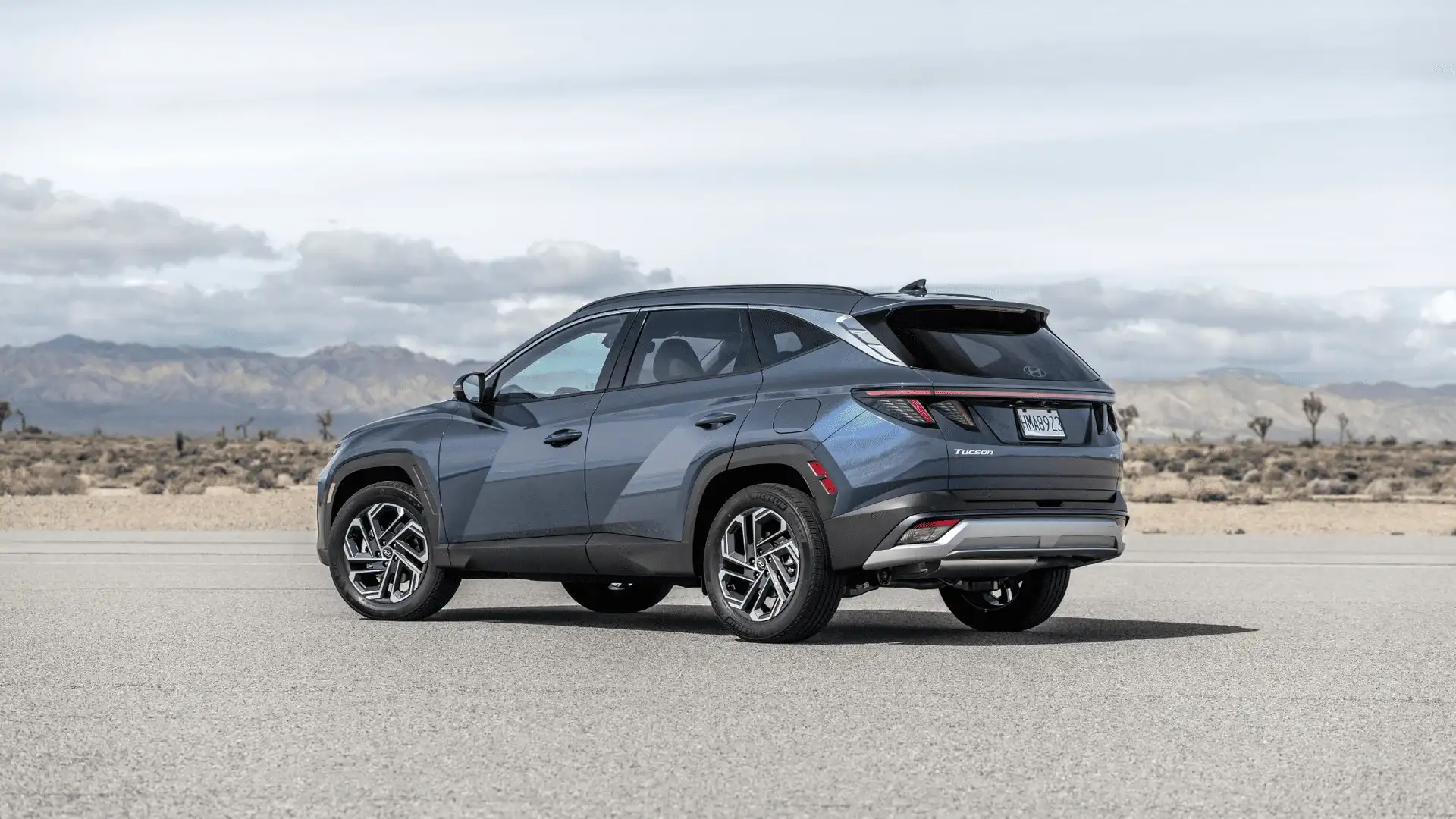
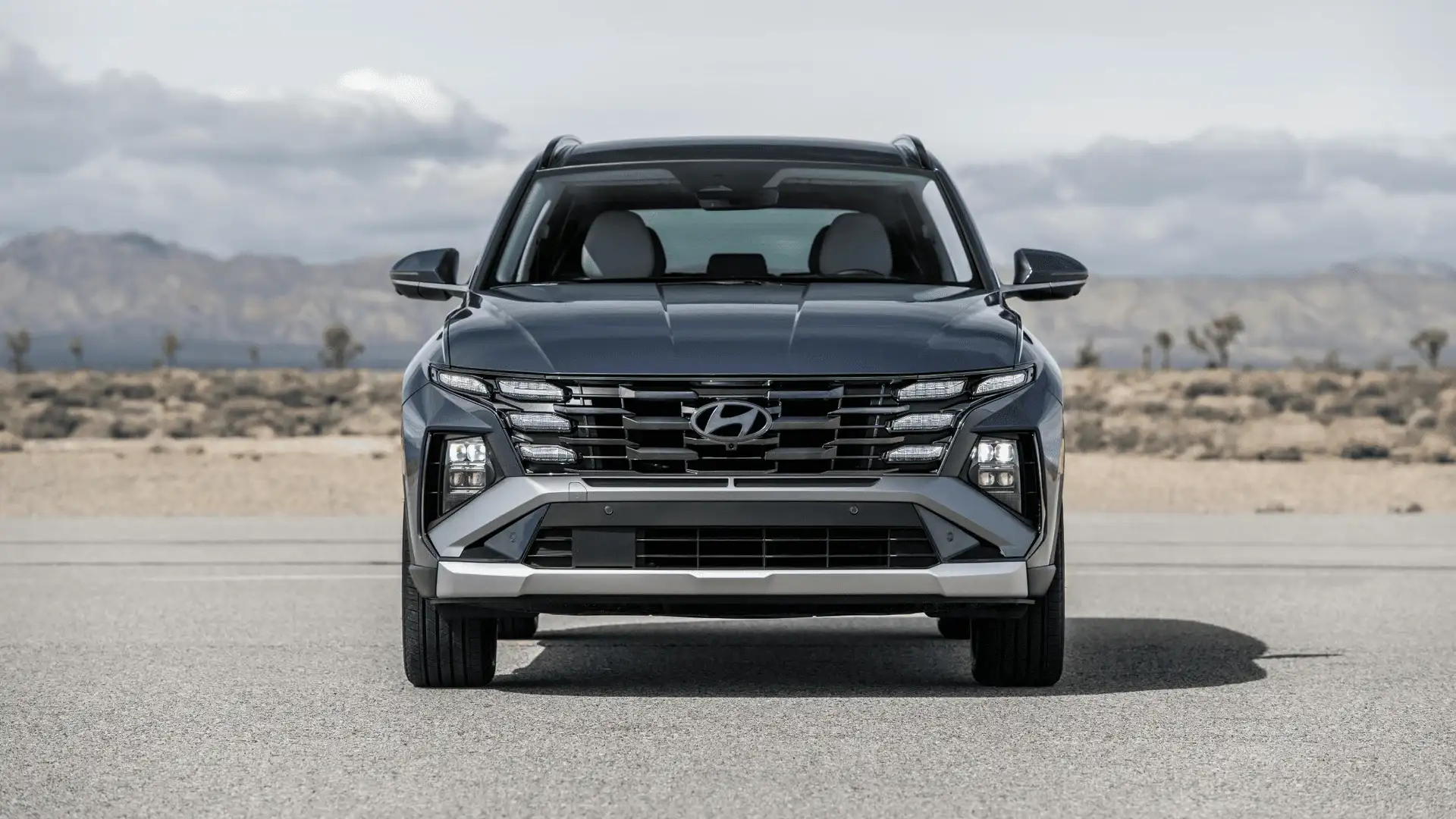
The 2025 Hyundai Tucson provides multiple wheel configurations, from 17-inch alloy wheels in base trims to 19-inch designs in Limited and N Line variants. All models feature LED lighting, including projector-type LED headlamps, daytime running lights, and taillights. Premium trims include gloss black accents, roof rails, and hands-free liftgates with adjustable height settings. The 2025 Ford Escape® offers 18-inch or 19-inch wheels, depending on the trim, and includes optional LED light bars and power liftgates. Both models offer panoramic roofs. However, the 2025 Hyundai Tucson includes a shark-fin antenna, smart liftgate with auto open, and trailer pre-wiring across all trims.
Climate Control and Cabin Features
The 2025 Hyundai Tucson includes dual-zone automatic climate control on all trims except the base. Higher trims add voice control for HVAC, rear seat heater ducts, and floor-mounted rear AC vents. Heated and ventilated front seats, heated rear seats, and ambient cabin lighting are included in the Limited trim. The 2025 Ford Escape® offers heated front seats and a heated steering wheel in several trims, along with available sport contour bucket seats in the ST-Line. While both vehicles offer manual and powered seat adjustments, the 2025 Hyundai Tucson includes an 8-way power driver’s seat with lumbar support in multiple trims and optional memory functions.
Driver Assistance and Safety Technology
The 2025 Hyundai Tucson comes standard with Forward Collision-Avoidance Assist with Pedestrian, Cyclist, and Junction Turning Detection. Lane Keeping and Lane Following Assist are also standard, as are Blind Spot Collision Avoidance, Rear Cross-Traffic Avoidance Assist, and Driver Attention Warning. Upper trims add Parking Distance Warning, Parking Collision Avoidance Assist, Surround View Monitor, and Blind-Spot View Monitor. The 2025 Ford Escape® includes Ford Co-Pilot360™ technology, Adaptive Cruise Control, Blind Spot Information System, and Lane-Keeping features. A 360-degree camera system is also available. The 2025 Hyundai Tucson base trims include a broader suite of safety features compared to entry-level offerings of the 2025 Ford Escape®.
Energy Efficiency and Emission Ratings
The 2025 Hyundai Tucson hybrid models achieve 38 mpg city and highway. Plug-in hybrid versions maintain a 35 mpg combined rating with 77 MPGe and a 32-mile electric-only range. The internal combustion engine variant returns up to 28 mpg combined in front-wheel drive configuration. The 2025 Ford Escape® hybrids deliver 42 mpg city and 36 highway for a combined rating of 39 mpg. Its plug-in hybrid has an MPGe rating of 101 with a 37-mile EV range. Gas-only 2025 Ford Escape® trims provide up to 30 mpg combined with the 1.5L engine and 26 mpg combined with the 2.0L AWD variant. The 2025 Hyundai Tucson holds a SULEV30 emission rating and achieves a smog score of 6, consistent with federal low-emission standards.
Disclaimer: 2025 TUCSON: FWD 25 City/33 Hwy/28 Combined MPG. HTRAC AWD 24 City/30 Hwy/26 Combined MPG. All figures are EPA estimates and for comparison purposes only. Actual mileage may vary with options, driving conditions, driving habits and vehicle’s condition.
Schedule a Test Drive at ALM Hyundai of Athens
Drivers interested in evaluating engine responsiveness, drivetrain adaptability, or integrated safety technologies are encouraged to experience the 2025 Hyundai Tucson in person. A test drive allows for a closer examination of its torque delivery, user interface responsiveness, and interior spatial design. The combination of hybrid capability, consistent structural engineering, and extensive standard features presents a strong technical profile. ALM Hyundai of Athens near Loganville, GA, invites you to schedule a test drive and explore the comprehensive specifications of the 2025 Hyundai Tucson firsthand. Engage with the features directly and determine the setup that best meets your performance and utility preferences.