

2025 Hyundai Tucson near Loganville, GA
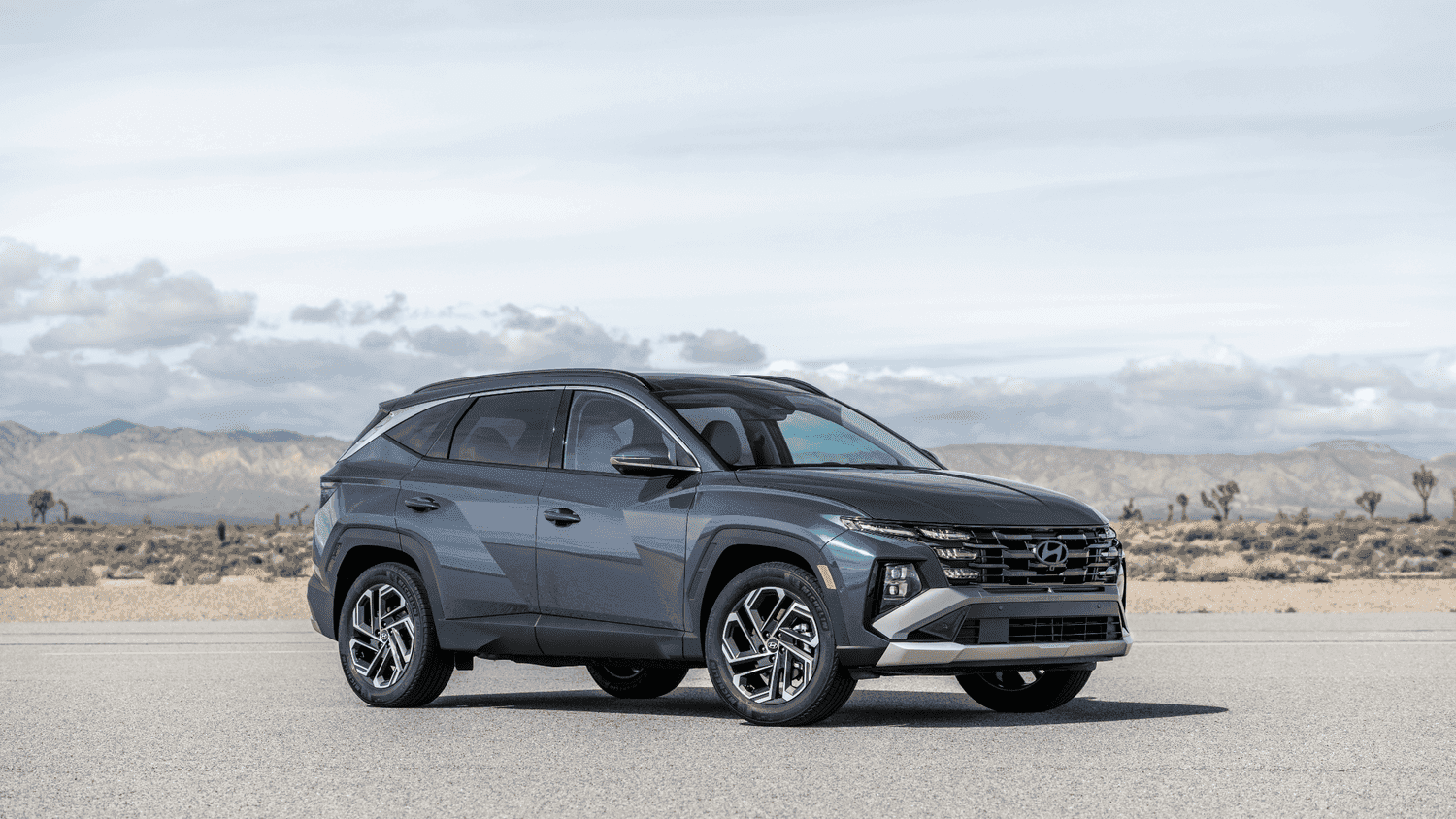
The 2025 Hyundai Tucson incorporates a range of internal combustion and hybrid propulsion systems supported by advanced electronic architecture and structural engineering. Powertrain options are paired with adaptive drive technologies, allowing drivers to balance efficiency, torque delivery, and terrain control. The unibody frame structure integrates high-strength steel reinforcements to improve rigidity while supporting aerodynamics and crash protection. Interior and exterior systems are designed with functional performance in mind, from low-drag surfaces and acoustic materials to modular cargo design and user-responsive interfaces.
Engine Options and Mechanical Architecture
The 2025 Hyundai Tucson presents a choice between a naturally aspirated gasoline engine and advanced hybrid powertrains. The standard internal combustion engine is a 2.5-liter inline four-cylinder unit utilizing Gasoline Direct Injection combined with Multi-Point Injection and operating with a dual overhead camshaft. This engine has a displacement of 2,497 cubic centimeters and operates with Continuously Variable Valve Timing (CVVT). It produces 187 horsepower at 6,100 revolutions per minute and delivers 178 pound-feet of torque at 4,000 RPM. The engine block and head are constructed from aluminum, enhancing weight reduction and heat dissipation. It features a compression ratio of 13.0 and operates on regular unleaded fuel. The 2.5L engine is paired with an eight-speed automatic torque converter transmission and is available in both front-wheel and all-wheel drive configurations.
The hybrid and plug-in hybrid versions employ a 1.6-liter turbocharged inline four-cylinder engine with Gasoline Direct Injection and Continuously Variable Valve Duration (CVVD) technology. This powertrain achieves 178 horsepower at 5,500 RPM and produces 195 pound-feet of torque across a wide range between 1,500 and 4,500 RPM. These models combine the gasoline engine with a permanent magnet synchronous electric motor, yielding total system outputs of 231 horsepower in the hybrid and 268 horsepower in the plug-in hybrid variant. The electric motors provide torque figures of 195 pound-feet for the hybrid and 224 pound-feet for the plug-in hybrid, enabling responsive acceleration. Lithium-ion battery packs power the electric motors, with capacities of 1.49 kilowatt-hours for the hybrid and 13.8 kilowatt-hours for the plug-in hybrid. The plug-in hybrid supports a full recharge in approximately two hours using a 7.2-kilowatt onboard charger supplied at 240 volts, and it offers an electric-only driving range near 32 miles.
Transmission systems for the hybrid models consist of a six-speed automatic torque converter. Both powertrains include drive mode selectors located on the center console, allowing the driver to adjust the vehicle’s dynamics. The all-wheel-drive system employed is the Hyundai HTRAC active on-demand system, which modulates torque distribution to optimize traction based on driving conditions. Paddle shifters and shift-by-wire technology are offered on hybrid models to enhance manual control over gear selection.
Suspension, Steering, and Brake Systems
The 2025 Hyundai Tucson uses a MacPherson® strut suspension setup in the front and a multi-link suspension configuration in the rear, both supported by gas-pressurized shock absorbers and stabilizer bars. This setup is intended to balance ride comfort with handling stability across different road surfaces.
Steering is managed through a motor-driven power steering system using a rack-and-pinion design with a column-mounted configuration. The steering system has an overall ratio of 13.7 to 1 and requires 2.41 turns lock to lock, contributing to responsive maneuverability. The vehicle’s turning diameter measures 38.6 feet curb to curb, which supports urban driving and parking.
Braking is performed by ventilated disc brakes measuring 12.8 inches in diameter at the front and solid disc brakes of 12.0 inches at the rear. The system includes Anti-lock Braking System (ABS) with Electronic Brake-force Distribution (EBD), four-wheel disc brakes, and Brake Assist. The electronic parking brake features an automatic vehicle hold function. Additional driver aids include Downhill Brake Control (DBC) and Hillstart Assist Control (HAC) to improve safety and vehicle control on slopes.
Exterior Dimensions and Functional Design Features
The overall length of the 2025 Hyundai Tucson measures 182.7 inches with a wheelbase of 108.5 inches. The vehicle width is 73.4 inches, and the height varies slightly depending on roof rail installation, measuring approximately 65.6 inches with roof rails. Ground clearance differs between front-wheel-drive and all-wheel-drive models, recorded at 7.1 inches and 8.3 inches, respectively. The coefficient of drag is 0.33, indicating a focus on aerodynamic efficiency.
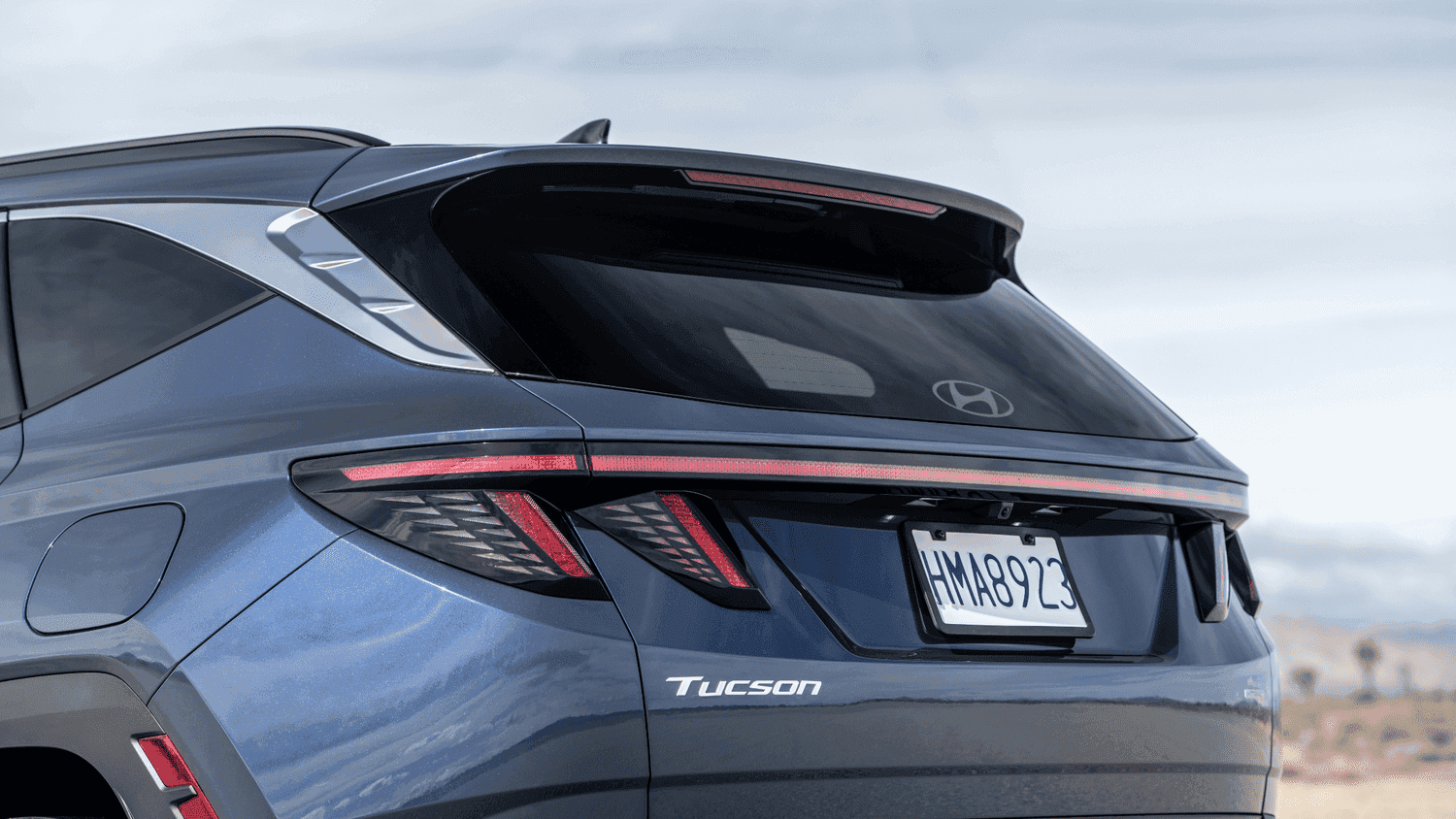
Wheel options range from 17 to 19 inches, depending on the trim level. Tires correspond accordingly with sizes such as 235/65R17 and 235/55R19. The exterior lighting system includes Bi-LED projector headlights with LED daytime running lights and LED taillights. Automatic headlights with High Beam Assist are standard, supporting visibility in varied driving conditions. The vehicle also includes roof-mounted center high-mount stop lamps and available panoramic sunroof configurations.
The exterior incorporates privacy glass on the rear windows and solar glass on the windshield and front doors. Acoustic laminated glass is used for the windshield and front side windows to reduce noise intrusion. Mirror assemblies feature heated capabilities with integrated turn signal indicators. Aerodynamic windshield wipers with variable intermittent settings are standard, with premium trims featuring rain-sensing wipers.
Body construction employs advanced high-strength steel with high tensile reinforcements in critical areas. The unibody structure emphasizes durability and occupant protection while keeping weight optimized. Additional exterior details include anodized aluminum badging, black or body-colored moldings, and roof rails designed for functional load capacity.
Interior Space and Comfort Features
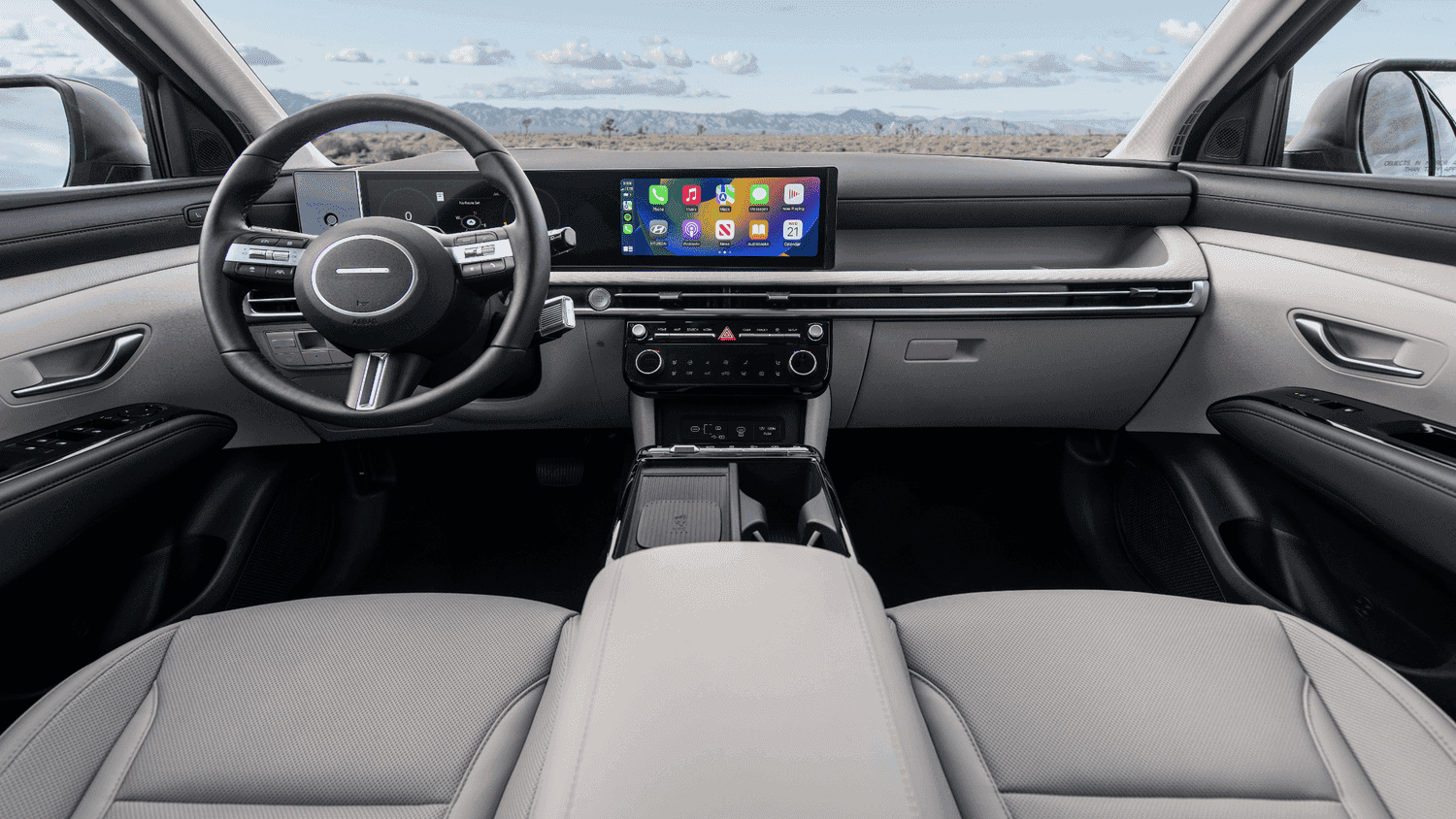
The interior cabin accommodates five passengers, with headroom measuring over 40 inches in the front seats and legroom exceeding 41 inches. Shoulder room reaches approximately 57.6 inches in the front. Cargo volume with rear seats upright ranges from approximately 32 to 41 cubic feet, depending on the powertrain, and expands to a maximum cargo volume of over 74 cubic feet when rear seats are folded flat.
Seating materials vary by trim, ranging from stain- and odor-resistant cloth to leatherette (H-Tex®) and full leather in premium models. Front seats include manual six-way adjustments in base trims and eight-way power adjustments with lumbar support in higher trims. Heated and ventilated front seats are available in select configurations. Rear seats feature a 60/40 split folding with recline functionality and adjustable head restraints. Dual-level cargo floors and remote folding rear seats add to interior versatility. The climate control system of the 2025 Hyundai Tucson offers dual-zone automatic temperature control with a capacitive touch interface.
Integrated Technology and Connectivity Systems
The 2025 Hyundai Tucson includes a 12.3-inch touchscreen infotainment system across all trims. Base models support AM/FM radio, HD Radio™, SiriusXM® satellite service, and wireless smartphone integration via Apple CarPlay® and Android Auto™. Navigation is included on higher trims with over-the-air update capabilities for maps and software. Voice recognition technology is present to support hands-free operation.
Audio system offerings range from six-speaker standard setups to an eight-speaker Bose® premium system in advanced trims. Multiple USB Type-C ports for data and charging are installed throughout the cabin, including front and second-row access points.
The Bluelink®+ connected car system from Hyundai enables remote access, vehicle diagnostics, and remote start capabilities. Some configurations add biometric fingerprint scanning for enhanced security of infotainment and engine start. Contactless payment via Hyundai Pay is available in select models. Wireless device charging pads offer 15 watts of power.
Safety and Driver Assistance Systems
Safety features on the 2025 Hyundai Tucson encompass a full suite of airbags, including advanced driver and passenger airbags, side-impact thorax airbags, side curtain airbags with rollover sensors, and rear side airbags. Seatbelts include pretensioners, load limiters, and three-point configurations for all seating positions. Child safety locks and power window lockouts are standard.
Active safety systems incorporate anti-lock brakes with electronic stability control, traction control, and brake assist. Tire Pressure Monitoring Systems provide individual tire indicators. Hillstart Assist Control and Downhill Brake Control assist in managing slopes.
Advanced driver aids include Forward Collision-Avoidance Assist, which detects vehicles, pedestrians, cyclists, and junction-turning hazards. Blind-Spot Collision Warning and Rear Cross-Traffic Collision Avoidance support safer lane changes and reversing. Lane Keeping Assist and Lane Following Assist maintain lane position on highways. Driver Attention Warning monitors alertness. Some models add parking collision avoidance, surround view monitoring, and blind-spot view monitoring for enhanced situational awareness.
Structural reinforcements and an anti-theft system integrated with remote keyless entry complement occupant protection.
Schedule a Test Drive at ALM Hyundai of Athens
If you’re considering a compact SUV that combines real-world efficiency with smart engineering, the 2025 Hyundai Tucson deserves time behind the wheel. Hybrid and turbocharged engines offer two very different approaches to performance, each supported by finely tuned suspension and comprehensive driver assistance features. Inside, the layout emphasizes daily function, intuitive tech, and safety systems that actively respond to changing conditions. Visit ALM Hyundai of Athens near Loganville, GA, to schedule your test drive and see how the 2025 Hyundai Tucson meets your expectations across performance, connectivity, and control.