

2025 Hyundai Santa Fe near Loganville, GA
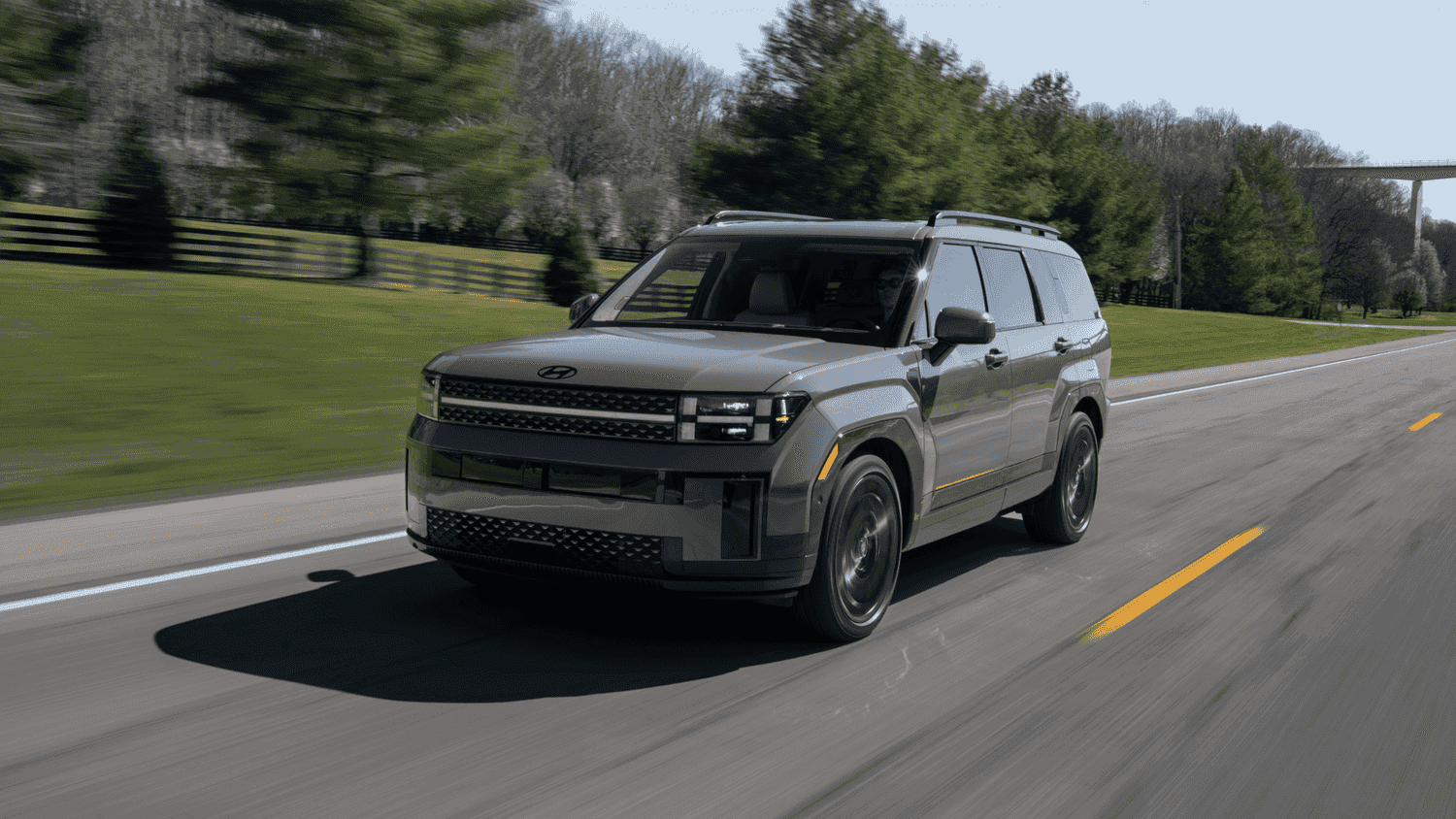
Engine architecture, powertrain versatility, and multi-mode drivetrain technologies form the mechanical foundation of the 2025 Hyundai Santa Fe. Designed with a focus on structural integrity and adaptive performance, this midsize SUV integrates aluminum block construction, dual-clutch transmission systems, and torque-managed all-wheel drive for controlled capability. Interior systems support electronic precision across navigation, infotainment, and climate interfaces, while the unibody chassis incorporates high-strength steel for improved rigidity and occupant safety. From hybrid propulsion to terrain-ready configurations, the 2025 Hyundai Santa Fe is structured to perform across varying road and load conditions.
Engine Performance and Powertrain Options
The 2025 Hyundai Santa Fe offers a gasoline engine and a hybrid powertrain that cater to different driving priorities. The gasoline variant uses the Smartstream® 2.5-liter turbocharged inline four-cylinder engine. This engine delivers 277 horsepower at 5800 rpm and 311 pound-feet of torque at 4000 rpm. Constructed with an aluminum block and head, it operates on a compression ratio of 11:1 and uses a gasoline direct injection fuel system combined with turbocharging. The engine features idle stop and go technology to improve fuel economy during idling.
The hybrid model combines a Smartstream® 1.6-liter turbocharged inline four-cylinder engine with a permanent magnet synchronous electric motor. The hybrid system produces a combined 231 horsepower and 271 pound-feet of torque, with the electric motor contributing about 60 horsepower and 195 pound-feet of torque. The battery is a 1.49 kWh lithium-ion unit operating at a maximum voltage of 270 volts. This hybrid setup allows for either front-wheel drive or the Hyundai HTRAC all-wheel-drive system with dynamic torque distribution based on driving conditions.
Transmission systems vary between powertrains. The hybrid model uses a 6-speed automatic transmission, while the gasoline engine employs an 8-speed wet-type dual-clutch transmission. Both transmissions feature Shift-By-Wire technology and paddle shifters for manual control. The HTRAC AWD system offers selectable modes such as Comfort, Eco, Sport, and Smart, adjusting torque distribution from 100:0 to 50:50 between the front and rear axles. Additional modes include Snow, Sand/Mud, and an AWD Lock setting for enhanced traction.
Chassis, Suspension, and Handling Characteristics
The chassis of the 2025 Hyundai Santa Fe uses a unibody construction with primary materials composed of high-strength steel, supporting structural rigidity and safety. The suspension system employs MacPherson® struts with coil springs in the front, paired with a stabilizer bar and gas-pressurized shock absorbers featuring advanced valving. The rear suspension is a multi-link independent setup with separated springs and shocks, also gas-pressurized and designed to balance ride comfort and handling precision.
Steering is managed by a Motor Driven Power Steering system with a rack and pinion configuration. The system offers a steering ratio of 13.7 and requires 2.6 turns from lock to lock, resulting in a turning diameter of 37.9 feet curb to curb. Braking components include ventilated front disc brakes ranging from 12.8 to 13.6 inches, depending on trim, and solid rear discs that measure 12.0 or 12.8 inches. Safety and control features in braking include ABS with electronic brake-force distribution, downhill brake control, hill-start assist, brake assist, and trailer sway control.
Exterior Design and Functional Details
The exterior of the 2025 Hyundai Santa Fe integrates functional design with advanced material use and aerodynamic considerations. Wheel options range from 18 inches on base models to 21 inches on higher trims. Tires are matched to wheel sizes and include brands like Goodyear®, Continental All-Terrain, Kumho, and Pirelli, chosen to provide specific performance traits such as all-terrain capability or road comfort.
Lighting uses LED technology for projector headlights with accents, daytime running lights, and taillights across all trims. The vehicle includes automatic headlights with high-beam assist for better visibility. Side mirrors come with heated elements, power folding features on higher trims, and LED turn signals. Blind-Spot and Rear Cross-Traffic Collision Avoidance Assist systems are integrated with mirror functionality.
The roof incorporates rails with a load capacity of 220 pounds and options for roof cross rails depending on trim levels. Other exterior features include a hands-free smart liftgate with auto open and adjustable height settings, a roof-mounted shark-fin antenna, an integrated rear spoiler with a high-mount stop lamp, and body-colored bumpers and door handles. The overall length measures 190.2 inches with a wheelbase of 110.8 inches, and ground clearance varies between 7.0 and 8.3 inches depending on trim and model variant.
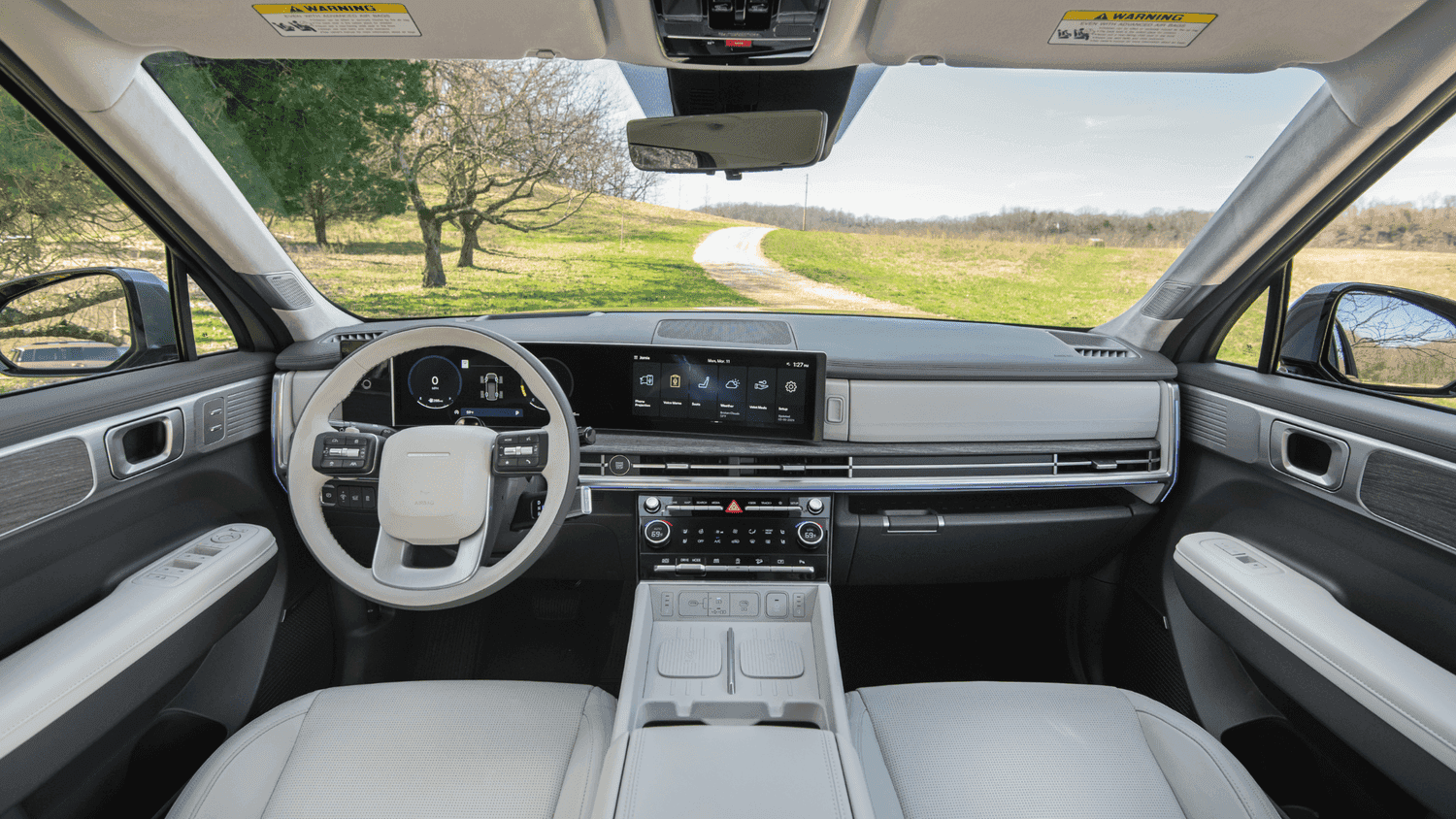
Interior Technology and Driver Interface
The interior focuses on integrating technology with driver usability. Depending on the trim, the vehicle features either a 12.3-inch touchscreen infotainment system with navigation, traffic flow data via HD Radio™, and Wi-Fi hotspot capabilities or a 12.3-inch digital instrument cluster. Wireless Apple CarPlay® and Android Auto™ are standard across all models. Higher trims offer Bose® premium 12-speaker audio systems and dynamic voice recognition controls.
Convenience features include multiple USB charge ports distributed throughout the front, rear, and third-row seating areas. Wireless device charging is available on most trims, with dual charging pads on select models. Hyundai Pay is integrated for in-car payments, and several models offer a head-up display projecting key driving information onto the windshield.
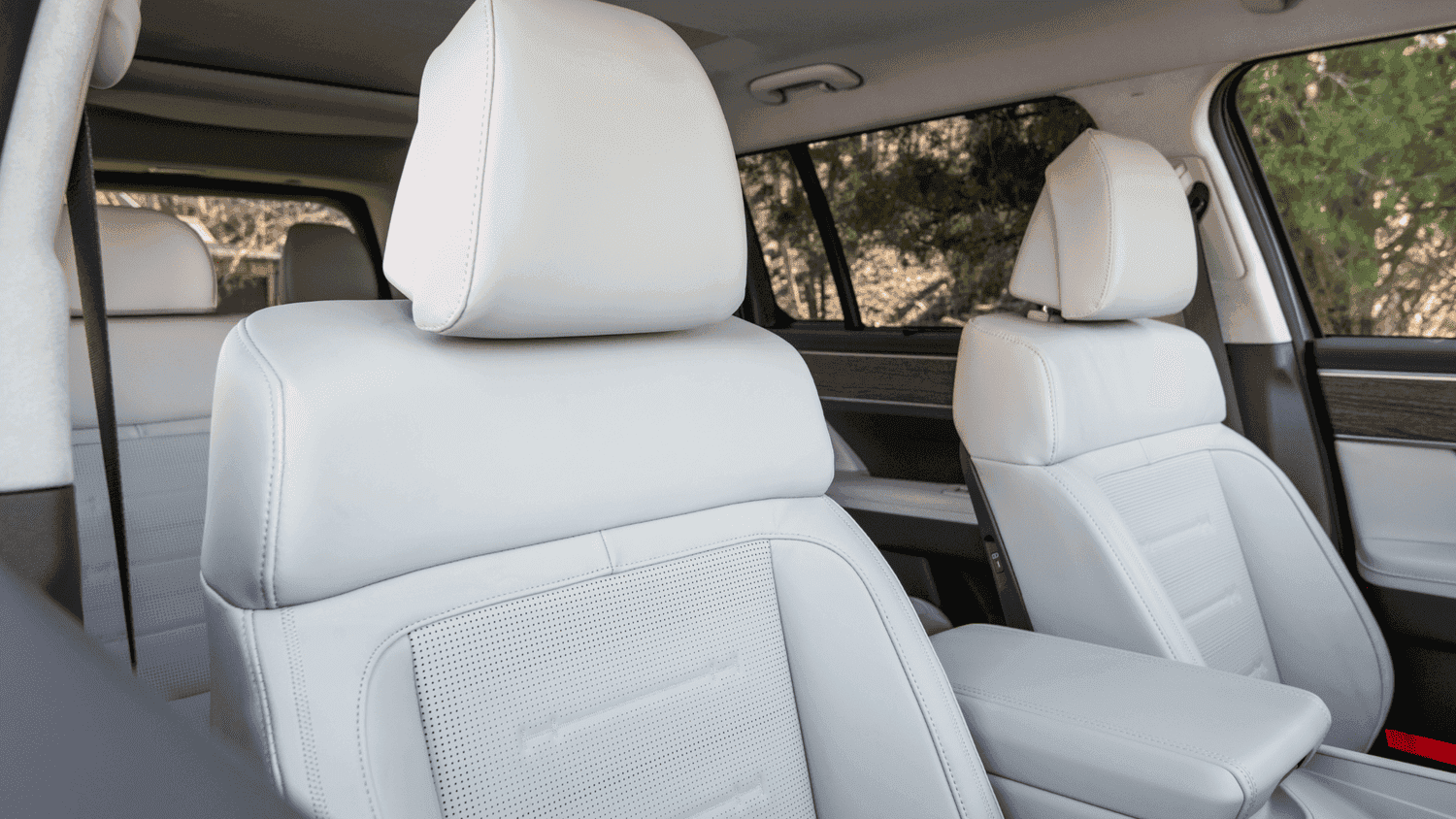
Seating configurations provide seven-passenger capacity, with leatherette, leather, or Nappa leather upholstery options depending on trim. Driver and front passenger seats include power adjustments with lumbar support, heating, and ventilation options. Rear seats have features like reclining and heating, with 60/40 split-folding second-row seats and a 50/50 sinking/folding third-row bench. Interior storage includes underfloor cargo trays and multiple door and center console compartments.
Safety Systems and Driver Assistance Technology
The 2025 Hyundai Santa Fe incorporates a comprehensive array of safety systems, both passive and active. Passive restraints include advanced front airbags for the driver and passenger, knee airbags for the driver, side airbags for the first and second rows, and side curtain airbags spanning all rows. Seatbelts include 3-point anchors for all positions with adjustable shoulder belt anchors and pretensioners.
Active safety features encompass anti-lock braking systems with four-wheel disc brakes, electronic stability control with traction control and brake assist, vehicle stability management, and tire pressure monitoring with individual indicators. Advanced driver-assist technologies are available depending on the trim. These include Blind-Spot Collision-Avoidance Warning or Assist, Rear Cross-Traffic Collision Avoidance, Forward Collision-Avoidance Assist with pedestrian, cyclist, and junction turning detection, Lane Keeping Assist, Lane Following Assist, Driver Attention Warning, and Safe Exit Assist.
Parking assistance technologies include rear-view monitors with parking guidance, surround-view monitors on higher trims, Park Distance Warning systems, and Remote Smart Parking Assist that enables the vehicle to park autonomously in certain scenarios. The 2025 Hyundai Santa Fe also provides Rear Occupant Alert systems with ultrasonic sensors and integration with the Hyundai Bluelink® connected car system.
Dimensions, Capacities, and Utility
The 2025 Hyundai Santa Fe measures 74.8 inches in width and 67.7 inches in height, with roof side rails adding approximately 2 inches to overall height. Interior dimensions provide headroom measuring 41.1 inches in the front row, 40.6 inches in the second row with a sunroof, and 37.7 inches in the third row. Legroom extends 44.4 inches in the front, 42.3 inches in the second row, and 30.0 inches in the third row. Shoulder and hip room across all rows support passenger comfort with 59.5 inches of shoulder room in the front and 56.5 inches of hip room.
Cargo volume is 14.6 cubic feet behind the third row, expanding to 40.5 cubic feet behind the second row and 79.6 cubic feet with both rear rows folded. Fuel tank capacity remains consistent at 17.7 gallons. The vehicle’s curb weight varies by configuration, ranging from approximately 4,343 to 4,575 pounds.
Towing capability reaches 3,500 pounds on most models with trailer brakes, with the XRT trim rated for up to 4,500 pounds. Approach, departure, and break-over angles differ across trims but generally support light off-road driving, aided by ground clearance that can reach 8.3 inches on select models.
Visit ALM Hyundai of Athens near Loganville, GA
The 2025 Hyundai Santa Fe brings together hybrid efficiency, all-wheel-drive capability, and integrated safety systems in a well-balanced midsize SUV. Its powertrain responsiveness, interior versatility, and real-time driver aids are designed for flexibility across changing conditions and driving environments. Exploring how these systems operate in motion provides a more complete perspective than spec sheets alone can offer. To experience its engineering and performance firsthand, schedule your test drive at ALM Hyundai of Athens near Loganville, GA.