

2025 Hyundai Elantra near Loganville, GA
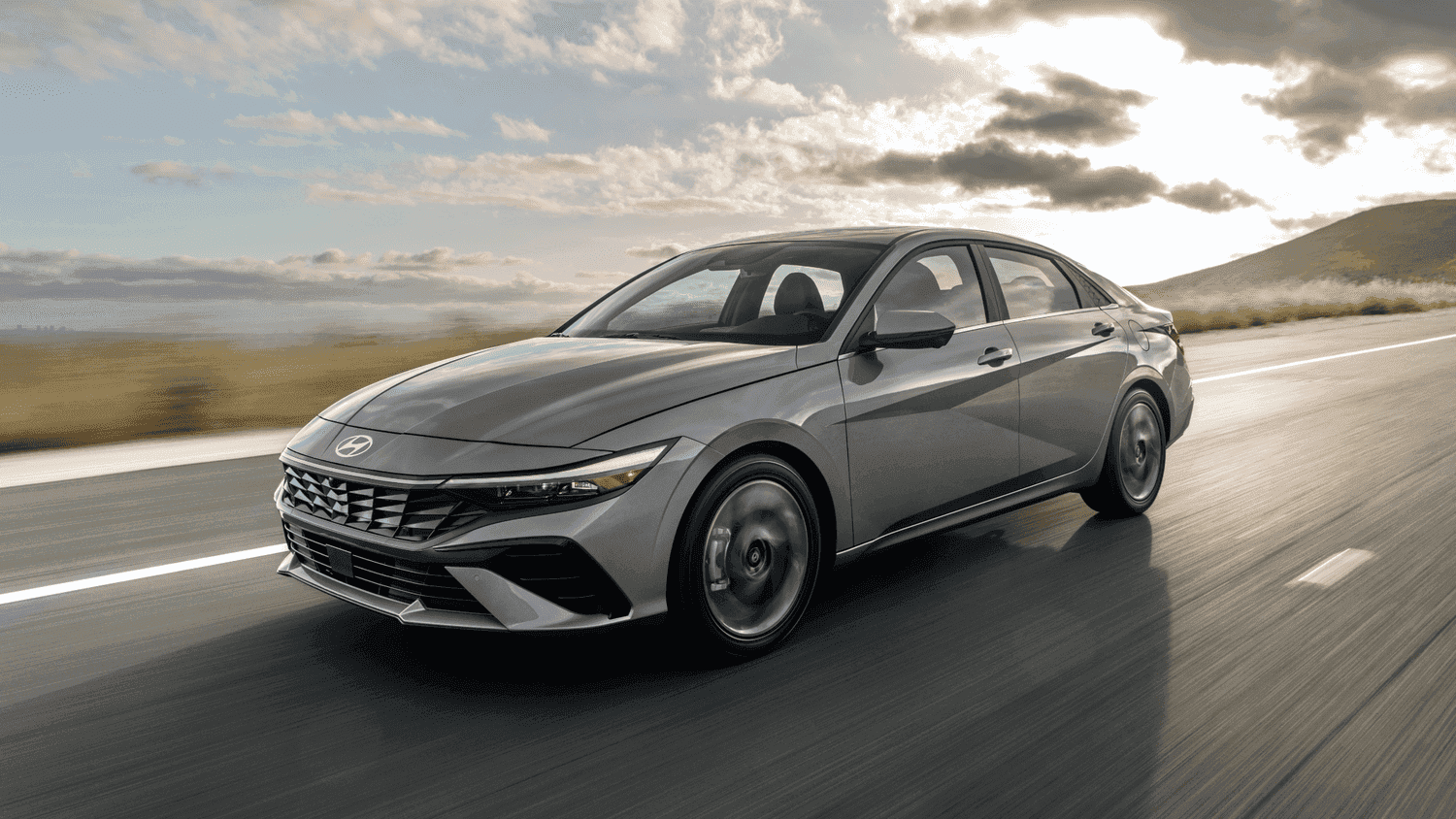
The 2025 Hyundai Elantra introduces a varied lineup of powertrains and systems designed to deliver efficiency, power, and control. This model offers a broad range of engines, from naturally aspirated four-cylinders to turbocharged variants and hybrid systems, each engineered with precision. It incorporates modern transmission technologies, structural engineering, and integrated electronics to provide a comprehensive driving experience focused on technical effectiveness.
Engine Performance and Transmission Systems
The mechanical options of the 2025 Hyundai Elantra provide multiple choices suited for distinct driving requirements. The base engine found in the SE, SEL, and LIMITED trims is a 2.0-liter MPI inline four-cylinder with dual continuously variable valve timing. This unit has a displacement of 1,999 cc with aluminum construction for both the block and head. It produces 147 horsepower at 6,200 rpm and 132 lb-ft of torque at 4,500 rpm, compliant with SULEV emissions standards. The compression ratio is 12.5 to 1, supporting balanced power delivery and fuel efficiency.
For the hybrid models, Hyundai uses a 1.6-liter gasoline engine operating on the Atkinson cycle. The inline four-cylinder engine displaces 1,580 cc and is coupled with an electric motor. The gasoline engine delivers 104 horsepower at 5,700 rpm and 109 lb-ft of torque at 4,000 rpm, while the electric motor adds 35 horsepower and 86 lb-ft of torque. Together, the system output reaches 139 horsepower and 195 lb-ft of torque. This setup enhances fuel economy without sacrificing practical power.
The sportier variants, including the Sport trim, utilize a 1.6-liter turbocharged gasoline direct-injected engine. It produces 201 horsepower at 6,000 rpm and 195 lb-ft of torque between 1,500 and 4,500 rpm. This engine integrates Continuously Variable Valve Duration technology for optimized valve timing, resulting in improved efficiency and throttle response. The aluminum construction of the block and head contributes to reduced weight.
The high-performance N Line model is powered by a 2.0-liter turbocharged direct-injected inline four-cylinder engine displacing 1,998 cc. It generates 276 horsepower within the 5,500 to 6,000 rpm range and 289 lb-ft of torque from 2,100 to 4,700 rpm. This engine’s bore and stroke are equal at 86 millimeters, indicating a balance between power and engine smoothness.
Transmission systems vary to match the engines and trims. The SE, SEL, and Limited trims use a Smartstream® Intelligent Variable Transmission, designed to provide smooth acceleration and fuel economy. The HEV ALL trim features a 6-speed EcoShift® Dual Clutch Transmission, which offers quicker gear shifts and enhanced driver engagement. The N Line comes with an 8-speed wet dual-clutch transmission, delivering performance-oriented shift times and durability. Front-wheel drive is standard across all versions.
Structural and Suspension Characteristics
The body of the 2025 Hyundai Elantra employs a unibody construction that emphasizes high tensile steel for rigidity and crash protection. The use of hot stamping in certain structural components increases strength without adding excessive weight.
The suspension system consists of MacPherson® struts with coil springs at the front across all trims, paired with either a coupled torsion beam or multi-link independent rear suspension, depending on the trim. The SE, SEL, Limited, and hybrid trims are equipped with a stabilizer bar of 22 to 23 millimeters in diameter and hydraulic twin-tube shock absorbers. The hybrid and N Line models feature a multi-link independent rear suspension with a thicker stabilizer bar. The N Line further enhances handling with an electronically controlled suspension system and a rear chassis brace. It also includes a limited-slip differential with electronic control, aiding cornering stability.
The steering systems differ between models, with most using rack-and-pinion motor-driven power steering. The steering ratio of the N Line trim is slightly quicker at 12.2:1 compared to 12.9:1 on other trims. Steering effort and turning radius are calibrated for both comfort and agility, with a minimum turning radius of around 17.7 feet on most trims.
Braking systems on the 2025 Hyundai Elantra consist of ventilated discs at the front ranging from 11 to 14.2 inches in diameter, depending on the trim, with solid or ventilated discs at the rear. All models are equipped with Anti-lock Braking Systems (ABS), Electronic Brake-force Distribution, and Brake Assist, contributing to controlled stopping performance.
Exterior Specifications and Lighting Technology
The 2025 Hyundai Elantra maintains consistent exterior dimensions across its lineup, with a wheelbase of 107.1 inches, an overall length of 185.4 inches, and a width of 71.9 inches. The vehicle’s coefficient of drag is a low 0.28, which aids fuel efficiency and reduces wind noise.
Wheel sizes vary by trim, starting from 15-inch alloys on the SE model up to 19-inch Michelin® Pilot Sport summer tires on the N Line. Tires are matched appropriately, scaling from all-season tires for daily driving to performance tires for sporty trims. The lighting systems of the 2025 Hyundai Elantra include standard LED daytime running lights and dual LED projector headlights on all trims. Rear lighting evolves from traditional bulb tail lamps on base trims to full LED rear taillights with dynamic turn signals on higher trims.
Exterior features also incorporate various grille designs and finishes, from black to glossy and matte black options, depending on the trim level. Spoilers and diffusers are present on performance trims, enhancing aerodynamics and providing a sportier look. Power-adjustable side mirrors come with heating and turn signal indicators on selected models.
Interior Dimensions and Comfort Features
Inside, the 2025 Hyundai Elantra offers seating for five, with front headroom measuring approximately 40.6 inches and rear headroom around 37.3 inches. Front legroom extends to 42.3 inches, and rear legroom measures 38 inches, providing adequate space for occupants in both rows.
The seating materials range from premium cloth in entry-level trims to leatherette and microsuede combinations in sportier or luxury variants. The N Line includes leather-trimmed sport bucket seats with illuminated logos. Driver seats in all trims offer six-way manual adjustments, with power adjustments and lumbar support available on higher trims. Heated and ventilated seats are optional or standard in select models.
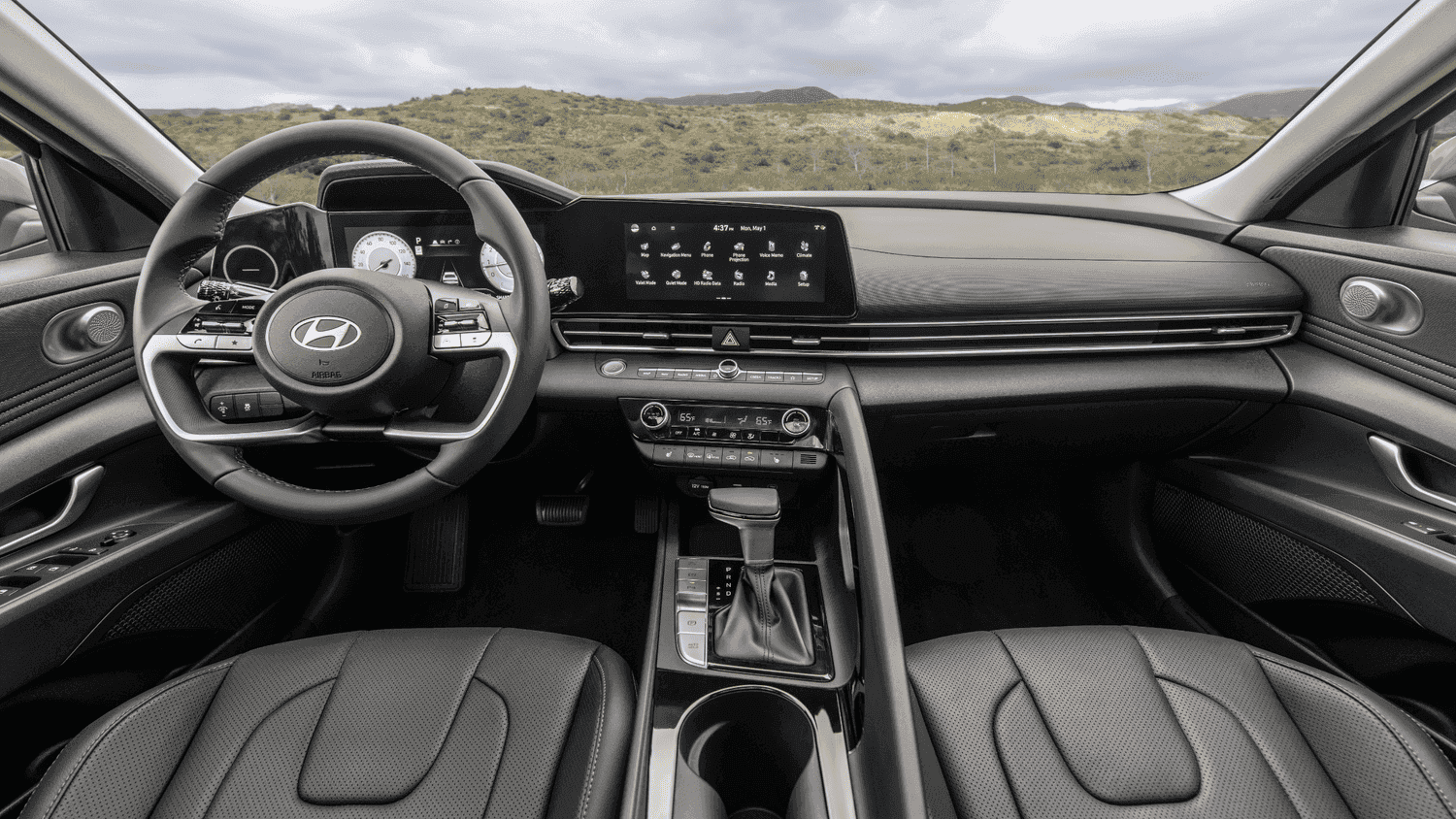
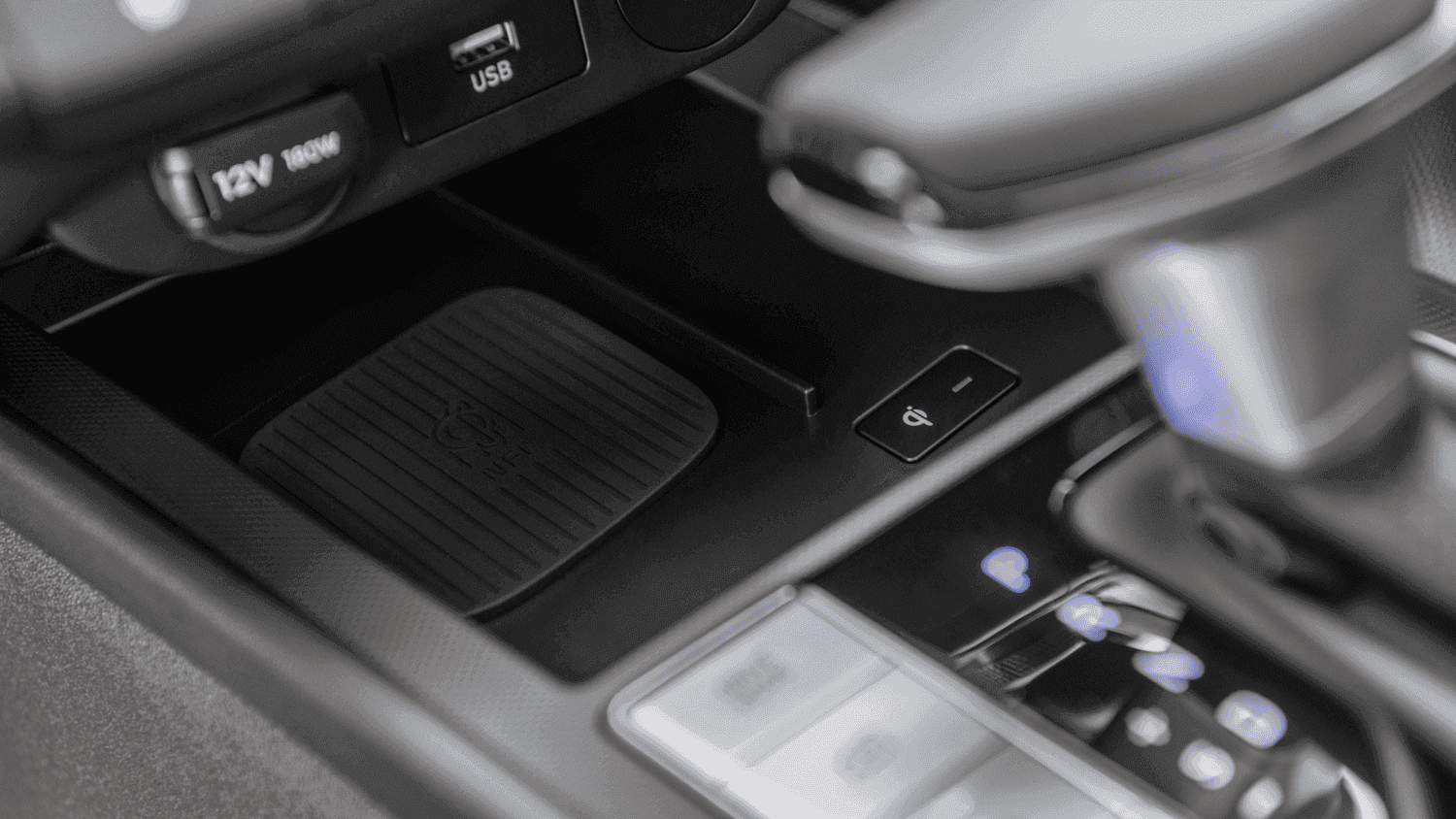
The dashboard incorporates technology with an 8-inch or optional 10.25-inch high-resolution touchscreen display, offering navigation, Apple CarPlay®, Android Auto™, and SiriusXM® satellite radio. The audio system ranges from six speakers in base models to an eight-speaker Bose® premium system in upper trims. Wireless charging pads and multiple USB ports provide connectivity and charging convenience.
Climate control is automatic dual-zone on most trims, with manual air conditioning available in base models. Rear seat heating ducts and window defrosters are included to enhance passenger comfort.
Safety Systems and Driver Assistance Technology
Safety equipment on the 2025 Hyundai Elantra is comprehensive. It includes advanced airbags for the driver and front passenger, side-impact airbags, and side curtain airbags covering both front and rear passengers. Seatbelt systems include pretensioners and adjustable anchors to improve restraint efficiency.
The vehicle structure incorporates crumple zones at the front and rear to absorb collision forces. Reinforced side body reinforcements and high-strength steel further increase occupant protection. Child safety is supported by LATCH anchors and rear door child safety locks.
Active safety features come standard across trims, including anti-lock brakes, electronic stability control, vehicle stability management, traction control, and hill start assist. The 2025 Hyundai Elantra is equipped with a tire pressure monitoring system and an emergency trunk release for additional safety.
Driver assistance systems include Forward Collision-Avoidance Assist with pedestrian detection on base trims, upgraded with cyclist and junction-turning detection on select trims. Blind-Spot Collision Warning and Rear Cross-Traffic Collision Avoidance are standard throughout the range. Lane Keeping Assist and Lane Following Assist maintain lane discipline during highway driving. Driver Attention Warning monitors driver fatigue, while High Beam Assist automatically switches lighting for oncoming traffic. Additional features such as Safe Exit Warning and Rear Occupant Alert are designed to prevent accidents during egress and unattended rear occupancy.
Some trims also offer Smart Cruise Control with Stop & Go functionality and Highway Drive Assist for semi-autonomous highway driving support.
Visit ALM Hyundai of Athens to Schedule a Test Drive
Designed to support a range of driving styles, the 2025 Hyundai Elantra offers both hybrid efficiency and turbocharged performance within a structurally refined chassis. Its suspension calibration and steering response promote confident control, while built-in safety systems and driver assistance technologies enhance day-to-day usability. These elements are engineered to work together seamlessly but are best understood in practice, not on paper. Schedule your test drive at ALM Hyundai of Athens near Loganville, GA, to experience the precision and versatility of the 2025 Hyundai Elantra firsthand.