

2026 Hyundai Tucson nearby Loganville, GA
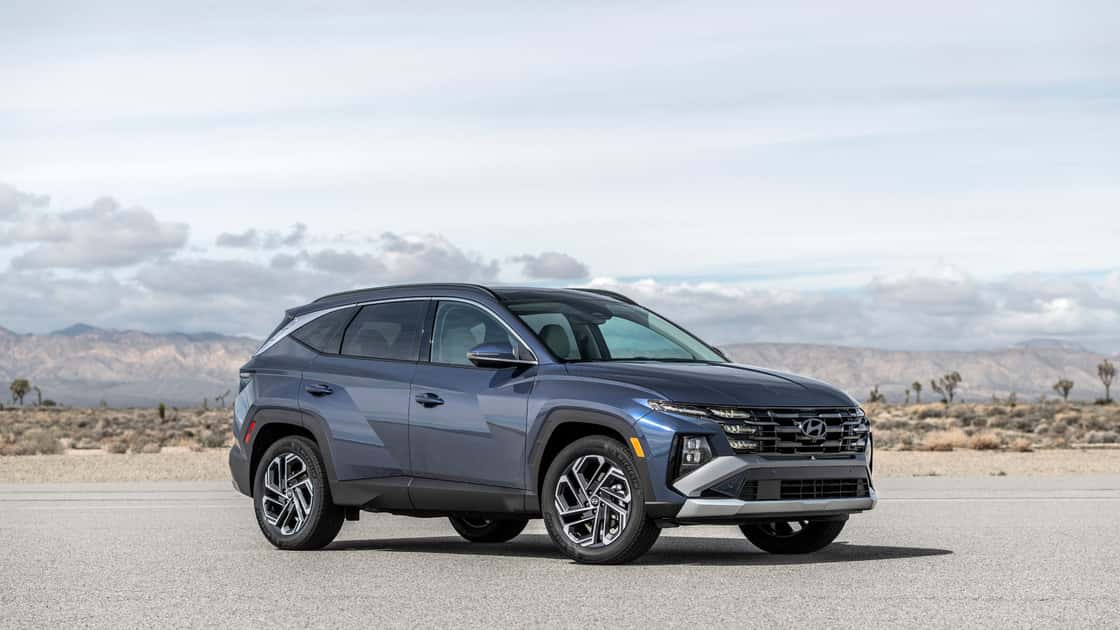
The 2026 Hyundai Tucson is a compact SUV with gas, hybrid, and plug-in hybrid configurations, a structured trim lineup, and a broad range of mechanical, technological, safety, comfort, and utility features. Its technical profile includes Smartstream® engine applications, available HTRAC all-wheel drive, torque-converter automatic transmissions, disc brakes, and a unibody chassis constructed with advanced high-strength and high-tensile steels. The model also integrates exterior lighting systems, wheel and tire packages, seating materials, digital displays, connected-car technology, and driver-assistance systems across SE, SEL, XRT, and Limited grades. Functional details such as five-passenger seating, split-folding rear seats, roof equipment, trailer pre-wiring, cargo-area hardware, and available liftgate technology support its SUV packaging.
Powertrain and Drivetrain Engineering
The 2026 Hyundai Tucson uses multiple propulsion systems to support internal-combustion, hybrid, and plug-in hybrid applications. Gas models use a 2.5L Smartstream® engine, while hybrid and plug-in hybrid models use a 1.6L turbocharged Smartstream® engine with electrified system components. Both engine families use aluminum block and head construction, variable intake systems, regular unleaded fuel, and SULEV30 emissions control. The drivetrain lineup also separates gas and electrified models through different automatic transmissions and drive-system configurations. These mechanical specifications give the 2026 Hyundai Tucson a defined technical structure across its gas, hybrid, and plug-in hybrid variants.
2.5L Smartstream® Gas Engine
The 2.5L Smartstream® GDI and MPI DOHC 16-valve inline 4-cylinder engine powers all internal combustion 2026 Hyundai Tucson models. This engine has a displacement of 2,497 cc and includes a full engine cover. Continuously Variable Valve Timing manages valve operation, while a variable intake system supports engine breathing. The 2.5L engine produces 187 horsepower at 6,100 rpm and 178 lb-ft of torque at 4,000 rpm. It also includes Idle Stop and Go, a hood insulator, front fender inner plastic covers, and a single-tip exhaust.
1.6L Turbocharged Hybrid and Plug-In Hybrid Engine
Hybrid and plug-in hybrid versions of the 2026 Hyundai Tucson use a 1.6L Turbo-GDI DOHC 16-valve inline 4-cylinder Smartstream® engine. This engine has a displacement of 1,598 cc and includes a full engine cover. Continuously Variable Valve Duration manages valve operation, and the engine also uses a variable intake system. As a gas engine only, the 1.6L turbocharged engine produces 178 horsepower at 5,500 rpm and 195 lb-ft of torque from 1,500 to 4,500 rpm. Hybrid and plug-in hybrid models include a single-tip exhaust, while the N Line application lists a single twin-tip exhaust configuration.
Hybrid and Plug-In Hybrid Electric Systems
The 2026 Hyundai Tucson Hybrid and Plug-In Hybrid both use a permanent magnet synchronous motor. The hybrid system produces 231 total system horsepower and 271 lb-ft of torque with the gas engine. Its electric motor alone provides 47.7 kW, equal to 64 horsepower, from 1,800 to 2,100 rpm and 195 lb-ft of torque at 1,700 rpm. The plug-in hybrid system produces 268 total system horsepower and 271 lb-ft of torque with the gas engine. Its electric motor alone produces 72 kW, equal to 97 horsepower, from 2,300 to 3,600 rpm and 224 lb-ft of torque at 2,200 rpm.
The hybrid and plug-in hybrid systems both use lithium-ion battery technology, but their electrical specifications differ. The hybrid battery system has a 270V maximum voltage, 1.49 kWh battery system capacity, and 64 kW battery power output. The plug-in hybrid battery system has a 360V maximum voltage, 13.8 kWh battery system capacity, and 88 kW battery power output. The plug-in hybrid also includes a charge port and a 7.2 kW onboard charger at 240V. The listed charge time for the plug-in hybrid is approximately two hours.
Transmission and Drive Systems
Gas models of the 2026 Hyundai Tucson use an 8-speed automatic torque-converter transmission. Hybrid and plug-in hybrid models use a 6-speed automatic torque-converter transmission. Front-wheel drive comes standard on 2.5L gas models, while HTRAC active on-demand all-wheel drive is optional on gas models and standard on 1.6T hybrid and plug-in hybrid models. A center-console-mounted drive mode system comes standard with both powertrain families. Steering wheel paddle shifters and Shift-By-Wire are available on 2.5L models and standard on 1.6T hybrid and plug-in hybrid models.
Chassis, Suspension, Steering, and Braking
The 2026 Hyundai Tucson combines unibody construction with suspension, steering, and braking systems designed to support controlled handling and stable vehicle behavior. Its body structure uses a monocoque layout with advanced high-strength steels and high-tensile steel as primary materials. The suspension system pairs MacPherson® struts in front with a multi-link rear layout, and both ends include stabilizer bars and gas-pressurized shock absorbers. The braking system uses disc brakes at all four wheels, supported by electronic brake-force management and driver-selectable or automatic assistance features. These systems work together to define the chassis response, braking function, and steering precision of the 2026 Hyundai Tucson.
Suspension and Body Structure
The front suspension of the 2026 Hyundai Tucson uses MacPherson® struts with coil springs. A front stabilizer bar comes standard, and gas-pressurized shock absorbers also come standard. The rear suspension uses a multi-link design with a rear stabilizer bar and gas-pressurized shock absorbers. This configuration gives the 2026 Hyundai Tucson independent rear suspension hardware within its compact SUV platform. The unibody construction provides the structural base for the powertrain, suspension mounting points, passenger compartment, and cargo area.
Braking and Steering Systems
All 2026 Hyundai Tucson models use ventilated front disc brakes measuring 12.8 inches by 1.2 inches, or 325 mm by 30 mm. Rear braking uses solid discs measuring 12.0 inches by 0.4 inches, or 300 mm by 10 mm. ABS with Electronic Brake-force Distribution uses four wheels, four channels, and four sensors. Downhill Brake Control is driver-selectable, while Hillstart Assist Control, Brake Assist, and an electronic parking brake with Automatic Vehicle Hold come standard. Motor Driven Power Steering uses a rack-and-pinion layout with a column-mounted configuration, a 13.7:1 overall ratio, 2.41 turns lock to lock, and a 38.6-foot curb-to-curb turning diameter.
Exterior Design, Lighting, and Utility Equipment
The exterior equipment on the 2026 Hyundai Tucson supports visibility, utility, trim identification, and functional convenience. Wheel sizes range from 17-inch alloy wheels to 19-inch alloy wheels depending on trim and powertrain configuration. Lighting equipment includes LED elements, automatic headlight operation, High Beam Assist, and grade-specific premium lighting details. Mirror, glass, wiper, roof, liftgate, and towing-related features vary across SE, SEL, XRT, and Limited models. Exterior details also include new anodized aluminum 2026 Hyundai Tucson badging and new anodized aluminum HEV and PHEV badges.
Wheels, Tires, Lighting, and Mirrors
The SE gas and Blue SE hybrid versions use 17 x 7.0J alloy wheels with 235/65R17 tires. The SEL, SEL Convenience, and XRT applications use 18 x 7.5J alloy wheels with 235/60R18 tires. Limited models use 19 x 7.5J alloy wheels with 235/55R19 tires. Gas models include a compact temporary spare tire, while hybrid and plug-in hybrid models use a tire mobility kit. Bi-LED headlights, LED front turn signals, LED daytime running lights, automatic headlights, High Beam Assist, and a roof-mounted center high-mount stop lamp come standard across SE, SEL, XRT, and Limited grades.
Exterior mirror features support visibility and driver awareness throughout the 2026 Hyundai Tucson lineup. Body-color side mirror housings appear on SE and SEL, while XRT uses black side mirror housings. The Limited use side mirror housings with premium accent treatment. Heated outside mirrors come on SEL, XRT, and Limited. Blind-Spot Collision Warning and Rear Cross-Traffic Collision-Avoidance Assist indicators come standard across all grades, while side mirrors with turn signal indicators are optional on SEL Convenience and standard on XRT and Limited.
Glass, Roof Equipment, Liftgate, and Towing Features
The 2026 Hyundai Tucson includes solar glass for the front doors and windshield across the lineup. An acoustic laminated windshield also comes standard, and Limited extends acoustic laminated glass to the front side windows. Privacy glass for the rear, quarter, and back glass comes on the SEL, XRT, and Limited. Front variable intermittent windshield wipers and an intermittent rear window wiper and washer come standard on all grades. Front aero wipers come on SEL, XRT, and Limited, while Limited also adds rain-sensing wipers.
Roof and cargo-access equipment adds functional flexibility to the 2026 Hyundai Tucson. SEL, XRT, and Limited include roof side rails, with XRT using a bridge-type rail design. Roof cross rails are listed as port-installed options on SEL, XRT, and Limited. A hands-free Smart Liftgate with auto open and adjustable height settings comes on SEL, XRT, and Limited. Trailer pre-wiring comes standard on every grade. A tow hitch is listed as a port-installed option on SE, SEL, and Limited, while XRT includes it as a port-installed model feature.
Interior Comfort, Seating, and Cargo Function
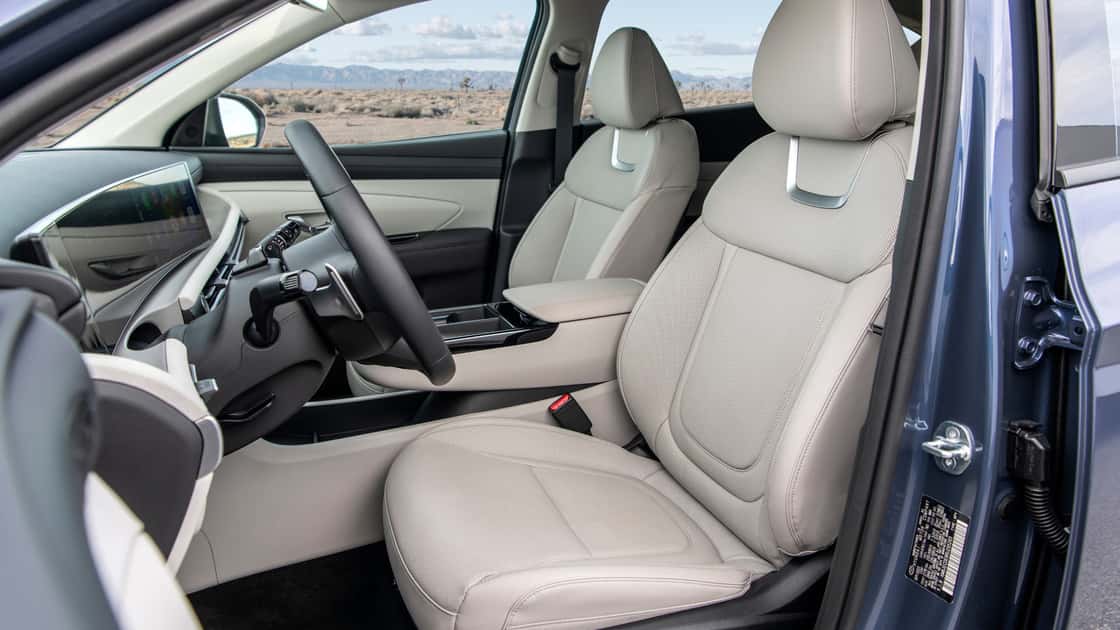
The 2026 Hyundai Tucson cabin seats five passengers and organizes comfort features by trim grade. Interior equipment includes several seating surfaces, driver and passenger seat adjustments, heated and ventilated seating availability, rear-seat folding hardware, and cargo-area utility features. SE and SEL use cloth-trimmed seats in their standard configurations, XRT uses H-Tex® leatherette-trimmed seats, and Limited uses leather-trimmed seats. The cabin also includes HVAC equipment, steering wheel controls, lighting features, storage areas, cupholders, power outlets, and cargo anchors. These interior specifications support passenger comfort, rear-seat flexibility, and cargo management without changing the model’s technical focus.
Seating and Passenger Comfort
All 2026 Hyundai Tucson grades have five-passenger seating. SE includes a 6-way adjustable driver’s seat, while SEL, XRT, and Limited include an 8-way power driver’s seat with power lumbar support. Heated front seats with three-step adjustment come on the SEL, XRT, and Limited. Limited adds an 8-way power front passenger seat, ventilated front seats, heated rear seats with high, medium, and low settings, and an Integrated Memory System for the driver’s seat and outside mirrors with a reverse dip function. Every grade includes a 60/40 split fold-down and reclining rear seatback with adjustable head restraints, remote release folding rear seats from the cargo area, and a dual-level cargo floor that is not available on plug-in hybrid models.
Climate Control, Cabin Details, and Storage
SE includes manual air conditioning, while SEL, XRT, and Limited include dual automatic temperature control with Auto Defogger, capacitive-touch controls, and knobs for temperature adjustment. Hybrid and plug-in hybrid SE models also list dual automatic temperature control with Auto Defogger. After-Blow logic, an external temperature display, a heater, rear-seat heater ducts, a cabin air filter, and a rear window defroster with a timer come standard. Floor console-mounted rear A/C vents are included on SEL, XRT, and Limited, and they also appear on hybrid and plug-in hybrid SE models. The steering wheel includes tilt and telescoping adjustment, audio controls, Bluetooth® controls, and cruise control buttons across all grades.
Interior storage and convenience equipment gives the 2026 Hyundai Tucson a practical cabin layout. A fixed front center armrest storage box, dual front cupholders, a rear center armrest with cupholders, and two 12-volt outlets come standard. All grades include four assist grips, one rear coat hanger, a dampened glove compartment, six cargo tie-down anchors, and a bag hook on the second-row seatback. The Limited adds an illuminated glove compartment, while the SEL Convenience offers wireless device quick charging and an auto-dimming mirror. Limited includes 15W wireless device quick charging and an auto-dimming mirror with HomeLink.
Multimedia, Displays, Connectivity, and Convenience Technology
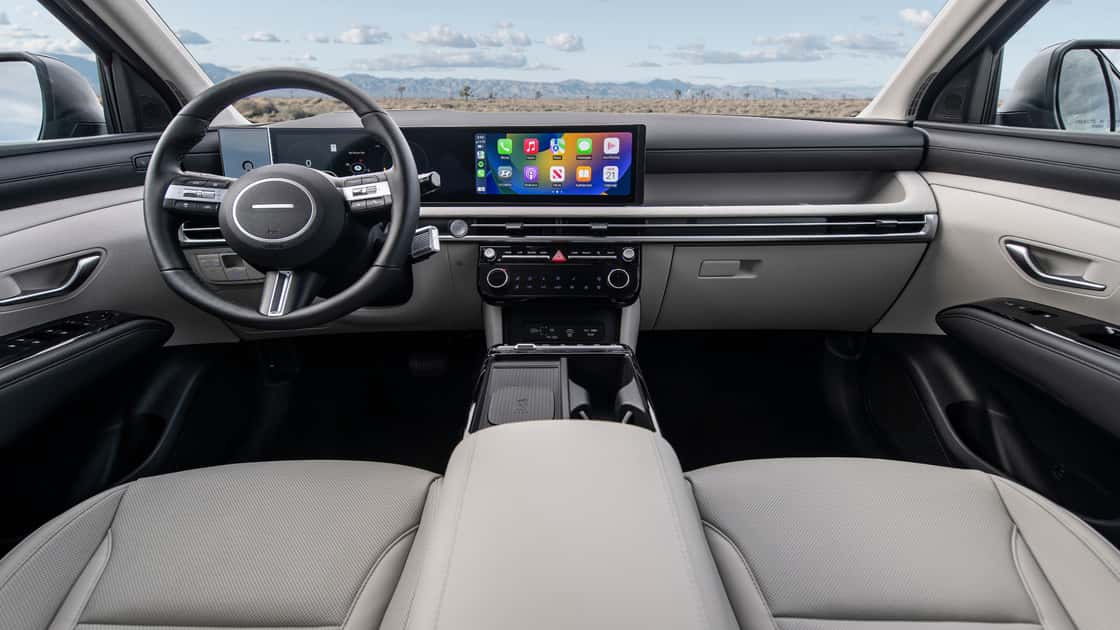
Technology in the 2026 Hyundai Tucson centers on digital interfaces, smartphone integration, connected services, charging access, and driver convenience functions. The lineup includes 12.3-inch touchscreen systems, wireless smartphone compatibility, available onboard navigation, and available premium audio. Instrumentation ranges from a 4.2-inch Multi-Information Display to an available 12.3-inch digital instrument cluster. The Bluelink®+ Connected Car System comes standard across the model range. Additional technology includes over-the-air update capability, Digital Key availability, Hyundai Pay availability, Remote Smart Parking Assist on Limited, and multiple USB Type-C charging points.
Audio, Multimedia, and Digital Displays
SE and SEL include a 12.3-inch color touchscreen with AM/FM, HD Radio™, SiriusXM® Satellite Radio, and a 6-speaker ccNC Lite system. A 12.3-inch color touchscreen with onboard navigation is available on ICE SEL Convenience and standard on Limited. The Limited also includes a Bose® Premium Audio System with a digital 8-channel amplifier, custom equalization, Digital Signal Processing, Dynamic Speed Compensation, and eight speakers. Wireless Apple CarPlay® and Android Auto™, SiriusXM® Satellite Radio, HD Radio™ Technology, controller over-the-air update capability, front dual USB Type-C ports, second-row dual USB ports, and a rearview camera come standard across all grades. Dynamic Voice Recognition and map and multimedia software over-the-air update capability are available on ICE SEL Convenience and standard on Limited.
Instrumentation provides the driver with vehicle data, operating indicators, and safety-system status. SE and SEL include a 4.2-inch Multi-Information Display. A 12.3-inch digital instrument cluster is optional on SEL Convenience and standard on Limited. Speedometer, tachometer, coolant temperature, fuel level, digital odometer, trip odometer, PRND with gear position in manual mode, Smart Cruise Control with Stop & Go, turn signal and hazard indicators, High Beam Assist indicators, parking brake indicators, and safety system indicators come across the lineup. Adjustable illumination level also comes standard across all grades.
Connected and Convenience Features
The Bluelink®+ Connected Car System comes standard on SE, SEL, XRT, and Limited. Hyundai Pay is optional on ICE SEL Convenience and standard on Limited. Proximity key entry with push-button start comes standard on all grades, as do power door locks and remote keyless entry with alarm and panic functions. Remote hood release, a storage tray below the 12-volt outlet, and proximity keys with detachable valet keys are also included. Hyundai Digital Key 2 Premium functionality with NFC, BLE, and UWB-type operation is optional on ICE SEL Convenience and standard on Limited.
Limited expands the technology package with several additional convenience features. Remote Smart Parking Assist appears on Limited. Smart Cruise Control with Stop & Go comes standard across the lineup, and Limited lists Smart Cruise Control 2 on vehicles equipped with Highway Driving Assist 1. Interior lighting includes a central dome light with delay and auto cut-off, front and rear LED overhead lighting, LED cargo-area lighting, hazard switch illumination, and illuminated power window switches across all grades. Ambient interior lighting with 64-color capability appears on XRT and Limited and is optional on SEL Convenience.
Safety and Driver Assistance Systems
The 2026 Hyundai Tucson includes restraint systems, active safety technology, passive safety equipment, and driver-assistance features across the lineup. Its safety equipment includes advanced front airbags, side-impact protection, side air curtains, rear side airbags, seatbelt systems, child-seat anchors, and child safety locks. Active systems include braking support, stability management, traction control, tire-pressure monitoring, collision-avoidance assistance, lane support, attention warnings, and speed-limit assistance. Limited adds expanded parking and camera-based technologies, while several advanced systems are optional on ICE SEL Convenience. This safety structure supports occupant protection, driver awareness, braking control, lane guidance, and low-speed maneuvering visibility.
Restraints, Stability, and Standard Assistance Features
All 2026 Hyundai Tucson models include advanced driver and front passenger airbags, an Occupant Classification System, a seat weight sensor, and a seat track sensor. The restraint system also includes driver and front passenger side-impact thorax airbags, side air curtains for front and rear passengers with rollover sensors, and rear side airbags. Three-point ELR outboard seatbelts, a rear inboard three-point ELR seatbelt, a 5-position seatbelt reminder, adjustable front-seat shoulder belt anchors, and front and rear outboard seatbelt pretensioners with load limiters come standard. LATCH lower anchors and upper tether anchors, a power window lock-out button, and rear child safety locks are also included. Anti-lock Braking System with 4-wheel disc brakes, Electronic Stability Control with Traction Control and Brake Assist, Vehicle Stability Management, and Tire Pressure Monitoring System with individual tire indicators come on all models.
Forward Collision-Avoidance Assist with Pedestrian, Cyclist, and Junction Turning Detection comes standard on SE, SEL, XRT, and Limited. Blind-Spot Collision Warning and Rear Cross-Traffic Collision-Avoidance Assist also come standard across the lineup. Driver Attention Warning, Lane Keeping Assist, Lane Following Assist, steering wheel haptic feedback for Lane Keeping Assist and Blind-Spot Collision-Avoidance Assist, Intelligent Speed Limit Assist, and Safe Exit Warning are also standard. Rear Occupant Alert comes on SE, SEL, and XRT, while Advanced Rear Occupant Alert with radar-type sensing is optional on SEL Convenience and standard on Limited. Bodyside reinforcements, an anti-theft system integrated with remote keyless entry and a panic alarm, and an immobilizer are included across the grade structure.
Advanced Parking, Camera, and Highway Assistance
Limited adds Parking Collision-Avoidance Assist in Reverse, Parking Distance Warning for front, rear, and side, Surround View Monitor, and Blind-Spot View Monitor. Forward Attention Warning with an in-cabin camera and Driver Demand Monitoring System is optional on ICE SEL Convenience and standard on Limited. Highway Driving Assist 1 is optional on ICE SEL Convenience and standard on Limited. Navigation-based Smart Cruise Control with Curve Control is also optional on ICE SEL Convenience and standard on Limited. These features expand the assistance package of the 2026 Hyundai Tucson through camera support, navigation-linked speed management, highway assistance, and parking area awareness.
Dimensions, Capacity, and Functional Packaging
The 2026 Hyundai Tucson uses exterior and interior dimensions that define its compact SUV footprint and passenger space. The wheelbase measures 108.5 inches, overall length measures 182.7 inches, and overall width measures 73.4 inches. Overall height with roof rails measures 65.6 inches for front-wheel-drive models and 66.3 inches for all-wheel-drive models. Minimum ground clearance measures 7.1 inches for 2WD and 8.3 inches for AWD, while the coefficient of drag is listed at 0.33. Roof rails have a listed load capacity of 220 pounds.
Interior dimensions support the five-passenger layout across ICE, hybrid, and plug-in hybrid configurations. Front and rear headroom without a sunroof measures 40.1 inches and 39.5 inches across the listed configurations. Front and rear leg room measures 41.4 inches and 41.3 inches on ICE and hybrid models, while plug-in hybrid models list 41.4 inches in front and 39.5 inches in the rear. Shoulder room measures 57.6 inches in front and 56.0 inches in the rear, and hip room measures 54.5 inches in front and 53.9 inches in the rear. Fuel tank capacity measures 14.3 gallons for ICE models, 13.7 gallons for hybrid models, and 11.1 gallons for plug-in hybrid models.
Schedule a Test Ride nearby Loganville, GA
Drivers can schedule a 2026 Hyundai Tucson test drive with ALM Hyundai of Athens, nearby Loganville, GA to evaluate its performance, technology, comfort, handling, and safety features in person. Our team can explain the differences among the gas, hybrid, and plug-in hybrid configurations, including their transmissions, available HTRAC all-wheel-drive equipment, and electrified system specifications. We can also review cabin technologies such as the 12.3-inch touchscreen, available digital instrument cluster, Bluelink®+ connectivity, available Bose® audio, and available Hyundai Digital Key 2 Premium functionality. A test drive gives shoppers a direct way to assess steering response, braking feel, seating comfort, visibility, cargo access, and driver-assistance functions. Contact our team to arrange a visit and compare the 2026 Hyundai Tucson grades that match your preferred equipment level.