

2026 Hyundai Tucson Hybrid near Commerce, GA
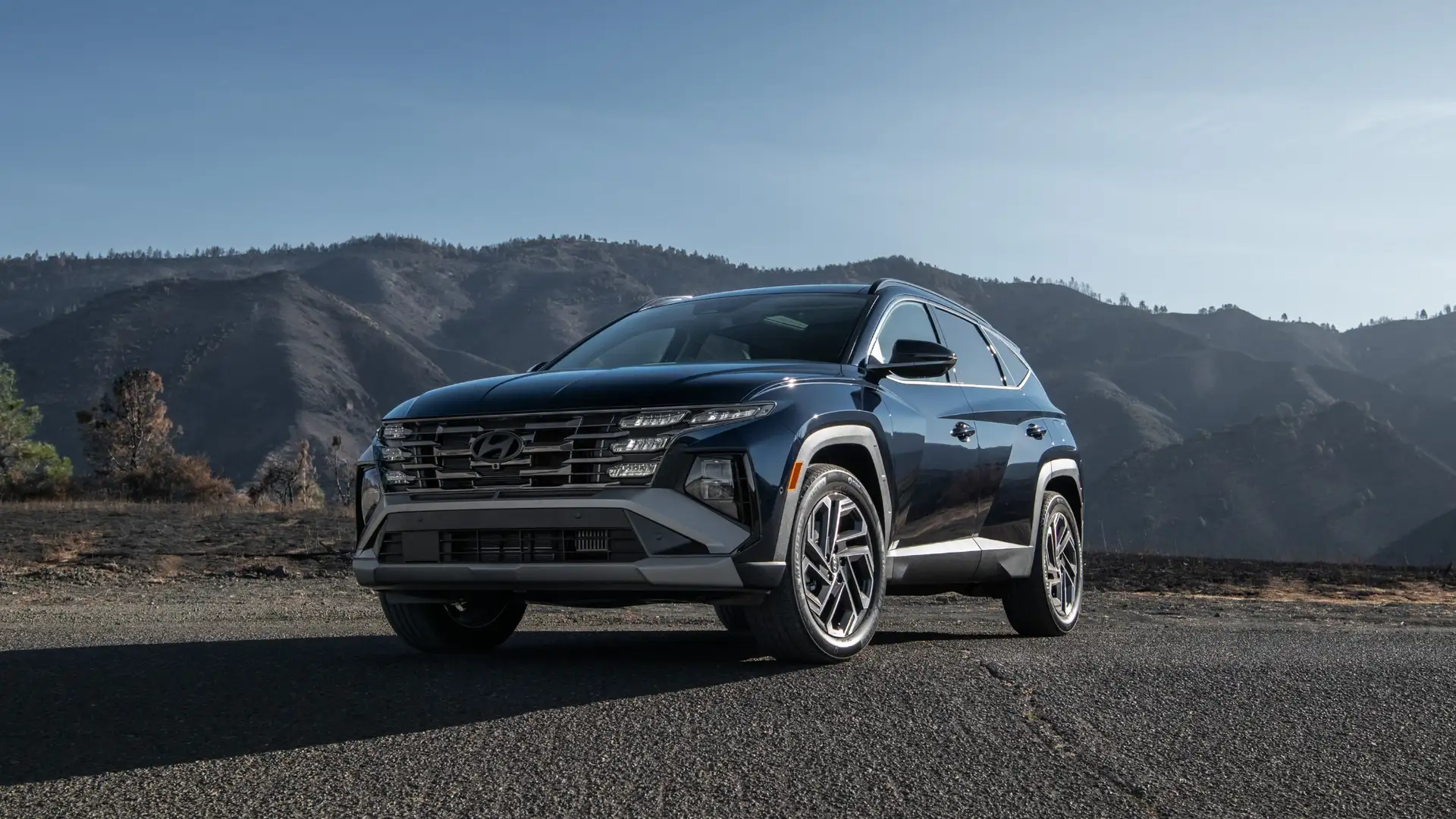
The 2026 Hyundai Tucson Hybrid is engineered as a compact hybrid SUV that prioritizes mechanical efficiency, system integration, and structural balance. Every major component, from its hybrid propulsion system to its safety architecture, is designed to operate within defined performance parameters that support consistent driving behavior across varied conditions. This model integrates a turbocharged gasoline engine with an electric motor and lithium-ion battery, delivering combined output figures that exceed those of traditional non-hybrid configurations while maintaining compliance with strict emissions standards.
The 2026 Hyundai Tucson Hybrid is positioned as a functional vehicle rather than a concept-driven design. Its specifications reflect deliberate engineering decisions focused on drivetrain efficiency, chassis rigidity, and system interoperability. The following sections examine these components in detail, based solely on verified technical specifications.
Turbocharged Hybrid Powertrain Architecture
The 2026 Hyundai Tucson Hybrid uses a 1.6-liter Turbo-GDI Smartstream® inline four-cylinder engine paired with an electric traction motor. The gasoline engine operates with dual overhead camshafts, 16 valves, and Continuously Variable Valve Duration technology. CVVD adjusts valve opening duration independently of valve timing, allowing the engine to switch between efficiency-focused and power-focused operation depending on load and throttle input.
The gasoline engine produces 178 horsepower at 5,500 rpm and 195 lb-ft of torque across a broad range from 1,500 to 4,500 rpm. This torque profile supports consistent acceleration at low and mid-range speeds. The electric motor is a permanent magnet synchronous unit that contributes 64 horsepower and 195 lb-ft of torque. When operating together, the hybrid system delivers a combined output of 231 horsepower and 271 lb-ft of torque.
Energy for the electric motor is stored in a 1.49 kWh lithium-ion battery operating at a maximum of 270 volts. The system supports regenerative braking, which converts kinetic energy into stored electrical energy during deceleration. The hybrid configuration is optimized for automatic operation and does not require external charging. The powertrain operates on regular unleaded fuel and meets SULEV30 emissions requirements.
Transmission Calibration and All-Wheel Drive Distribution
Power from the hybrid system is routed through a 6-speed automatic transmission with a torque converter. This transmission is engineered for hybrid compatibility and uses fixed gear ratios to maintain predictable power delivery and driveline durability. Gear changes are electronically managed and coordinated with electric motor output to reduce shift shock and maintain consistent torque flow.
The 2026 Hyundai Tucson Hybrid includes Shift-by-Wire technology, replacing mechanical shift linkages with electronic controls. This design reduces component complexity and improves cabin packaging. Steering wheel-mounted paddle shifters are standard, allowing the driver to manually select gears when specific control is required.
HTRAC all-wheel drive is available and uses an active on-demand system that adjusts torque distribution between the front and rear axles. The system monitors wheel slip, throttle input, and road conditions to determine optimal torque allocation. A center-console-mounted drive mode selector allows adjustment of throttle response and transmission behavior to suit different driving environments.
Suspension Geometry and Steering Response
The chassis of the 2026 Hyundai Tucson Hybrid is supported by a fully independent suspension system. The front suspension uses a MacPherson® strut design with coil springs and a stabilizer bar. The rear suspension uses a multi-link layout, also equipped with coil springs, gas-pressurized shock absorbers, and a stabilizer bar. This configuration balances vertical compliance with lateral stability, allowing the vehicle to maintain consistent tire contact across uneven surfaces.
Steering is provided by a motor-driven power steering system mounted to the steering column. The system uses a rack-and-pinion layout with a 13.7:1 overall steering ratio and requires 2.41 turns from lock to lock. This setup allows controlled steering inputs at highway speeds while maintaining maneuverability in confined spaces. The turning diameter measures 38.6 feet from curb to curb.
Braking Systems and Stability Controls
The 2026 Hyundai Tucson Hybrid uses four-wheel disc brakes. The front brakes are ventilated discs measuring 12.8 inches in diameter, while the rear brakes are solid discs measuring 12.0 inches. The braking system includes anti-lock braking, electronic brake-force distribution, and brake assist.
Electronic Stability Control and Traction Control System operate together to manage wheel slip and directional stability. Vehicle Stability Management integrates braking and engine output adjustments during evasive maneuvers. Hillstart Assist Control prevents rollback on inclines, while Downhill Brake Control maintains controlled descent speed on steep grades. An electronic parking brake with automatic vehicle hold functionality is standard.
Structural Design and Exterior Dimensions
The body structure of the 2026 Hyundai Tucson Hybrid uses a unibody construction composed primarily of advanced high-strength steel and high-tensile steel. This approach increases torsional rigidity while controlling overall vehicle weight. The wheelbase measures 108.5 inches, contributing to balanced weight distribution and interior space utilization.
Overall vehicle length is 182.7 inches, with a width of 73.4 inches. Height measures 65.6 inches for front-wheel-drive configurations and 66.3 inches for all-wheel-drive configurations. Ground clearance ranges from 7.1 inches to 8.3 inches depending on drivetrain configuration. The coefficient of drag is rated at 0.33, supporting aerodynamic efficiency.
Roof rails are standard and rated to support up to 220 pounds of load. Exterior lighting includes Bi-LED headlights, LED daytime running lights, LED taillights, and high beam assist functionality.
Interior Seating Structure and Cargo Capacity
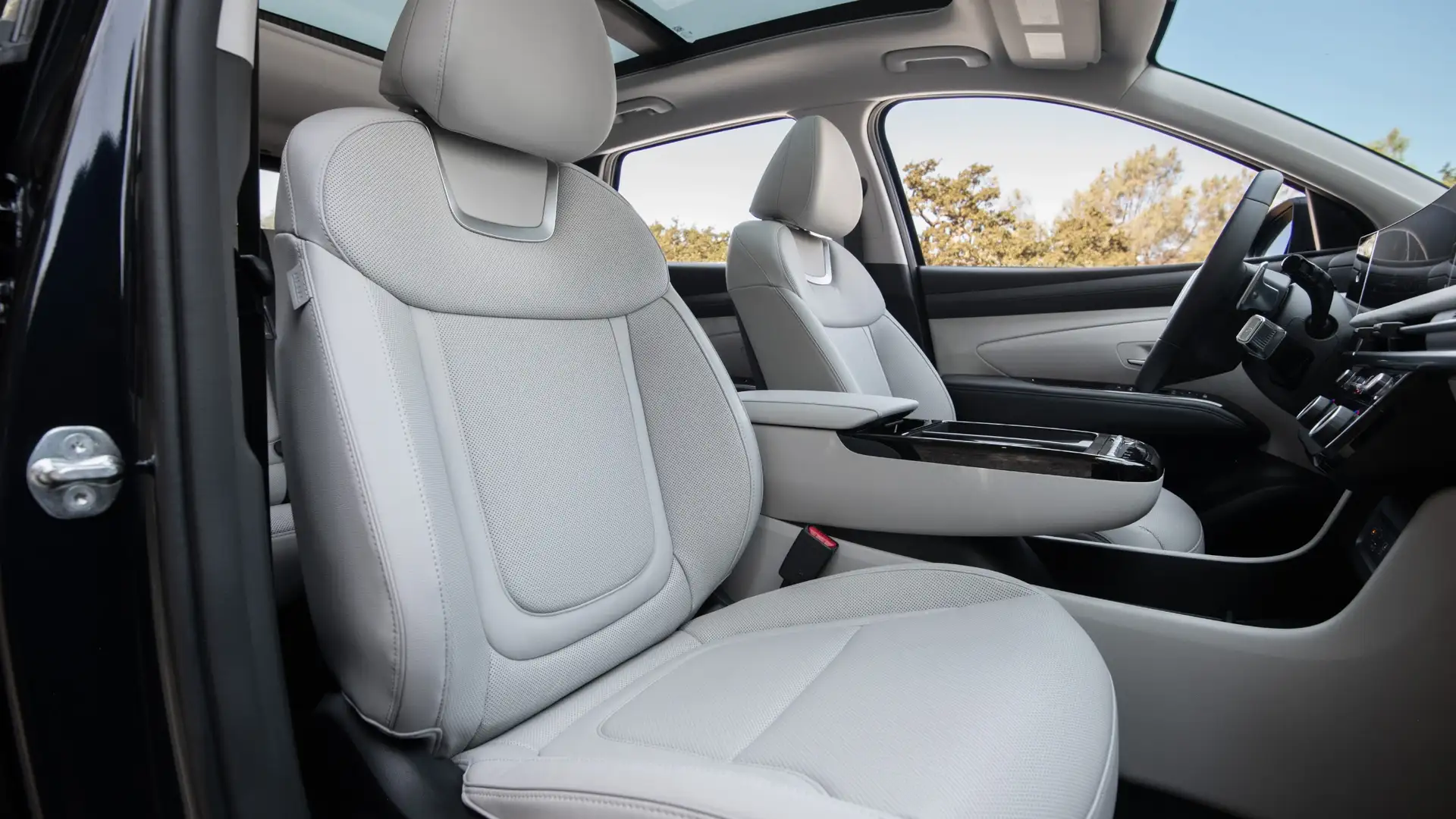
The 2026 Hyundai Tucson Hybrid accommodates five occupants. Seating materials vary by trim and include cloth, H-Tex® leatherette, and leather-trimmed upholstery. Front seating includes available power adjustment with lumbar support, heating functionality, and ventilation on higher trims. Rear seating uses a 60-40 split-folding design with reclining seatbacks and adjustable head restraints.
Cargo volume measures 38.7 cubic feet with rear seats in the upright position. When rear seats are folded, cargo volume expands to 74.5 cubic feet based on SAE measurements. A dual-level cargo floor allows adjustment of load height and storage configuration.
Digital Interfaces and System Connectivity
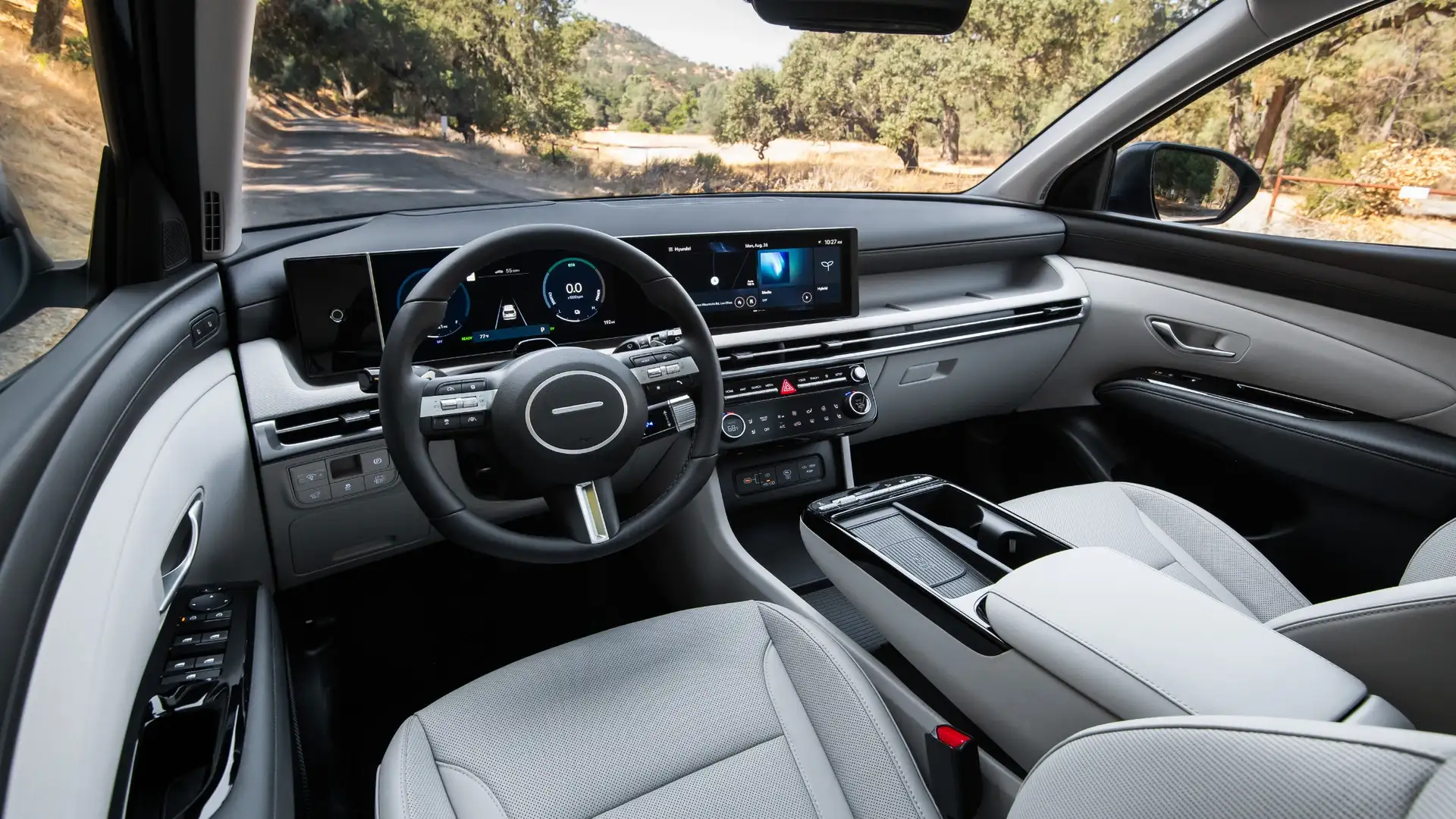
The infotainment system uses a 12.3-inch color touchscreen. Depending on configuration, the system includes onboard navigation. Wireless Apple CarPlay® and Android Auto™ are standard, along with SiriusXM® satellite radio and HD Radio™ technology. Over-the-air update capability allows software updates for infotainment and navigation systems without physical service intervention.
USB-C ports are provided in the front row for data and charging functions, with additional charging ports in the second row. An available Bose® premium audio system includes eight speakers and a digital amplifier with custom equalization.
Instrumentation options include a 12.3-inch digital instrument cluster that displays speed, hybrid system status, safety alerts, and driver-assistance indicators.
Active and Passive Safety Integration
The 2026 Hyundai Tucson Hybrid includes a comprehensive safety system incorporating both passive restraint technologies and active driver-assistance systems. Airbag coverage includes advanced front airbags, side-impact airbags, curtain airbags with rollover sensors, and rear side airbags. Seatbelt systems include pretensioners, load limiters, and adjustable anchors.
Active safety technologies include Forward Collision-Avoidance Assist with pedestrian, cyclist, and junction turning detection. Blind-Spot Collision Warning and Rear Cross-Traffic Collision-Avoidance Assist monitor adjacent traffic and rearward movement. Lane Keeping Assist and Lane Following Assist support steering input to maintain lane position. Driver Attention Warning monitors driving patterns for signs of fatigue. Intelligent Speed Limit Assist uses camera data to display detected speed limits.
Available features include Highway Driving Assist, Surround View Monitor, Blind-Spot View Monitor, and Parking Collision-Avoidance Assist.
Visit ALM Hyundai of Athens near Commerce, GA
A detailed evaluation of the 2026 Hyundai Tucson Hybrid allows drivers to assess its hybrid power delivery, transmission behavior, and integrated safety systems under normal driving conditions. Observing how the electric motor supplements turbocharged output during acceleration provides practical insight into system coordination. Experiencing the suspension tuning and steering response highlights the vehicle’s structural balance and chassis design. Reviewing the digital interfaces during operation demonstrates system clarity and responsiveness. Interested drivers may arrange a test drive through ALM Hyundai of Athens near Commerce, GA to examine the technical execution of the 2026 Hyundai Tucson Hybrid in person.