

2026 Hyundai Santa Fe nearby Loganville, GA
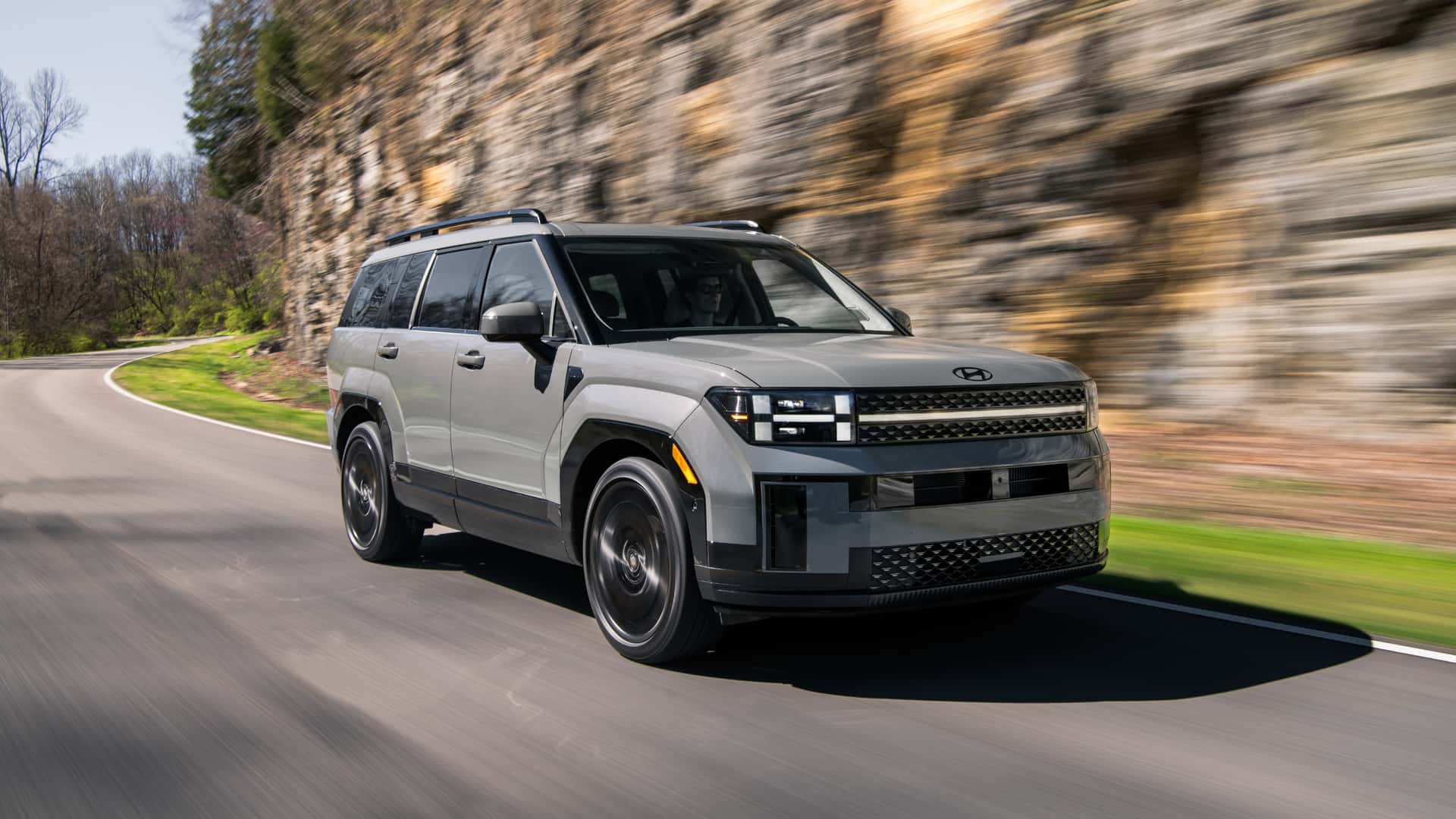
The 2026 Hyundai Santa Fe is a midsize SUV engineered with turbocharged powertrains, available hybrid capability, three-row seating, available HTRAC all-wheel drive, and a broad range of driver assistance and convenience technologies. Its lineup includes gasoline and hybrid configurations, each built around aluminum engine construction, turbocharging, direct injection, and transmission systems matched to the specific powertrain. The vehicle also uses a unibody structure with high-strength steel, independent suspension components, four-wheel disc brakes, and motor-driven power steering. Inside, the 2026 Hyundai Santa Fe provides seating for six or seven passengers, trim-specific materials, advanced display systems, connected services, and practical cargo solutions.
Powertrain and Hybrid System Engineering
The 2026 Hyundai Santa Fe offers two turbocharged powertrain configurations that support different driving and efficiency priorities within the lineup. Gasoline models use a Smartstream® 2.5L Turbo GDI plus MPI DOHC 16-valve inline four-cylinder engine with 2,497 cc of displacement. Hybrid models use a Smartstream® 1.6L Turbo GDI DOHC 16-valve inline four-cylinder engine with 1,598 cc of displacement. Both engines use aluminum block and head construction, turbocharging, gasoline direct injection, a 10.5:1 compression ratio, and regular unleaded fuel. These shared engineering details give the 2026 Hyundai Santa Fe lineup a consistent technical foundation while allowing each powertrain to serve a distinct role.
Turbocharged Gasoline Engine Specifications
The 2.5L turbocharged gasoline engine produces 277 horsepower at 5,800 rpm and 311 lb-ft of torque at 4,000 rpm. Its bore and stroke measure 88.5 mm by 101.5 mm, and the engine includes a hood insulator as standard equipment. The gasoline powertrain also includes Idle Stop & Go, which supports efficiency during stop-and-go operation. Hyundai pairs this engine with an 8-speed automatic transmission, SHIFTRONIC® manual shift paddle shifters, and Shift-By-Wire control. The system uses a single-tip exhaust configuration and carries a SULEV 30 emissions control rating.
Hybrid Powertrain Specifications
The 2026 Hyundai Santa Fe Hybrid combines the 1.6L turbocharged engine with a permanent magnet synchronous motor and a lithium-ion battery. The gasoline engine produces 178 horsepower at 5,500 rpm and 195 lb-ft of torque from 1,500 to 4,500 rpm. The electric motor produces 44.2 kW, estimated at 60 horsepower, from 1,600 to 2,100 rpm and generates 195 lb-ft of torque. Total combined system output reaches 231 horsepower, while combined system torque measures 271 lb-ft from 1,000 to 4,100 rpm. The hybrid battery system uses a 270V maximum voltage rating and a 1.49 kWh capacity, and the hybrid drivetrain supports either front-wheel drive or HTRAC all-wheel drive.
Transmission, Drivetrain, Steering, and Chassis Systems
The 2026 Hyundai Santa Fe uses powertrain-specific transmission hardware and offers front-wheel drive or available HTRAC all-wheel drive, depending on configuration. Gasoline and hybrid models include Drive Mode Select through a center-console-mounted control. HTRAC all-wheel drive operates as an active on-demand system and varies torque distribution based on selected drive modes and traction needs. Comfort, Eco, Sport, and Smart modes distribute torque from 100:0 to 50:50, while Snow mode varies distribution from 80:20 to 50:50. XRT models add Sand and Mud mode distribution at 50:50, and AWD Lock also provides a 50:50 torque split.
Transmission Hardware and Gear Ratios
The gasoline 2.5T powertrain uses an 8-speed automatic transmission, while the 1.6T hybrid powertrain uses a 6-speed automatic transmission identified as A6MF2H-2. Both systems include SHIFTRONIC® manual shift paddle shifters and Shift-By-Wire operation. The 2.5T transmission uses ratios of 4.808 in first gear, 2.901 in second, 1.864 in third, 1.424 in fourth, 1.219 in fifth, 1.000 in sixth, 0.799 in seventh, 0.648 in eighth, and 3.425 in reverse. The 1.6T hybrid transmission uses ratios of 4.639 in first gear, 2.826 in second, 1.841 in third, 1.386 in fourth, 1.000 in fifth, 0.772 in sixth, and 3.385 in reverse. Both front-wheel-drive and all-wheel-drive configurations use a final gear ratio of 3.510.
Suspension, Brakes, Steering, and Body Structure
The 2026 Hyundai Santa Fe uses a MacPherson® strut front suspension with coil springs, a stabilizer bar, and gas-pressurized shock absorbers with advanced valving. The rear suspension uses a multi-link independent layout with separated springs and shocks, a stabilizer bar, and gas-pressurized shock absorbers with advanced valving. Its body structure uses a unibody monocoque layout with high-strength steel as the primary material. Braking hardware includes 12.8-inch ventilated front discs and 12.8-inch solid rear discs on all models. The braking system also includes four-wheel ABS with Electronic Brake-force Distribution, Downhill Brake Control, Hillstart Assist Control, Brake Assist, Trailer Sway Control, and an electric parking brake with Auto Vehicle Hold.
Exterior Equipment, Lighting, Wheels, and XRT Features
The 2026 Hyundai Santa Fe applies trim-specific exterior equipment while maintaining a consistent set of visibility and functional features across the lineup. Standard lighting includes LED projector headlights with LED accents, LED daytime running lights, LED interior cabin lights, a roof-mounted center high-mount stop lamp, automatic headlights, LED taillights, and High Beam Assist. Exterior glass content includes solar front glass on the windshield and front doors, privacy glass on the rear, quarter, and back glass, and acoustic laminated glass for the windshield and front side windows. Wiper equipment includes front 2-speed variable intermittent windshield wipers and an intermittent rear window wiper and washer. Limited and Calligraphy models add rain-sensing windshield wipers for added convenience during changing weather conditions.
Wheels, Tires, Mirrors, and Exterior Utility
SE and SEL models use 18 x 7.5J alloy wheels with 235/60 R18 Goodyear tires, while SE Hybrid and SEL Hybrid models also use 18-inch alloy wheels. XRT models use 18 x 7.5J alloy wheels with 245/60R18 Continental all-terrain tires. Limited models use 20 x 8.5J alloy wheels with 255/45 R20 tires, with Kumho tires on front-wheel-drive models and Pirelli tires on all-wheel-drive models. Calligraphy gasoline models use 21 x 8.5J alloy wheels with 245/45 R21 Pirelli tires, while Calligraphy Hybrid models use 20-inch alloy wheels. All models include heated side mirrors, a hands-free smart liftgate with auto-open and adjustable height setting, a shark-fin roof antenna, a trailer pre-wire connection, and a body-color rear spoiler integrated with the center high-mount stop lamp.
XRT-Specific Equipment
The XRT configuration gives the 2026 Hyundai Santa Fe distinct exterior, interior, and functional equipment. Exterior changes include a glossy dark chrome radiator grille, black outside mirror scalp, matte metal black C-pillar garnish, black daylight opening molding, matte black H logo and lettering, black front grille elements, and matte or metallic black roof rails. The XRT also uses 18-inch black wheels with Continental all-terrain tires and includes XRT emblem availability as port-installed equipment. Inside, the XRT uses black H-Tex® seating with an embroidered logo on the seatback. Functionally, the XRT increases towing capacity from 3,500 pounds to 4,500 pounds when properly equipped with trailer brakes, adds 1 inch of ground clearance, uses AWD only, and provides greater approach and departure angles than the standard design.
Interior Seating, Comfort, Cargo, and Cabin Controls
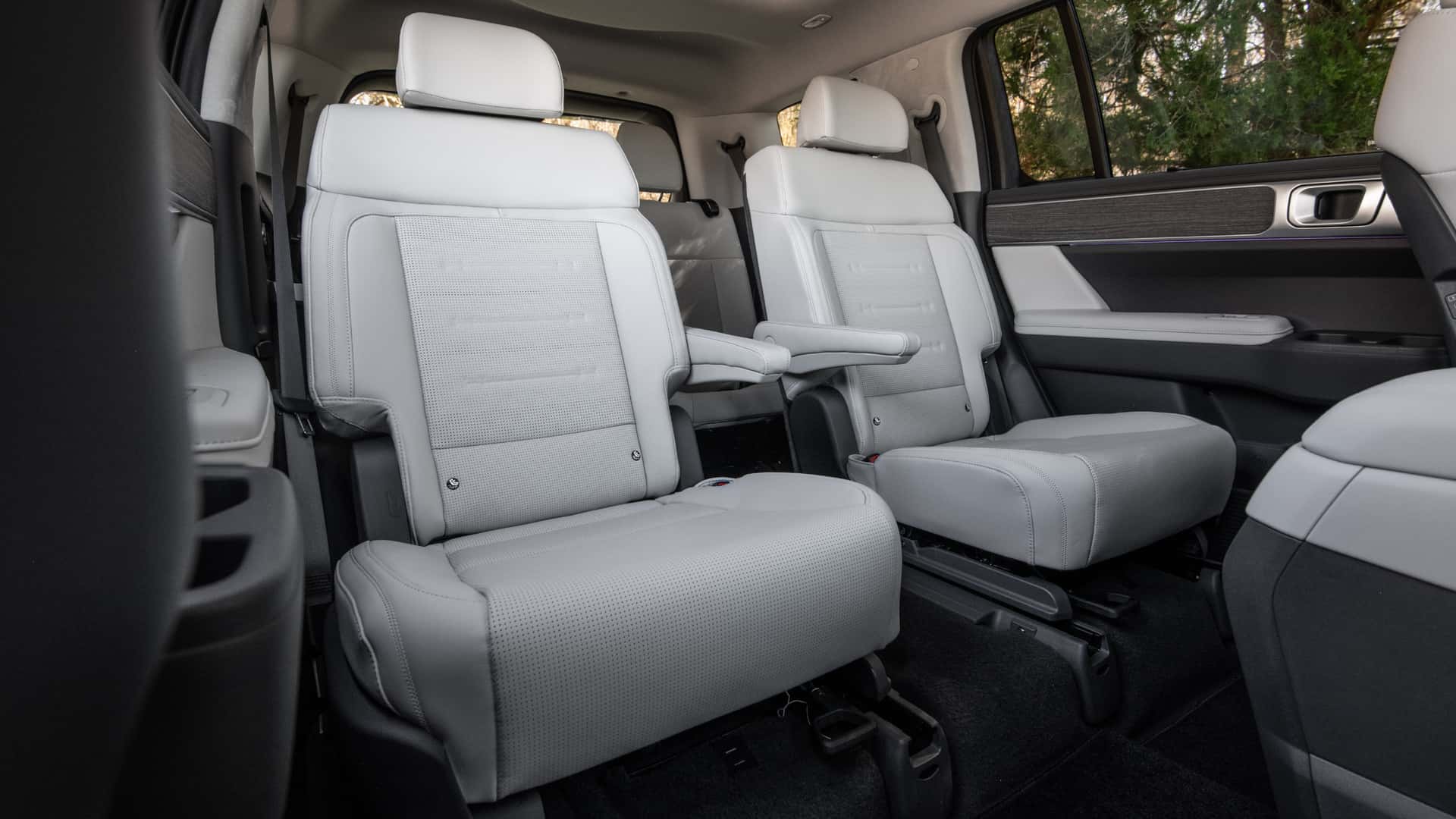
The 2026 Hyundai Santa Fe uses three-row interior packaging with seating capacity and materials that vary by trim. The SE, SEL, and XRT models seat seven passengers, while the Limited models offer six or seven seats, and the Calligraphy models seat six. Material choices include YES Essentials stain-resistant cloth on SE, H-Tex® leatherette on SEL and XRT, leather-trimmed seats on Limited, and Nappa leather-trimmed seats on Calligraphy. Every model includes a third-row 50/50 sinking and folding seat with a room lamp, an underfloor storage tray, and remote-release folding second-row seats. These features support passenger flexibility and cargo conversion without changing the technical focus of the cabin layout.
Seat Functions, Climate Equipment, and Interior Storage
Front-seat equipment begins with a 6-way adjustable driver’s seat and 2-way lumbar support on SE models. SEL and XRT add an 8-way power driver’s seat, 2-way lumbar support, and heated front seats. The Limited adds 4-way lumbar support, a 6-way power passenger seat, ventilated front seats, and an integrated memory system for the driver’s seat. Calligraphy retains those upper-trim features and adds a driver relaxation seat with a one-touch setting. Climate and storage equipment include air conditioning, an external temperature display, a heater, a cabin air filter, a rear window defroster with a timer, second-row air vents, available third-row air vents from SEL upward, front and rear door storage pockets, bottle holders for all rows, and a two-level center console armrest with bidirectional opening.
Steering Wheel, Trim, and Cabin Details
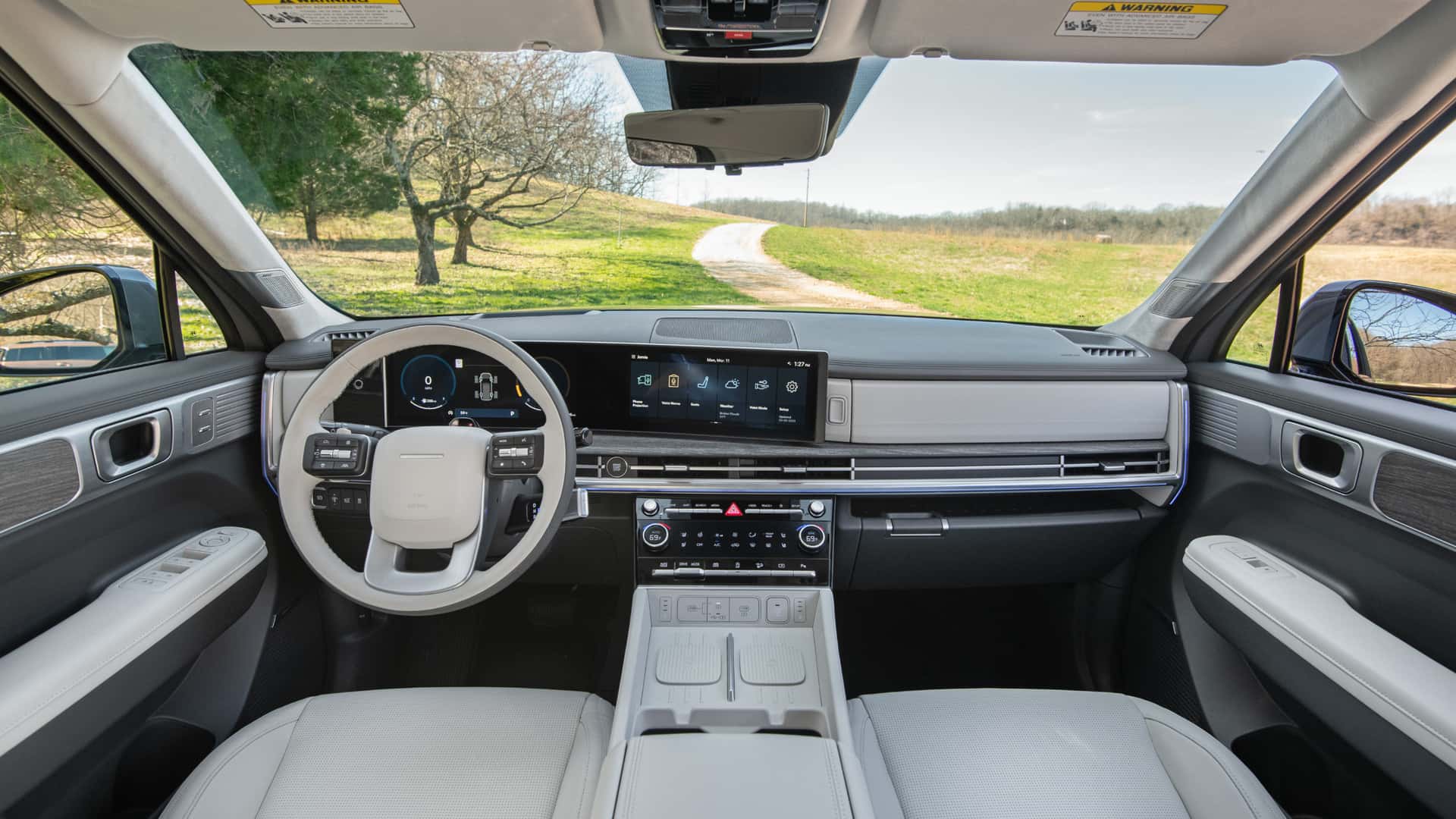
The 2026 Hyundai Santa Fe cabin uses trim-specific headliner materials, including cloth on SE, SEL, and XRT; mélange on Limited; and Eco-Suede on Calligraphy. All models include integrated door armrests, illuminated sunvisors with dual vanity mirrors and extensions, front and rear power window switches, and carpeted floor mats as port-installed equipment. The 4-spoke steering wheel includes tilt and telescoping adjustment, audio controls, Bluetooth® hands-free control with wireless audio streaming, phone controls, cruise controls, and multi-information display controls. The Limited and Calligraphy models add a heated steering wheel, while the Calligraphy uses a two-tone leather-wrapped steering wheel. These cabin details combine driver control access, storage, ventilation, and seating functions into a practical three-row interior package.
Displays, Connectivity, Audio, and Convenience Technology
The 2026 Hyundai Santa Fe uses trim-dependent display and connectivity equipment while making several core technologies standard across the lineup. SE and SEL models include a 12.3-inch Display Audio system with ccNC Lite, AM/FM, and HD Radio™. XRT, Limited, and Calligraphy models add a 12.3-inch wide touchscreen with ccNC, onboard navigation, traffic flow with incident data through HD Radio™ and HERE data, and a Wi-Fi hotspot. Wireless Android Auto™ and Apple CarPlay® come standard on every trim. Rear Seat Quiet Mode and a rearview monitor with parking guidance also come standard across the lineup.
Audio, Charging, Digital Access, and Displays
Limited and Calligraphy models add a Bose® premium audio system with 12 speakers. High-power USB charge ports include two front and two rear ports on SE, while SEL and higher trims add two third-row USB ports. Wireless device charging starts on SEL, and XRT, Limited, and Calligraphy provide dual wireless device charging for supported devices. XRT and higher trims add Dynamic Voice Recognition and Hyundai Pay in-car payment capability. SE, SEL, and XRT use a 4.2-inch color multi-information display, while Limited and Calligraphy add a 12.3-inch digital instrument cluster, and Calligraphy adds a windshield-type head-up display.
Connected Services and Convenience Features
All 2026 Hyundai Santa Fe models include the Bluelink® Connected Car System and over-the-air updating capability. Proximity key entry with push-button start, proximity remote engine start, a detachable valet key, power door and liftgate locks, and remote releases for the hood and fuel filler door also come standard. Hyundai Digital Key 2 Premium with NFC, BLE, and UWB starts on SEL and continues through XRT, Limited, and Calligraphy. Limited and Calligraphy add an auto-dimming rearview mirror with HomeLink, ambient lighting, rear side-window sunshades, a Blind-Spot View Monitor, and a Surround View Monitor. These systems expand convenience, visibility, and connected functionality without changing the vehicle’s core mechanical layout.
Safety, Driver Assistance, Dimensions, and Utility Ratings
The 2026 Hyundai Santa Fe includes passive safety systems, electronic stability technologies, braking support, monitoring equipment, and driver assistance features. Its restraint system includes a driver advanced front airbag, a driver knee airbag, a passenger advanced front airbag, first-row seat side airbags, second-row seat side airbags, and side curtain airbags. All models include 3-point outboard seatbelts, a 3-point rear inboard seatbelt, adjustable front-seat shoulder belt anchors, front seatbelt pretensioners and load limiters, LATCH lower anchors and upper tether anchors, a power window lock-out button, and rear child safety locks. Active safety equipment includes anti-lock braking with four-wheel disc brakes; Electronic Stability Control with Traction Control System and Brake Assist, Vehicle Stability Management, and a Tire Pressure Monitoring System with individual tire indicators. Security equipment includes front crumple zones, 2.5-mph bumpers, an electronic shift lock system, an anti-theft system integrated with remote keyless entry and a panic alarm, and an immobilizer.
Driver Assistance and Parking Technologies
Blind-Spot Collision-Avoidance Warning and Rear Cross-Traffic Collision-Avoidance Assist come standard across the lineup. Calligraphy adds Blind-Spot Collision-Avoidance Assist, while Limited and Calligraphy add Parking Collision-Avoidance Assist in Reverse. SE, SEL, and XRT include Park Distance Warning for forward and reverse detection, while Limited and Calligraphy expand the system to forward, side, and reverse detection. Limited and Calligraphy also include Remote Smart Parking Assist with entry, fore, and aft movement capability. Forward Collision-Avoidance Assist with pedestrian, cyclist, and junction turning detection, Lane Keeping Assist, Driver Attention Warning, Safe Exit Assist, and Lane Following Assist 2 come standard on all trims.
Size, Passenger Space, Cargo, and Towing
The 2026 Hyundai Santa Fe uses a 110.8-inch wheelbase and measures 190.2 inches long and 74.8 inches wide. Its height measures 67.7 inches without roof side rails and 69.7 inches with roof side rails. Minimum ground clearance measures 7.0 inches on most models and 8.3 inches on the XRT. Interior measurements include 44.4 inches of front leg room, 42.3 inches of second-row leg room in gasoline models, 41.5 inches of second-row leg room in hybrid models, and 30.0 inches of third-row leg room. Cargo capacity measures 79.6 cubic feet behind the front seats, 40.5 cubic feet behind the second row, and 14.6 cubic feet behind the third row, while maximum trailer weight ratings reach 3,500 pounds with trailer brakes for 2.5T models, 4,500 pounds with trailer brakes for XRT, and 2,000 pounds with trailer brakes for hybrid models.
Schedule a Test Ride Today
The 2026 Hyundai Santa Fe gives drivers a detailed mix of turbocharged performance, available hybrid operation, three-row seating, driver assistance technology, and practical utility features. To evaluate its powertrain response, steering feel, cabin layout, display systems, seating comfort, and safety technologies, schedule a test drive with ALM Hyundai of Athens, nearby Loganville, GA. Our team can review trim-specific equipment such as HTRAC all-wheel drive, navigation, premium audio, digital key access, second-row seating layouts, and XRT functional upgrades. A test drive also helps demonstrate how the 2026 Hyundai Santa Fe manages handling, braking feel, ride comfort, visibility, and connected technology during normal operation. Contact our team to arrange time behind the wheel and review the 2026 Hyundai Santa Fe features that best support your driving and passenger needs.