

2026 Hyundai Santa Cruz nearby Loganville, GA
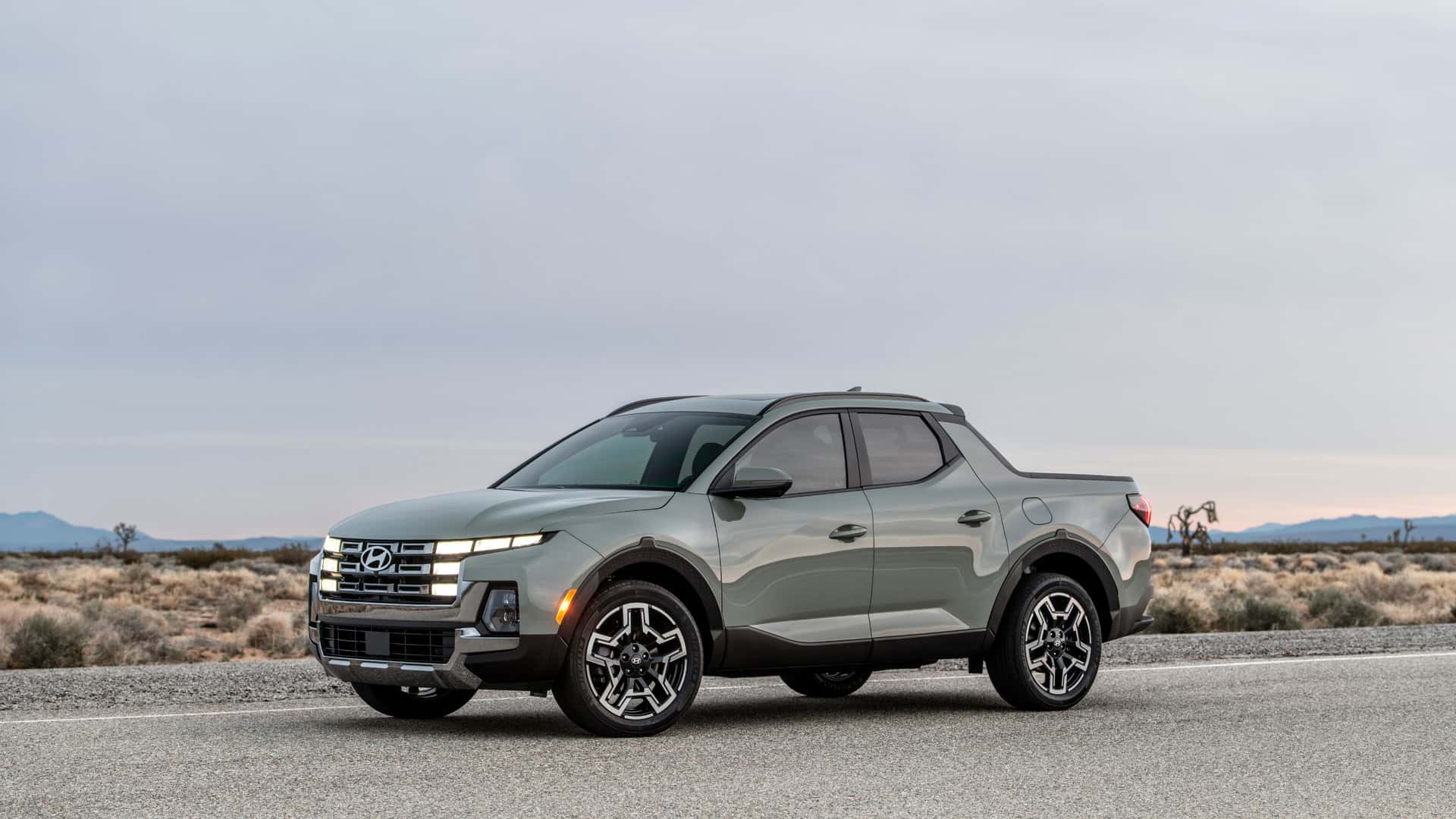
The 2026 Hyundai Santa Cruz combines a unibody chassis, open-bed utility, five-passenger cabin packaging, and a choice of Smartstream® four-cylinder powertrains in a compact sport adventure vehicle. Its technical profile centers on a structured mix of driveline options, cargo-bed systems, cabin technology, comfort equipment, braking hardware, steering systems, and driver-assistance features. The model supports front-wheel drive and HTRAC all-wheel drive depending on powertrain and trim, and every configuration uses an 8-speed automatic torque-converter transmission. The 2026 Hyundai Santa Cruz also integrates functional exterior equipment, connected infotainment systems, advanced restraint systems, and open-bed storage solutions that support daily driving and utility needs.
Powertrain, Transmission, and Drive Systems
The 2026 Hyundai Santa Cruz offers two Smartstream® engine configurations that define its performance range and driveline availability. Both engines use a 2,497-cc displacement, aluminum block and head construction, dual overhead camshafts, 16 valves, Gasoline Direct Injection plus Multi-Point Injection, and Continuously Variable Valve Timing. The 2.5L engine produces 191 horsepower at 6,100 rpm and 181 lb-ft of torque at 4,000 rpm. The 2.5T turbocharged engine produces 281 horsepower at 5,800 rpm and 311 lb-ft of torque from 1,700 to 4,000 rpm. Both engines use regular unleaded fuel, include a full engine cover, feature a hood insulator, meet ULEV emissions control standards, and route exhaust through a single-tip system.
Smartstream® Engine Specifications
The 2.5L engine uses a variable intake system and a 13.0 compression ratio. Its bore and stroke measure 85.5 mm by 101.5 mm, which matches the bore and stroke measurements of the 2.5T engine. The turbocharged 2.5T engine uses a turbocharged intake system and a 10.5 compression ratio. These details separate the naturally aspirated and turbocharged configurations while maintaining common displacement and Smartstream® engine-family architecture. The result is a clear engine lineup that gives the 2026 Hyundai Santa Cruz defined output levels, shared structural specifications, and trim-dependent performance positioning.
Transmission and Driveline Hardware
Every 2026 Hyundai Santa Cruz uses an 8-speed automatic torque-converter transmission. The 2.5L configuration includes front-wheel drive as standard, while HTRAC all-wheel drive with Active On-Demand operation is available. The 2.5T configuration pairs with HTRAC all-wheel drive as standard equipment. A center-console-mounted drive mode system comes standard with both engine configurations. XRT models also include Terrain Mode Select, which gives that trim a specific control feature within the 2026 Hyundai Santa Cruz lineup.
The transmission gearing differs between the 2.5L FWD or AWD setup and the 2.5T AWD setup. The 2.5L configuration uses a 4.487 first gear, a 0.635 eighth gear, a 3.081 reverse gear, and a 4.081 final gear ratio. The 2.5T AWD configuration uses a 4.808 first gear, a 0.648 eighth gear, a 3.425 reverse gear, and a 3.51 final gear ratio. Both versions include eight forward ratios, reverse gearing, and driveline-specific final drive calibration. These specifications show how the 2026 Hyundai Santa Cruz keeps a consistent transmission format while matching gear ratios to engine output and drive-system configuration.
Chassis, Suspension, Braking, and Steering
The 2026 Hyundai Santa Cruz uses a unibody, or monocoque, body structure built with Advanced High Strength Steels and high-tensile steel as primary materials. This construction supports its passenger cabin, open-bed layout, front-drive architecture, and available all-wheel-drive packaging. The chassis also provides the foundation for consistent suspension, steering, and braking specifications across the model range. Hyundai equips all 2026 Hyundai Santa Cruz models with the same fundamental suspension design, braking technology, and steering layout. These systems give the vehicle a clearly defined mechanical base that supports both everyday maneuverability and functional utility.
Suspension and Steering Layout
The front suspension uses MacPherson® struts with coil springs. Gas-pressurized shock absorbers come standard at the front, giving the suspension a defined damping component across the lineup. The rear suspension uses a multi-link design with gas-pressurized, self-leveling shock absorbers. This independent rear suspension layout supports the unibody construction and open-bed packaging of the 2026 Hyundai Santa Cruz. The shared suspension specification also gives all trims a consistent mechanical foundation regardless of engine or wheel configuration.
Motor Driven Power Steering comes standard with rack-and-pinion steering and a column-mounted system. The steering system uses a 14.2 overall ratio. It requires 2.62 turns from lock to lock, which provides a measurable reference point for steering input across the model range. The 2026 Hyundai Santa Cruz has a 39.6-foot curb-to-curb turning diameter. These specifications support practical low-speed maneuvering, parking, and directional control during routine driving.
Braking and Control Systems
All 2026 Hyundai Santa Cruz models use 4-wheel disc brakes with ventilated front discs and solid rear discs. The front discs measure 12.8 inches by 1.2 inches, or 325 mm by 30 mm. The rear discs measure 12.8 inches by 0.5 inches, or 325 mm by 12 mm. The Anti-lock Braking System with Electronic Brake-force Distribution uses four wheels, four channels, and four sensors. Brake Assist, Downhill Brake Control, Hillstart Assist Control, and an electronic parking brake with Automatic Vehicle Hold also come standard.
Exterior Design, Lighting, Bed Utility, and Dimensions
The 2026 Hyundai Santa Cruz exterior combines standard lighting technology, functional open-bed equipment, trim-specific wheels, and integrated cargo-access features. All trims include Bi-LED projector-type headlights with high and low beams, LED daytime running lights, LED taillights, automatic headlights, High Beam Assist, a roof-mounted Center High-Mount Stop Lamp, and a roof-mounted LED cargo light. The SE, SEL, SEL Activity, and XRT models use 18 x 7.5J alloy wheels with 245/60R18 tires. Limited models use 20 x 7.5J alloy wheels with 245/50R20 tires. A temporary spare tire comes with the model range.
Exterior Equipment and Trim Details
Exterior mirror equipment varies by trim while retaining several shared driver-assistance indicators. Body-color side mirror housings come on SE, SEL, SEL Activity, and Limited, while XRT uses matte black mirror housings. Heated side mirrors appear from SEL upward, and Blind-Spot Collision and Rear Cross-Traffic Avoidance-Assist indicators come across the lineup. Side mirrors with turn signal indicators appear on SEL, SEL Activity, XRT, and Limited. Limited models add a dark chrome accent grille and tailgate handle, while the XRT uses matte black door handles and the Limited uses body-colored door handles.
Glass and roof equipment add further functional detail to the 2026 Hyundai Santa Cruz exterior. Rear and back privacy glass, front door and windshield solar glass, and an acoustic laminated windshield come standard on all trims. SEL Activity, XRT, and Limited add a rear sliding glass window with a defroster. A conventional power sunroof comes on the SEL Activity and Limited. Roof side rails come on SEL, SEL Activity, XRT, and Limited, and roof cross rails are available as port-installed equipment for those trims.
Open-Bed Utility and Cargo Access
Every 2026 Hyundai Santa Cruz includes a lockable under-bed storage compartment, a Sheet Molded Composite bed, sidewall bed storage compartments, heavy-duty cargo D-rings, a multifunctional assisted open and close tailgate, and integrated rear bumper side steps. These features give the open bed built-in storage, tie-down support, and access points without requiring a separate cargo-box structure. SEL Activity, XRT, and Limited add an integrated tonneau cover with two built-in T-slot accessory tracks. Those same trims also include a dual C-channel adjustable utility track rail and cleat system. An 115V power outlet in the sidewall storage area also comes on SEL Activity, XRT, and Limited.
The 2026 Hyundai Santa Cruz has a 118.3-inch wheelbase and a 75.0-inch overall width. Overall length measures 195.7 inches, while XRT measures 195.9 inches. Overall height with roof rails measures 66.7 inches, with 66.9 inches listed for the taller configuration. Minimum ground clearance is 8.6 inches, and exterior geometry includes a 16.9-degree approach angle, a 19.9-degree approach angle for XRT, a 23.2-degree departure angle, and an 18.6-degree breakover angle. The open bed measures 48.4 inches in upper length, 52.1 inches in lower length, and 74.8 inches with the tailgate open, with 53.9 inches of maximum bed width, 42.7 inches between the wheelhouses, and 19.2 inches of bed depth.
Interior Comfort, Seating, and Cabin Technology
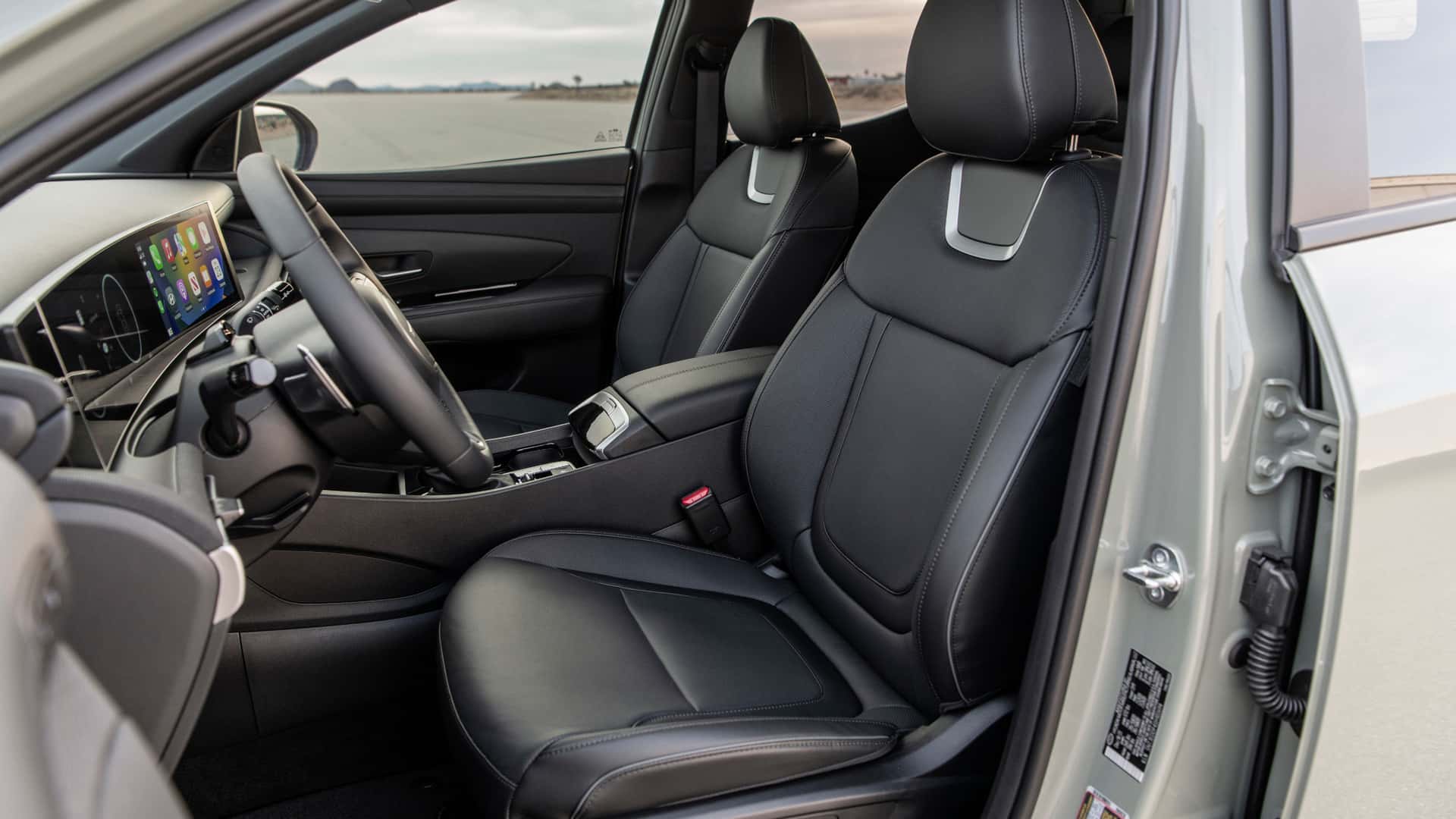
The 2026 Hyundai Santa Cruz cabin seats five passengers and offers trim-specific seating surfaces, front-seat adjustment, climate systems, displays, and convenience equipment. SE includes cloth-trimmed stain- and odor-resistant seats. SEL and SEL Activity use H-Tex® leatherette seating surfaces, XRT uses black-only H-Tex® seating surfaces, and Limited adds leather-trimmed seating. SE includes a 6-way adjustable driver’s seat, while SEL and higher trims include an 8-way power driver’s seat with power driver’s lumbar support and heated front seats. Limited adds a 6-way power passenger’s seat and ventilated front seats, and every trim includes 60/40 split tip-up lower rear seat cushions.
Climate, Controls, and Interior Trim
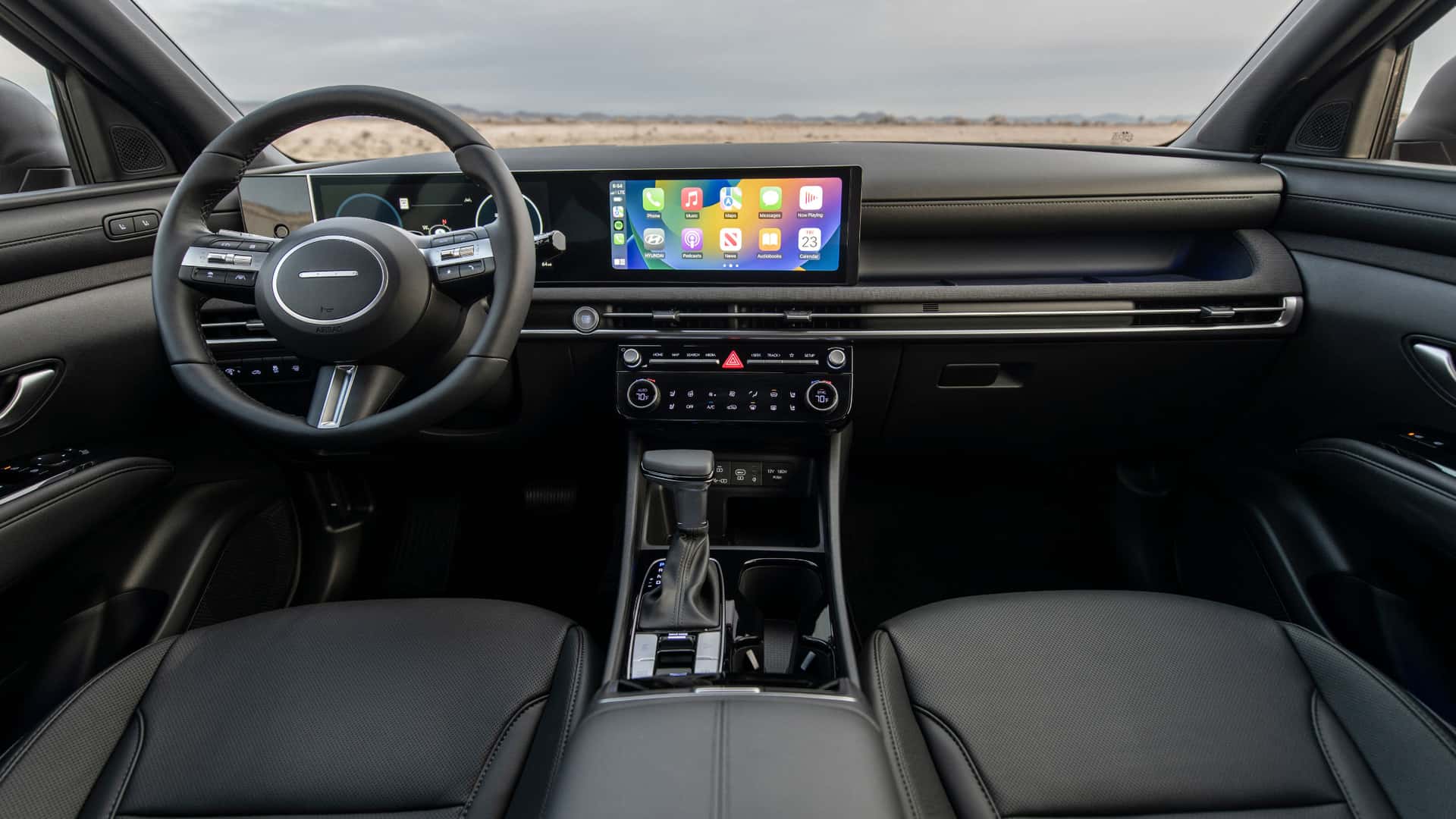
SE uses manual air conditioning, while SEL and higher trims use dual automatic temperature control with Auto Defogger and full capacitive-touch controls. A heater, rear seat heater ducts, and a cabin air filter come standard across all trims. SEL Activity, XRT, and Limited add a center console-mounted rear A/C vent and a rear sliding glass window with a defroster. The steering wheel has a 3-spoke design, tilt and telescoping adjustment, audio controls, Bluetooth® controls, and cruise controls on every trim. XRT and Limited add a leather-wrapped steering wheel, while Limited adds a heated steering wheel.
Interior trim details support cabin organization and regular use. All trims include black roof trim, metal-paint door handles, integrated door armrests, front passenger seatback map pockets, dual vanity mirrors with covers, a sliding sun visor function, and an illuminated push-button start. SEL and higher trims add illuminated sunvisors, while XRT and Limited add a leather-wrapped shift knob. SE includes a driver auto-down power window switch, while SEL and higher trims include front auto-down and auto-up functionality. The Limited also adds 64-color ambient interior lighting for the upper center console and front door pockets.
Displays, Audio, and Connectivity
SE, SEL, and SEL Activity use a 12.3-inch touchscreen display with ccNc Lite and six speakers. XRT and Limited use a 12.3-inch Audio-Video-Navigation color touchscreen with ccNc and onboard navigation. AM/FM/HD Radio™, SiriusXM®, and Bluelink®+ come across the model range. Wireless Apple CarPlay® and Android Auto™ also come standard across all trims. Limited adds a Bose® Premium Audio System to its audio configuration.
The 2026 Hyundai Santa Cruz includes HD Radio™ Technology, SiriusXM® Satellite Radio with a 3-month trial subscription, front dual Type-C USB ports, second-row dual Type-C USB ports, and a rearview camera across the lineup. XRT and Limited add Dynamic Voice Recognition. OTA update capability applies to ECU and multimedia for all trims, while map update capability applies to XRT and Limited. Instrumentation includes a 4.2-inch Multi-Information Display on SE and SEL. SEL Activity, XRT, and Limited use a 12.3-inch digital instrument cluster, and XRT and Limited also add Hyundai Digital Key 2 Touch.
Safety, Driver Assistance, and Security Systems
The 2026 Hyundai Santa Cruz includes restraint systems, active safety systems, passive safety features, and driver-assistance technologies across the lineup. The airbag system includes advanced front airbags for the driver and front passenger, an Occupant Classification System, a seat weight sensor, a seat track sensor, front side-impact thorax airbags, side air curtains for front and rear passengers with rollover sensors, and rear side airbags with rollover sensors. All seating positions include 3-point seatbelts, and the model adds adjustable front-seat shoulder belt anchors, front and rear outboard seatbelt pretensioners and load limiters, LATCH lower anchors and upper tether anchors, a power window lock-out button, and rear child safety locks. Active safety fundamentals include an Anti-lock Braking System with 4-wheel disc brakes, Electronic Stability Control with Traction Control and Brake Assist, Vehicle Stability Management, and a Tire Pressure Monitoring System with an individual tire indicator. Passive safety and security equipment include bodyside reinforcements, an anti-theft system integrated with remote keyless entry and a panic alarm, and an immobilizer.
Driver Assistance by Trim
Forward Collision-Avoidance Assist with Pedestrian Detection comes on the SE, SEL, and SEL Activity. XRT and Limited use Forward Collision-Avoidance Assist with Pedestrian, Cyclist, and Junction Turning Detection through a sensor-fusion type system. Blind-Spot Collision Warning, Rear Cross-Traffic Collision-Avoidance Assist, Leading Vehicle Departure Alert, Driver Attention Warning, Lane Keeping Assist, Lane Following Assist, steering wheel haptic feedback for Lane Keeping Assist and Blind-Spot Collision Warning, Safe Exit Warning, and Rear Occupant Alert come standard on all trims. XRT and Limited add Surround View Monitor, Blind-Spot View Monitor, Intelligent Speed Limit Assist, Forward Attention Warning, Highway Driving Assist 1, and Navigation-based Smart Cruise Control with Curve Control. XRT and Limited also include Smart Cruise Control 2 and Smart Cruise Control with Stop and Go, while SE, SEL, and SEL Activity include conventional cruise control.
Capacities, Weight Ratings, and Functional Packaging
The 2026 Hyundai Santa Cruz provides interior dimensions that support its five-passenger layout. Headroom without the sunroof measures 40.2 inches in front and 39.6 inches in the rear. Headroom with the sunroof measures 38.2 inches in front and 39.6 inches in the rear. Leg room measures 41.4 inches in front and 36.5 inches in rear, while shoulder room measures 57.7 inches in front and 56.1 inches in rear. Hip room measures 54.5 inches in front and 53.5 inches in the rear.
Weight and capacity specifications vary by trim and drive configuration. SE curb weight is listed at 3,779 pounds for FWD and 3,922 pounds for AWD, while SEL is listed at 3,805 pounds for FWD and 3,948 pounds for AWD. The SEL Activity is listed at 3,900 pounds for FWD and 4,043 pounds for AWD, while the XRT is listed at 4,140 pounds with AWD and the Limited is listed at 4,191 pounds with AWD. GVWR is listed at 5,522 pounds for FWD and 5,665 pounds for AWD on SE, SEL, and SEL Activity, while XRT and Limited are listed at 5,798 pounds. Maximum vehicle load limit is 1,411 pounds, the maximum trailer weight with trailer brakes is 3,500 pounds, and the maximum trailer weight without trailer brakes is 1,653 pounds.
The 2026 Hyundai Santa Cruz has a 17.7-gallon fuel tank capacity. Engine oil capacity with filter is listed at 5.8 liters. Roof side rails have a static and dynamic load capacity rating of 220 pounds. Trailer pre-wiring comes across the lineup, with a 4-pin configuration for 2.5L models and a 4/7-pin configuration for 2.5T models. These details connect the 2026 Hyundai Santa Cruz drivetrain, body structure, open-bed layout, roof-rail equipment, and towing-related hardware into one functional package.
Visit ALM Hyundai of Athens for a Test Ride
Our team can help shoppers evaluate how the 2026 Hyundai Santa Cruz feels from the driver’s seat and how its powertrain, handling, comfort, technology, and safety features work together. We can review the differences between the 2.5L and 2.5T configurations, available HTRAC all-wheel drive, open-bed equipment, digital displays, and driver assistance systems. A test drive gives drivers a direct look at the cabin layout, steering response, braking feel, seating comfort, and cargo-bed functionality. Our team can also explain trim-specific features such as Smart Cruise Control, the 12.3-inch digital instrument cluster, the utility track system, and available navigation technology. Contact ALM Hyundai of Athens, nearby Loganville, GA to schedule a test drive and review the 2026 Hyundai Santa Cruz in person.