

2026 Hyundai Kona near Coventry, GA
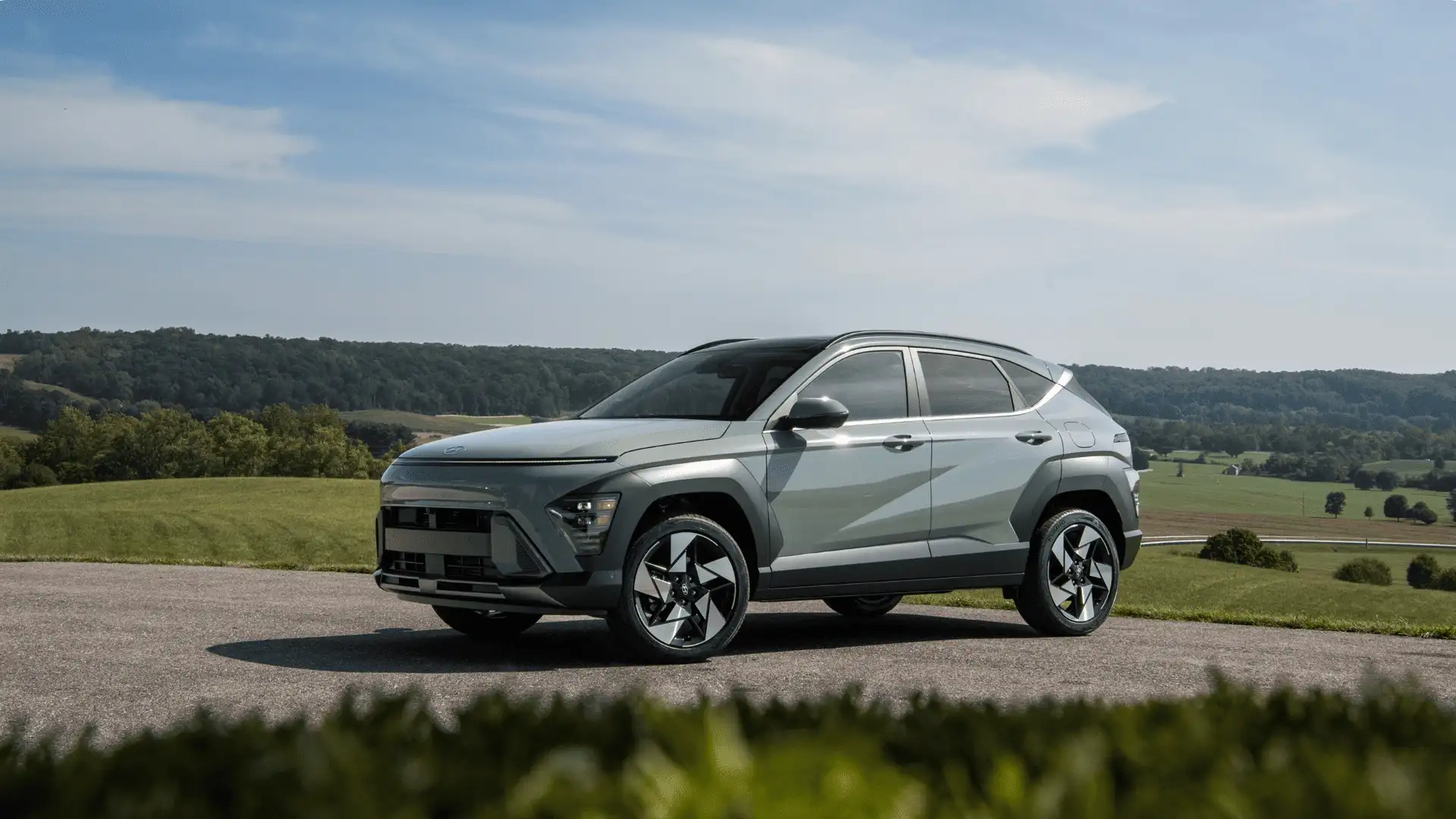
The 2026 Hyundai Kona presents a technical design structured around efficiency, powertrain versatility, chassis stability, and expanded digital integration. Hyundai applies updated mechanical systems, refined structural components, and an upgraded driver assistance suite to create a model focused on measurable performance traits. The engineering approach prioritizes durability, precision, and consistency across all trims. Every major system is configured to support predictable driving characteristics along with improved occupant convenience supported by modern vehicle technology.
Powertrain Systems Designed for Output Consistency
The 2026 Hyundai Kona offers two engines within the Nu PE and Gamma II families. The 2.0-liter MPI Atkinson inline four-cylinder engine supplies 147 horsepower at 6200 rpm and 132 pound-feet of torque at 4500 rpm. Its long-stroke configuration paired with a 12.5 to 1 compression ratio supports combustion efficiency and stable operation across common driving speeds. The engine features dual continuously variable valve timing, an aluminum block and head, and a multi-point injection fuel system.
The available 1.6-liter turbocharged GDI inline four-cylinder engine produces 190 horsepower at 6000 rpm and 195 pound-feet of torque across a broad 1700 to 4500 rpm range. The shorter bore and stroke configuration, along with a 10.0 to 1 compression ratio, supports the demands of boosted output. The direct injection system increases responsiveness through precise fuel metering. Aluminum construction reduces weight while maintaining the structural strength required for higher-pressure turbocharged operation.
Two transmission types are offered to support the engines. The 2.0-liter engine pairs with an Intelligent Variable Transmission. This system uses an adaptive ratio approach to maintain smooth transitions and promote steady acceleration. The 1.6-liter turbo engine uses an eight-speed automatic torque converter transmission designed for quicker gear changes and improved torque handling. Select trims include paddle shifters for manual ratio control.
Front-wheel drive comes standard, while an Active On-Demand all-wheel-drive configuration is offered. All-wheel-drive models include Normal, Sport, and Snow drive modes along with increased ground clearance that ranges up to 8.3 inches depending on wheel size. The drive mode system adjusts throttle mapping and steering response to support surface changes.

Structural Components and Suspension Engineering
Hyundai builds the 2026 Hyundai Kona on a unibody structure composed of high-tensile steel. This material selection increases rigidity while lowering overall mass. The improved stiffness enhances steering accuracy and reduces body flex under load.
The front suspension uses a MacPherson® strut layout with coil springs and gas-pressurized shock absorbers. This layout supports consistent wheel control and predictable rebound. The rear suspension differs based on drivetrain. Front-wheel-drive models use a coupled torsion beam axle designed for space efficiency and simplified geometry. All-wheel-drive models use a multi-link rear suspension that increases control over wheel articulation. Gas-pressurized shock absorbers are standard at the rear for both setups.
A column-mounted, motor-driven power steering system provides electronic assistance through a 13.6 to 1 steering ratio. The system completes 2.5 turns lock to lock. This configuration supports accurate input and maintains consistent steering feel. The turning diameter is measured at 34.8 feet, which helps with maneuverability in tight environments.
Brake hardware includes ventilated front discs measuring up to 12 inches and solid rear discs measuring 11.2 inches. The 2026 Hyundai Kona includes electronic brake force distribution, a four-channel anti-lock braking system, downhill brake control, and hill start assist control. The 10.5-inch brake booster paired with a 9.0 boosting ratio is designed to maintain stable pedal input across varied conditions. An electronic parking brake is standard.
Exterior Functionality Through Mechanical and Aerodynamic Design
The 2026 Hyundai Kona incorporates a design focused on airflow efficiency, lighting performance, and material durability. Wheel sizes include 17-, 18-, or 19-inch alloy options with tire sizes ranging from 215 millimeters in width up to 235 millimeters on 19-inch configurations. Trim-dependent tire mobility solutions include compact spares or tire mobility kits.
LED projector headlights, LED daytime running lights, and LED taillights are standard across all trims. High Beam Assist manages the transition between lighting modes. Additional exterior components include active grille shutters that regulate airflow through the engine bay, a shark fin antenna, and an integrated rear spoiler. Roof rails are available and rated for a 220-pound load capacity. Select trims include hands-free smart liftgate access.
Privacy glass is included on upper trims for rear, quarter, and back windows. Heated exterior mirrors and integrated turn signals are also trim dependent. The coefficient of drag reaches as low as 0.302, which supports fuel economy improvement and reduced wind resistance.
Cabin Engineering and Interior Space Allocation
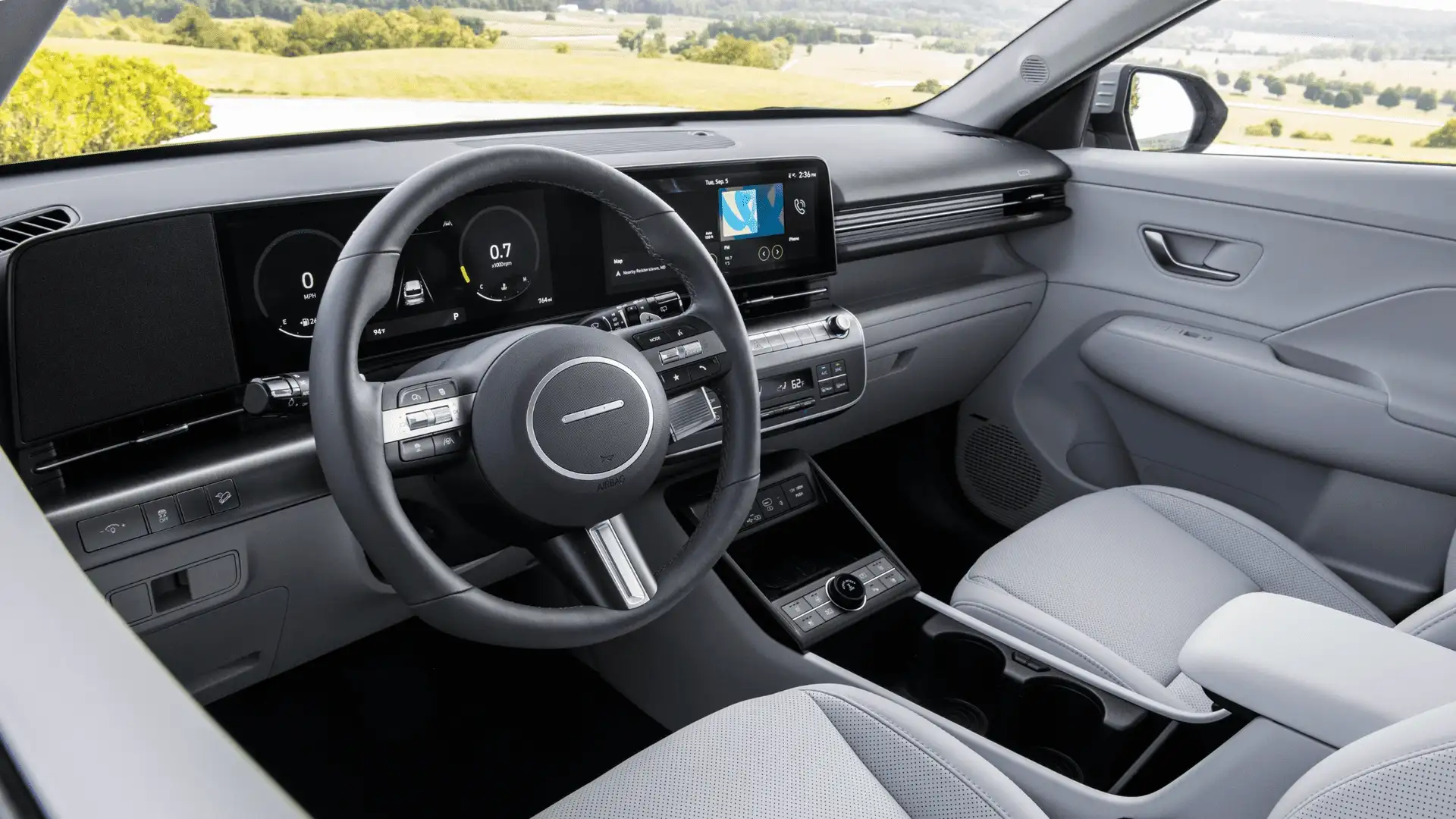
Interior engineering focuses on ergonomic seat construction, expanded display systems, and practical storage layouts. Seating capacity remains at five. Cloth seating surfaces appear on lower trims, while H-Tex®-trimmed seating is offered on upper trims. Driver seat adjustments include six-way manual or eight-way power operation, depending on trim. Ventilated and heated front seats are available. Rear seating includes 60 by 40 split folding seatbacks with adjustable head restraints and a recline function.
Interior volume totals 126.7 cubic feet with the sunroof or 124.5 cubic feet with reduced headroom. Passenger volume measures up to 101.2 cubic feet. Cargo capacity measures 25.5 cubic feet with seats raised and 63.7 cubic feet with seats folded. A dual-level cargo floor provides additional configuration flexibility.
The standard audio system uses a 12.3-inch touchscreen with AM, FM, SiriusXM®, and HD Radio™ support, along with six speakers. Higher trims include a 12.3-inch navigation system and an available Bose® premium audio system with eight speakers. Wireless Apple CarPlay® and Android Auto™ are standard along with dual USB-C ports for front and rear passengers. Wireless device charging is included on select trims.
Instrumentation includes a 4.2-inch color multi-information display on lower trims or a 12.3-inch digital instrument cluster on upper trims. Select models include a Blind Spot View Monitor. The center console configuration varies by trim and includes either fixed- or rotary-style cupholders. Proximity key access with push button start is standard, along with remote start capability.
HVAC systems include rear seat heater ducts, dual automatic temperature control on upper trims, and an air filtration system. All trims include a rear window defroster with a timer. Lighting features include LED interior lights, a central dome light, and user-selectable ambient lighting on upper trims.
Safety Engineering and Driver Assistance Technology Integration
The 2026 Hyundai Kona includes a full complement of passive and active safety features. Airbag systems include advanced dual front airbags along with side impact and side curtain airbags with rollover sensors. Structural reinforcement includes bodyside reinforcements and front crumple zones. Occupant protection systems include seatbelt pretensioners and load limiters for front and rear passengers.
Active safety systems include electronic stability control, traction control, brake assist, and a tire pressure monitoring system with individual tire indicators. Driver assistance features include Forward Collision Avoidance Assist with pedestrian, cyclist, junction turning, and direct oncoming detection. Additional systems include Blind Spot Collision Avoidance Warning, Rear Cross Traffic Collision Avoidance Assist, Lane Keeping Assist, Lane Following Assist, High Beam Assist, Driver Attention Warning, and Intelligent Speed Limit Assist.
Upper trims include Navigation based Smart Cruise Control with Curve Control, Highway Driving Assist, Parking Distance Warning, and Surround View Monitor technology. Remote Smart Parking Assist is also available. The ignition system includes an electronic shift lock system and remote keyless entry with an integrated anti-theft alarm.
Vehicle Dimensions and Capacity Specifications
The 2026 Hyundai Kona measures 171.3 inches in overall length and 71.9 inches in width. Wheelbase length is 104.7 inches. Ground clearance varies based on drivetrain and wheel size, with front-wheel-drive models reaching between 6.7 and 6.9 inches and all-wheel-drive models reaching between 8.1 and 8.3 inches. Overhang lengths measure 33.9 inches at the front and 32.7 inches at the rear.
Interior dimensions include 39.9 inches of front headroom or 38.3 inches with the sunroof and 38.3 inches of rear headroom. Legroom totals 41.7 inches in the front and 38.2 inches in the rear. Shoulder room measures 56.8 inches in the front and 55.2 inches in the rear. Hip room measures 54.3 inches in the front and 52.4 inches in the rear. Fuel tank capacity is 12.4 gallons for the 2.0-liter engine and 13.2 gallons for the 1.6-liter turbo engine.
Schedule a Test Ride at ALM Hyundai of Athens
A structured driving session provides the most accurate way to assess the 2026 Hyundai Kona. The combination of two engine options along with either front-wheel or all-wheel drive creates meaningful distinctions in response and traction. Exploring these systems in motion helps clarify how each configuration supports daily operation. The upgraded digital interfaces and expanded safety features also benefit from hands-on evaluation during active travel. Interested drivers can arrange a test ride with ALM Hyundai of Athens near Coventry, GA, to experience the model firsthand and review any technical details that support informed decision-making.