

2026 Hyundai Kona Electric near Commerce, GA
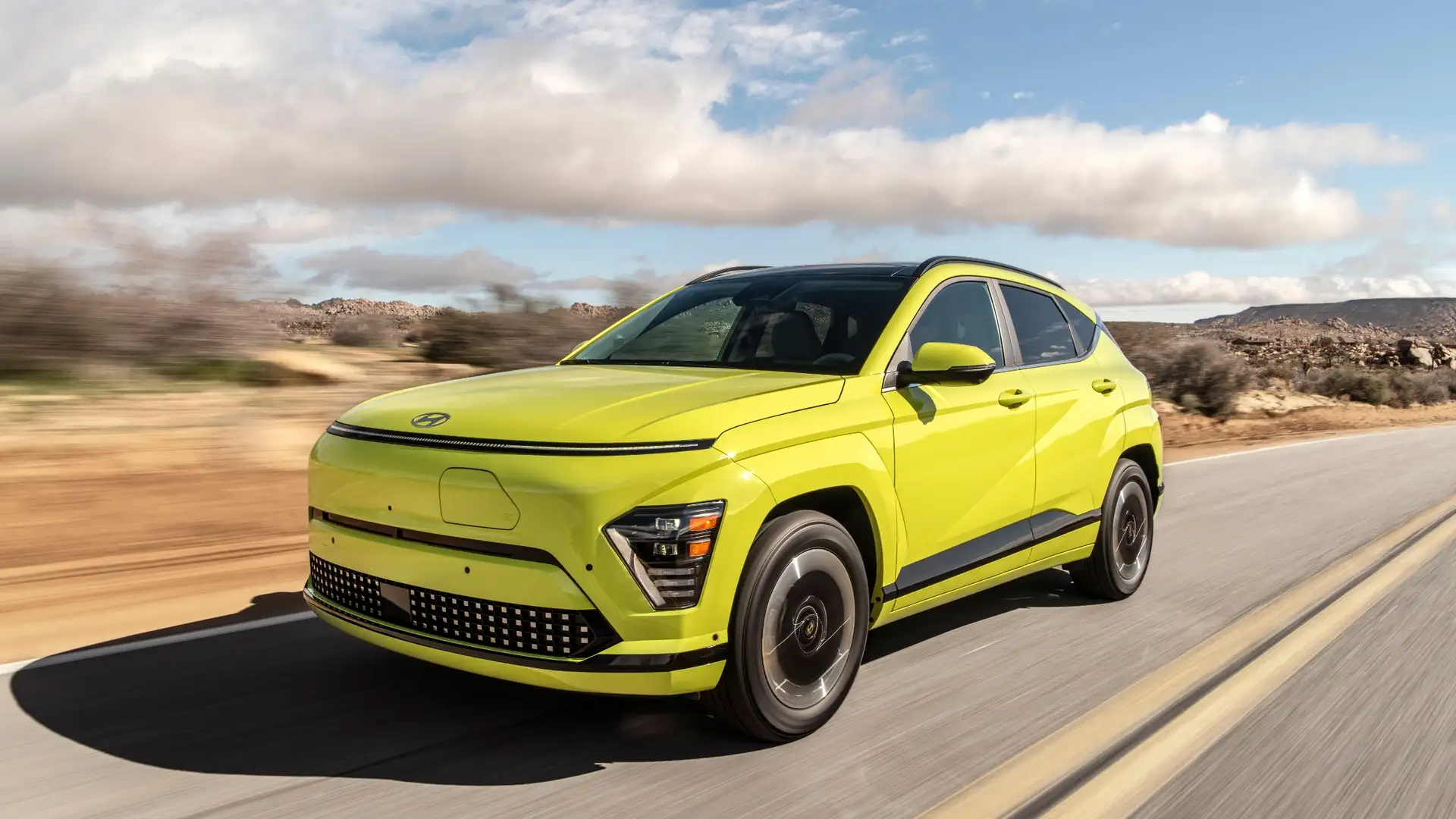
The 2026 Hyundai Kona Electric is engineered as a compact electric SUV built on a proven Kona vehicle architecture and adapted specifically for electric propulsion. The model applies established body dimensions, chassis tuning, and safety structures to an all-electric configuration that prioritizes efficiency, predictable performance, and integrated technology systems. The 2026 Hyundai Kona Electric retains a unibody construction using high-tensile steel, providing structural rigidity while supporting the placement and protection of electric drivetrain components. Its overall layout reflects a focus on balanced packaging, allowing passenger space, cargo capacity, and electric system integration to coexist without compromise. This overview examines the technical features and specifications of the 2026 Hyundai Kona Electric as presented in the provided manufacturer documentation.
Electric Drivetrain Configuration and Performance Characteristics
The drivetrain of the 2026 Hyundai Kona Electric replaces traditional internal combustion components with an electric propulsion system designed for smooth power delivery and simplified mechanical operation. The electric motor provides immediate torque availability, eliminating the need for multi-gear shifting and supporting linear acceleration across common driving speeds. This configuration reduces mechanical complexity while improving responsiveness in urban traffic conditions.
Power delivery is managed electronically to maintain consistent output while supporting efficiency targets. The absence of a conventional transmission allows for seamless acceleration without interruption, contributing to stable vehicle behavior during both low-speed maneuvering and highway cruising. The drivetrain layout supports front-wheel-drive operation, aligning with the Kona platform’s original design parameters.
Structural Engineering and Chassis Design
The body structure of the 2026 Hyundai Kona Electric uses a unibody construction with a monocoque body design. High-tensile steel is employed throughout the chassis to enhance rigidity and crash performance. This structural approach supports occupant protection while maintaining manageable vehicle weight.
The platform accommodates electric system components without altering exterior proportions significantly. Weight distribution is managed to support predictable handling characteristics, contributing to stability during braking, cornering, and acceleration. The rigid structure also enhances suspension effectiveness by providing a stable mounting foundation for suspension components.
Suspension Systems and Steering Control
Suspension tuning on the 2026 Hyundai Kona Electric is configured to balance ride comfort with controlled handling. The front suspension uses a MacPherson® strut design with coil springs and gas-pressurized shock absorbers. This setup supports consistent wheel control and predictable road feedback. A stabilizer bar is included to limit body roll during cornering.
At the rear, the 2026 Hyundai Kona Electric platform applies a coupled torsion beam axle configuration for front-wheel-drive layouts. Gas-pressurized shock absorbers are also used at the rear to maintain ride stability over varied road surfaces. The suspension geometry supports controlled vertical motion while maintaining lateral stability.
Steering is managed through a column-mounted, motor-driven power steering system. This electrically assisted steering design reduces energy consumption while providing precise control. The steering ratio and turning diameter are calibrated for maneuverability in confined environments such as urban streets and parking areas.
Braking Systems and Stability Technologies
The braking system of the 2026 Hyundai Kona Electric consists of ventilated front disc brakes and solid rear disc brakes. Anti-lock braking functionality with electronic brake-force distribution manages braking pressure across all four wheels to enhance stopping stability. The system includes four sensors and four channels to monitor wheel behavior during braking events.
Additional control technologies include hill-start assist control, which helps prevent rollback during uphill starts, and downhill brake control, which assists with maintaining controlled speed on steep descents. Electronic stability control and traction control systems work together to manage wheel slip and directional stability during acceleration and cornering.
Exterior Dimensions and Aerodynamic Considerations
The exterior dimensions of the 2026 Hyundai Kona Electric support its classification as a compact SUV. The wheelbase, overall length, width, and height are configured to balance interior space with maneuverability. Ground clearance measurements support everyday driving requirements while maintaining a low center of gravity relative to taller utility vehicles.
Aerodynamic efficiency is addressed through exterior design elements such as active grille shutters. These shutters adjust airflow based on cooling requirements, reducing aerodynamic drag when full airflow is not required. The resulting drag coefficient supports efficiency during sustained highway travel.
Lighting Systems and Exterior Functional Features
Exterior lighting on the 2026 Hyundai Kona Electric relies on full LED technology. LED projector headlights provide consistent illumination with reduced energy consumption. LED daytime running lights improve vehicle visibility in daylight conditions. LED taillights and a center high-mount stop lamp contribute to rear visibility and signaling clarity.
Automatic headlight activation adjusts lighting based on ambient conditions. High beam assist monitors traffic and lighting conditions to manage headlight output without manual input. These systems support visibility while minimizing driver workload.
Additional exterior features include body-color bumpers, an integrated rear spoiler design, and available roof rails. These elements are engineered for functional integration rather than decorative emphasis.
Interior Space Management and Seating Engineering
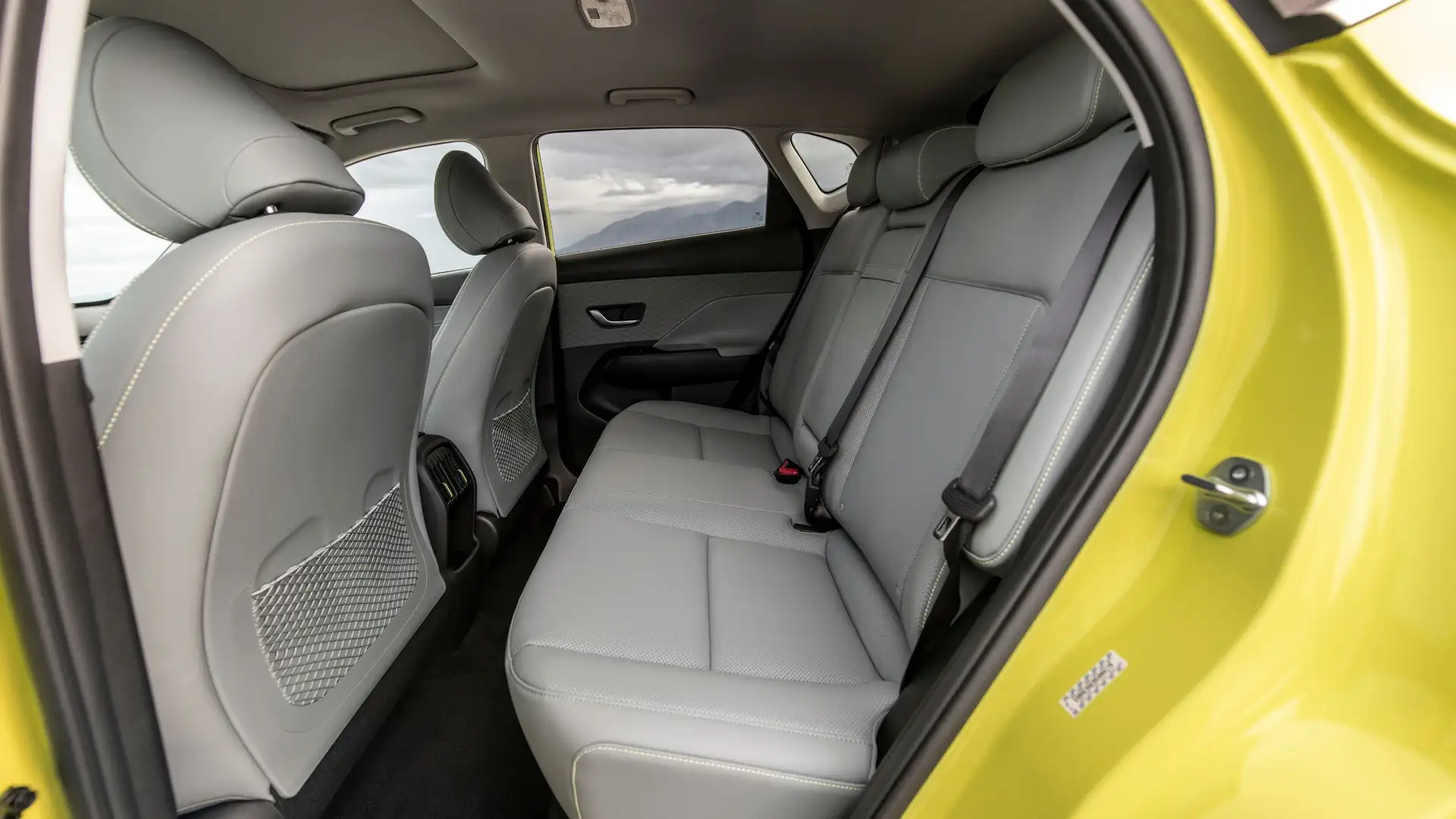
The interior of the 2026 Hyundai Kona Electric accommodates five occupants within a compact footprint. Seating surfaces are configured to support durability and long-term use. Front seating includes multiple adjustment options to allow precise driver positioning. Rear seating uses a 60/40 split-folding seatback to expand cargo capacity when required.
Headroom, legroom, shoulder room, and hip room measurements are configured to support adult passengers in both seating rows. The rear cargo area includes a dual-level cargo floor, allowing flexible storage configurations depending on load requirements.
Instrumentation and Digital Display Systems
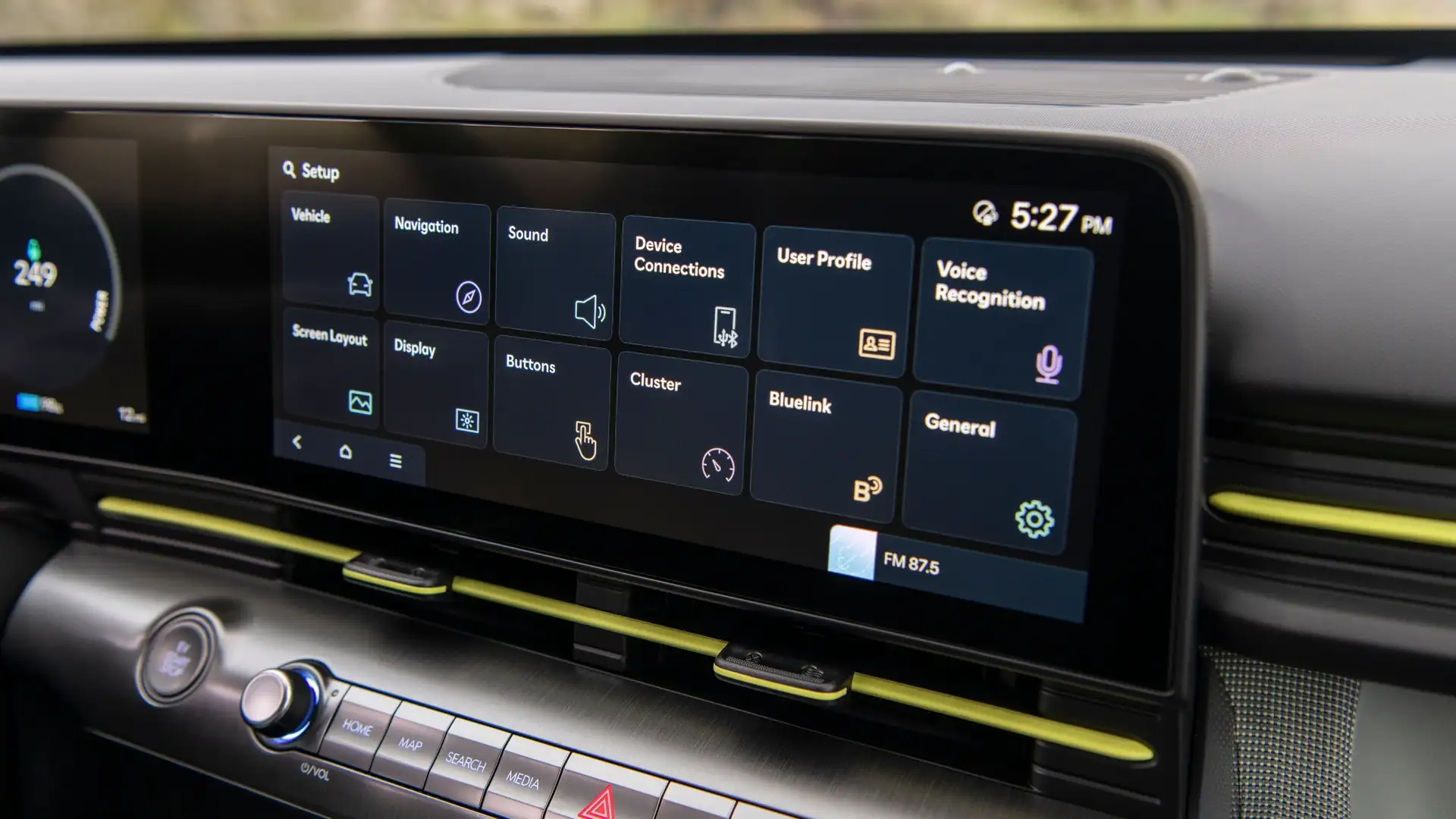
Driver information is presented through a digital instrument cluster that displays speed, system alerts, and vehicle status indicators. The display uses clear graphics and adjustable illumination to support visibility under varying lighting conditions. Indicators for driver-assistance systems and vehicle alerts are integrated into the cluster for centralized monitoring.
The center infotainment system uses a wide touchscreen interface that manages audio, navigation, and vehicle settings. Display resolution supports clear graphics and text presentation. System menus are designed to allow straightforward access to features without unnecessary complexity.
Connectivity and Infotainment Integration
The 2026 Hyundai Kona Electric includes wireless compatibility with Android Auto™ and Apple CarPlay®, allowing smartphone integration without physical cables. Multiple USB-C outlets are positioned throughout the cabin to support device charging and connectivity for both front and rear occupants. Wireless device charging is included for supported devices, reducing reliance on cables.
Audio systems are configured to deliver balanced sound distribution through strategically placed speakers. System integration supports radio, streaming audio, and navigation functions through a unified interface.
Climate Control and Cabin Environment Systems
Cabin climate management is handled through an automatic temperature control system that regulates airflow and temperature settings. Rear air vents distribute conditioned air to second-row passengers. The system includes a cabin air filter to manage interior air quality.
Additional features include a rear window defroster with timer functionality. These systems are designed to maintain cabin comfort while managing energy consumption efficiently.
Driver-Assistance Technologies and Active Safety Systems
The 2026 Hyundai Kona Electric integrates a comprehensive range of driver-assistance technologies. Forward collision-avoidance assist monitors the roadway for potential hazards and can apply braking intervention when necessary. Lane keeping assist and lane following assist help maintain lane position under appropriate conditions.
Blind-spot collision avoidance and rear cross-traffic collision avoidance systems monitor surrounding traffic during lane changes and reversing maneuvers. Intelligent speed limit assist provides alerts based on detected speed limit information. Driver attention warning monitors driving patterns and issues alerts if signs of reduced attention are detected.
High beam assist manages headlight output automatically. Rear occupant alert monitors rear seat activity to reduce the risk of unattended occupants.
Passive Safety Engineering and Occupant Protection
Passive safety systems in the 2026 Hyundai Kona Electric include advanced front airbags for the driver and front passenger, side-impact airbags for thorax protection, and side curtain airbags for front and rear occupants. Seatbelt systems include pretensioners and load limiters for front and rear outboard seating positions.
The body structure incorporates reinforced zones to manage energy absorption during collisions. Electronic shift lock systems and immobilizer technology add additional layers of vehicle security.
Cargo Capacity and Practical Utility Design
Cargo capacity in the 2026 Hyundai Kona Electric supports daily usability and extended transport needs. With rear seats in place, the cargo area provides space for standard luggage and equipment. Folding the rear seats expands cargo volume significantly, allowing the transport of larger items.
Roof rails support additional cargo solutions such as crossbars when equipped. Interior storage compartments, door pockets, and center console storage areas provide organized space for smaller items.
Schedule a Test Ride at ALM Hyundai of Athens
A detailed understanding of the technical systems of the 2026 Hyundai Kona Electric is best achieved through direct operation. Scheduling a test drive allows drivers to assess electric power delivery, steering response, braking behavior, and driver-assistance functionality in practical conditions. The cabin layout, digital displays, and connectivity systems can also be evaluated during real driving scenarios. ALM Hyundai of Athens near Commerce, GA offers the opportunity to explore these features with professional guidance. A scheduled visit provides a structured environment to examine how the specifications of the 2026 Hyundai Kona Electric translate into everyday operation.