

2026 Hyundai IONIQ 9 near Buford, GA
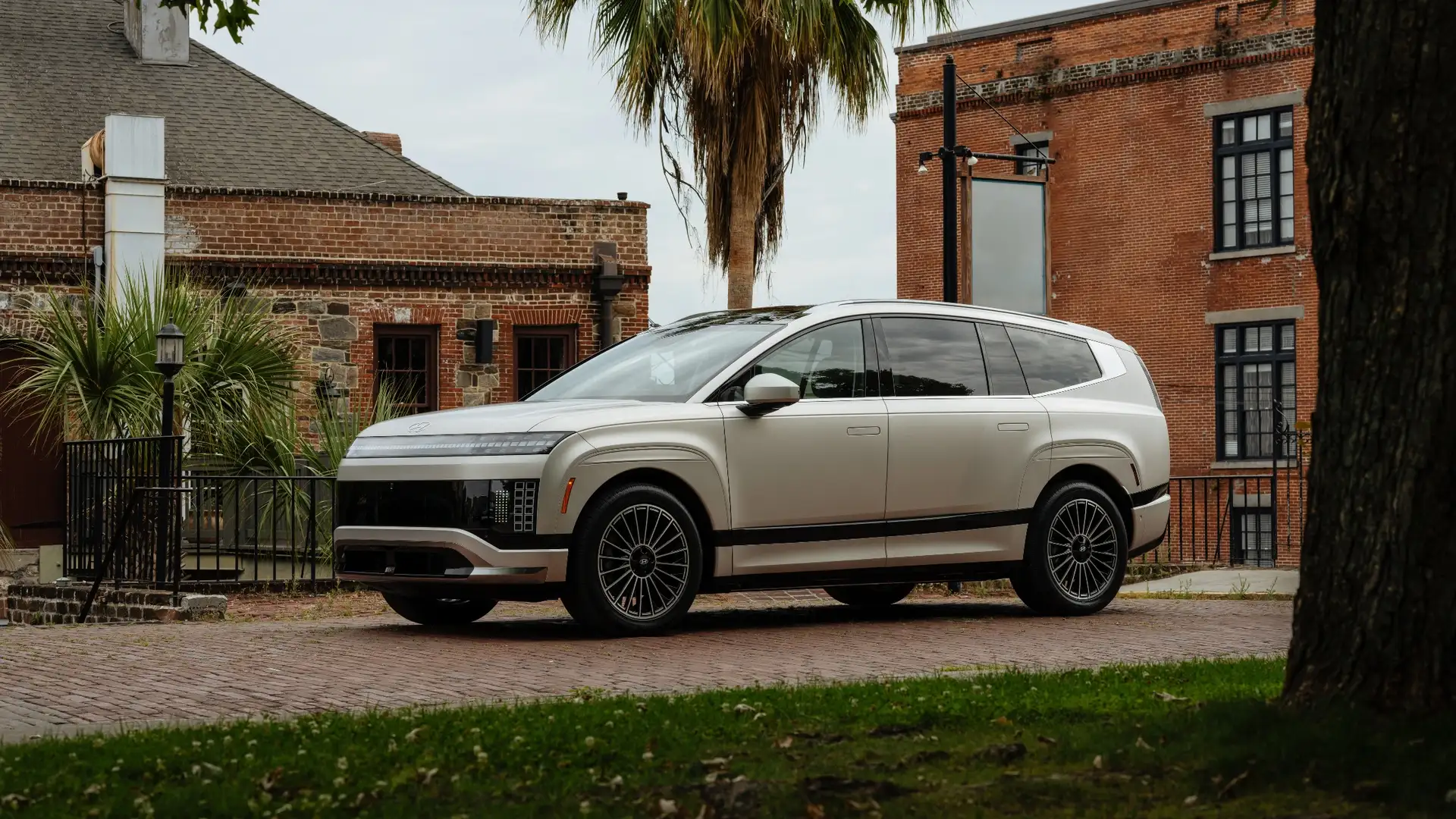
The 2026 Hyundai IONIQ 9 is a three-row electric sport utility vehicle engineered to support extended driving range, high-output electric performance, and a comprehensive suite of integrated vehicle systems. Built on a dedicated electric vehicle architecture, the 2026 Hyundai IONIQ 9 supports both rear-wheel drive and all-wheel drive configurations while maintaining consistent energy efficiency across its lineup. The platform enables a low center of gravity, optimized structural rigidity, and expanded interior volume. Each mechanical, electrical, and electronic component has been configured to support large-scale battery capacity, high-voltage charging, and advanced driver assistance functionality. The result is an electric SUV designed for long-distance travel, multi-passenger capacity, and system-level efficiency.
Electric Motor Architecture and Drive Configuration
The 2026 Hyundai IONIQ 9 utilizes permanent-magnet synchronous motor technology across all configurations. Rear-wheel drive models are equipped with a single electric motor producing 160 kilowatts, equivalent to 215 horsepower, and generating 350 Newton-meters of torque. All-wheel drive variants introduce a second motor, increasing total system output to 226.1 kilowatts, or 303 horsepower, with torque output rising to 605 Newton-meters. The highest-output configuration delivers a combined 314.6 kilowatts, or 422 horsepower, with torque reaching 700 Newton-meters.
Power is transmitted through a single-speed reduction gear system designed to deliver uninterrupted torque without gear shifting. Electronic shift-by-wire operation is managed through a column-mounted selector. Drive configuration options include rear-wheel drive and all-wheel drive, allowing the vehicle to adapt to varying traction demands. Drive Mode Select functionality provides selectable Eco, Normal, Sport, Snow, and customizable modes, each adjusting throttle response and energy distribution parameters.
High-Voltage Battery System and Energy Capacity
All 2026 Hyundai IONIQ 9 models are equipped with a lithium-ion battery system rated at 110.3 kilowatt-hours. The battery operates at 610 volts, supporting high-efficiency power delivery and rapid charging capability. Rear-wheel drive models achieve a combined driving range of up to 335 miles, while all-wheel drive variants provide ranges of 320 miles and 311 miles depending on output configuration.
A battery heating system with integrated preconditioning functionality is included to support charging performance in varied ambient temperatures. The non-traction electrical system operates on a 12-volt architecture to support vehicle accessories and control modules. Battery management systems are calibrated to balance performance output, energy efficiency, and long-term system stability.
Charging Technology and Infrastructure Compatibility
The 2026 Hyundai IONIQ 9 is equipped with a North American Charging Standard port positioned on the rear passenger-side quarter panel. DC fast charging capability supports multiple charging outputs when used with a compatible adapter. Charging from 10 percent to 80 percent can be completed in approximately 24 minutes when connected to a 350-kilowatt DC fast charger. A 50-kilowatt DC fast charger completes the same range in approximately 109 minutes. AC Level 2 charging using a 240-volt, 48-amp power supply requires approximately 9 hours and 40 minutes for a 10 percent to 80 percent charge cycle.
A dual-voltage charging cable is included to support home and portable charging scenarios. Charge port access is managed through a power-operated door, allowing controlled opening and closing during charging sessions.
Disclaimer: Approximately 24 minutes to charge from 10% to 80% on a 350-kW, 800V DC ultra-fast charger using the CCS adapter included with the 2026 IONIQ 9. Actual charging time varies based on a number of factors, including current battery charge level, output of the charging unit, vehicle and battery settings, battery temperature, and outside temperature. Ultra-fast charging stations are provided by independent companies, and availability is not guaranteed.
Steering, Suspension, and Vehicle Control Systems
Steering is managed through a rack-mounted motor-driven power steering system calibrated for electric vehicle weight distribution. The steering system provides a turning diameter of 41 feet, supporting maneuverability in confined spaces. Overall steering ratio is set at 16.02, with 2.93 turns lock-to-lock.
Front suspension utilizes a MacPherson® strut design with gas dampers, while the rear suspension employs a multi-link five-link configuration with gas dampers. This suspension architecture is designed to balance ride comfort with lateral stability under load. The chassis structure uses a unibody construction composed primarily of advanced high-strength steel and high-tensile steel, contributing to torsional rigidity and crash energy management.
Braking Systems and Regenerative Control
The braking system consists of four-wheel ventilated disc brakes, with front rotors measuring 360 millimeters in diameter and rear rotors measuring 345 millimeters. Regenerative braking is integrated with an active hydraulic brake booster to coordinate mechanical braking and energy recovery. Steering wheel-mounted regenerative brake control paddles allow the driver to adjust regeneration intensity.
Additional braking-related systems include electronic brake-force distribution, anti-lock braking across all wheels, brake assist, hill-start assist control, and an electric parking brake with automatic vehicle hold functionality. These systems are designed to maintain braking consistency under varied driving conditions.
Exterior Structure, Dimensions, and Aerodynamics
The exterior dimensions of the 2026 Hyundai IONIQ 9 include a wheelbase of 123.2 inches, an overall length of 199.2 inches, an overall width of 78.0 inches, and an overall height of 70.5 inches. Minimum ground clearance measures 6.9 inches. Aerodynamic efficiency is supported by active air flaps in the lower front grille and a low coefficient of drag measured at 0.269.
Wheel options include 19-inch, 20-inch, and 21-inch alloy wheels depending on trim level, paired with appropriately sized tires. Exterior lighting is fully LED-based, including daytime running lights, projector headlights with automatic high-beam assist, taillights, and an integrated center high-mount stop lamp. A panoramic sunroof, roof side rails, a power liftgate with automatic open, and an integrated rear spoiler are available depending on trim configuration.
Interior Volume and Seating Configuration
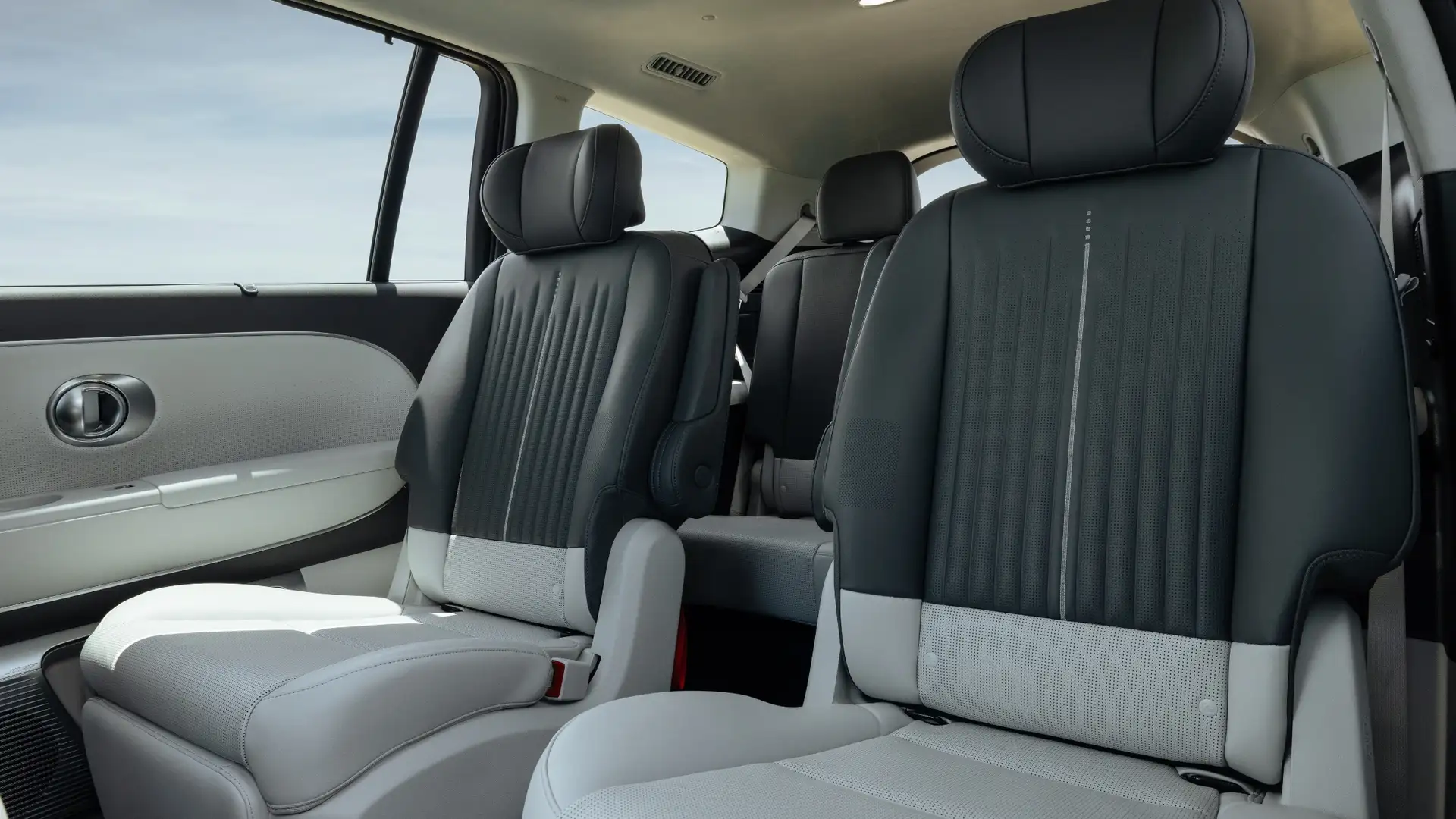
Interior seating capacity is configured for six or seven occupants depending on trim level. Seating surfaces include stain-resistant cloth or H-Tex® trimmed materials. Front seating features 8-way power adjustment for the driver across all trims, with available power adjustment for the front passenger. Power lumbar support is available in multiple configurations, with memory system integration on higher trims.
Second-row seating is offered as either a bench seat with slide and manual entry assist or power-adjustable captain’s chairs with one-touch walk-in functionality, wing-type headrests, and leg rests. Third-row seating is manually adjustable on standard trims and power folding on higher trims. Total interior volume measures 185.44 cubic feet, with luggage capacity reaching 86.9 cubic feet with rear seats folded.
Infotainment Displays and Digital Interfaces
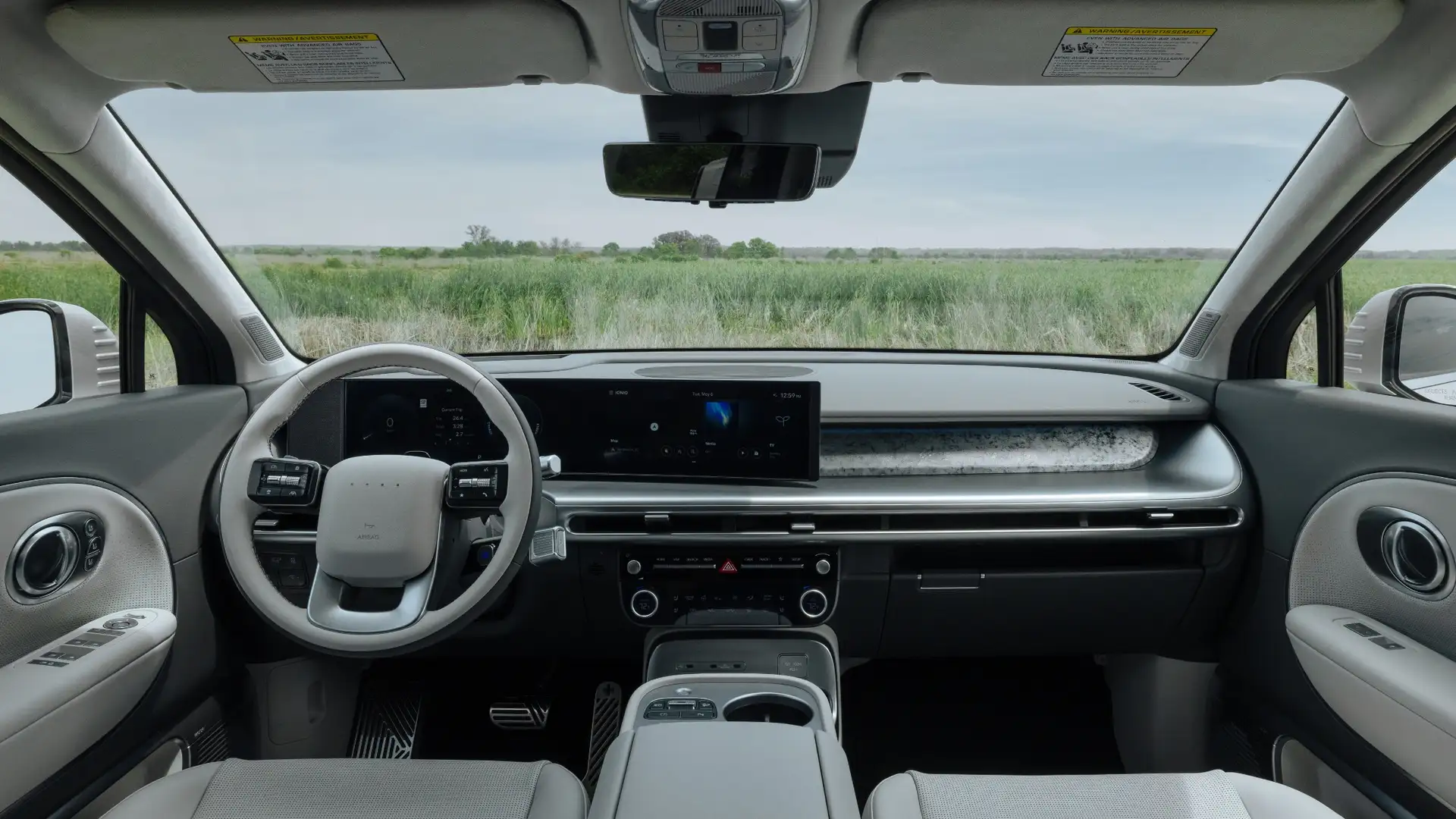
The 2026 Hyundai IONIQ 9 features a 12.3-inch digital instrument cluster displaying speed, power usage, charge level, drive mode status, and driver assistance indicators. A 12.3-inch center navigation display operates the brand’s connected car navigation cockpit system, supporting over-the-air software updates, satellite radio, and HD Radio™. Wireless Android Auto™ and Apple CarPlay® functionality are standard across all trims.
Audio output is managed through a standard sound system, with a Bose® premium audio system available on select trims. Seven USB Type-C ports are distributed throughout all three seating rows. Wireless device charging is included. A rearview monitor with parking guidance assists with low-speed maneuvering.
Climate Control and Cabin Systems
Climate control includes dual automatic temperature control for front occupants and independent automatic climate control for the second row. Air vents are provided for all three seating rows. A heat pump system is standard, supporting efficient cabin heating in lower temperature conditions. Interior lighting includes LED ambient lighting on select trims, along with illuminated control interfaces.
Driver Assistance and Safety Technologies
Active safety systems include forward collision-avoidance assist with detection for vehicles, pedestrians, cyclists, and junction traffic. Lane keeping assist, lane following assist, highway driving assist 2, smart cruise control with stop and go, driver attention warning, and forward attention warning are standard.
Additional systems available depending on trim include blind-spot collision-avoidance assist, blind-spot view monitor, surround view monitor, rear cross-traffic collision-avoidance assist, parking collision-avoidance assist, remote smart parking assist 2, intelligent speed limit assist, and advanced rear occupant alert with radar detection. Passive safety systems include multiple airbags, three-point seatbelts for all seating positions, pretensioners, load limiters, and rear child safety locks.
Connected Vehicle and Power Distribution Capabilities
Bluelink® connected car services are standard, providing remote access to vehicle status, charging controls, and system diagnostics. Digital Key 2 Premium functionality is available on select trims, enabling compatible smart device access. Vehicle-to-load capability is supported through a two-way onboard charger located in the cargo area, allowing external devices to be powered directly from the vehicle battery.
Schedule a Test Ride Today
Drivers interested in evaluating the full technical capability of the 2026 Hyundai IONIQ 9 can benefit from experiencing its power delivery, regenerative braking control, and integrated driver assistance systems firsthand. A test drive allows direct assessment of electric acceleration, interior space utilization, and digital interface responsiveness under normal driving conditions. The combination of high-capacity battery architecture, advanced charging capability, and comprehensive safety systems support a wide range of daily and long-distance use cases. Our team at ALM Hyundai of Athens near Buford, GA, can assist with scheduling a test drive and reviewing configuration options. This opportunity provides a practical way to understand how the 2026 Hyundai IONIQ 9 performs across its complete system design.