

2026 Hyundai IONIQ 5 near Loganville, GA
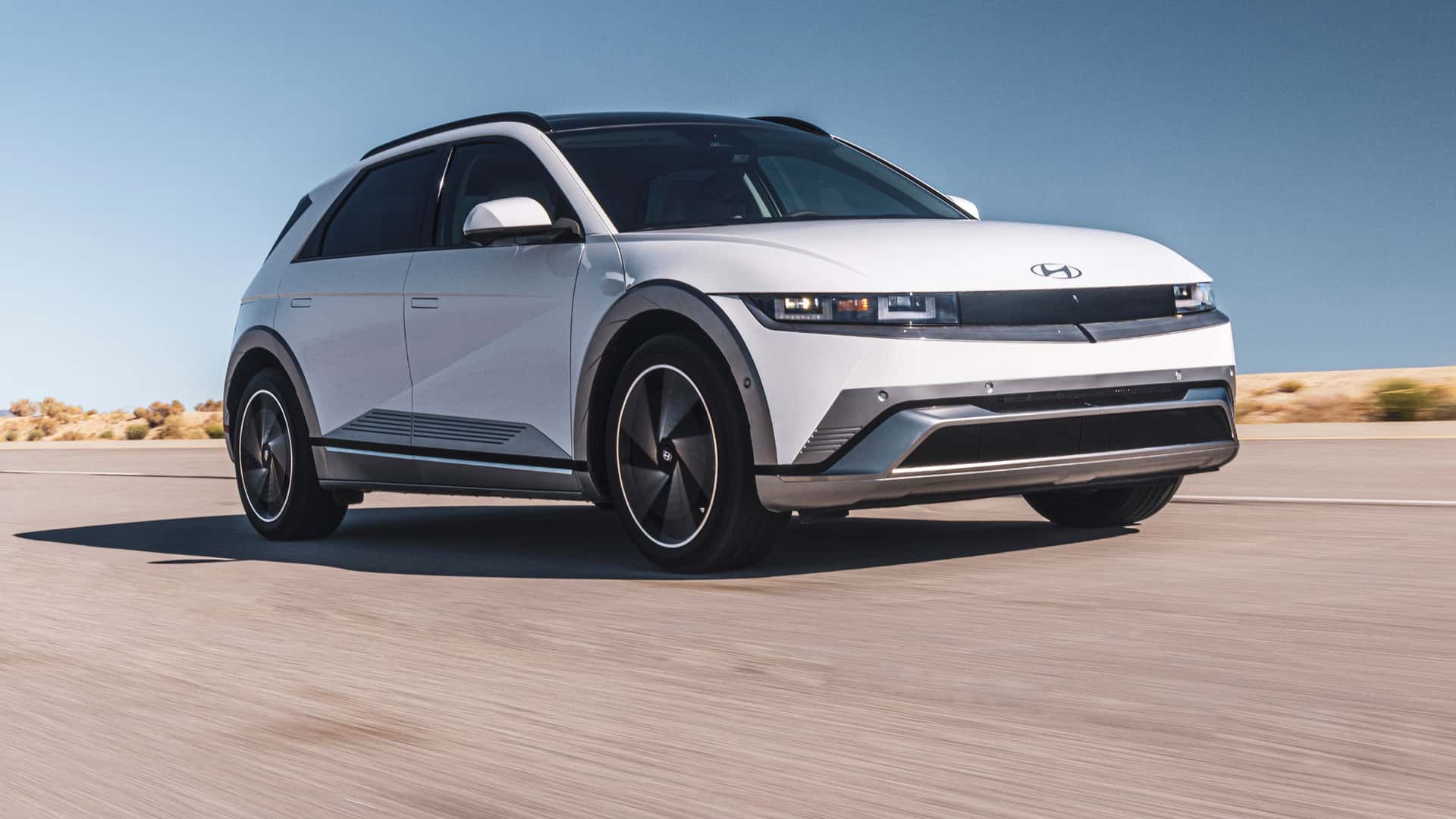
The 2026 Hyundai IONIQ 5 applies a dedicated electric vehicle platform that integrates high-voltage systems, scalable battery configurations, and multiple drivetrain layouts. The model supports rear-wheel drive and all-wheel drive configurations, each paired with a permanent-magnet synchronous motor system. Power delivery, charging capability, and structural engineering are designed to align with measurable performance metrics. The vehicle operates with electronically governed speed limits of 115 mph and incorporates a single-speed reduction gear transmission for consistent torque delivery.
Electric Powertrain Configuration and Output Metrics
The powertrain lineup includes three distinct configurations based on drivetrain and battery pairing. The rear-wheel drive standard range configuration produces 125 kW, equivalent to 168 horsepower, and delivers 350 Nm of torque. The extended-range rear-wheel drive configuration increases output to 168 kW, or 225 horsepower, while maintaining the same torque figure of 350 Nm. The all-wheel drive system integrates dual electric motors with a combined output of 320 horsepower and 605 Nm of torque.
The transmission system uses a single-speed reduction gear design, which eliminates gear shifting delays and supports continuous acceleration. The gear ratio is set at 2.263, with a final drive ratio of 4.706. A shift-by-wire system manages gear selection electronically. The front motor in all-wheel drive models uses a dog clutch disconnector, which allows the system to disengage the front motor when not required, improving efficiency during steady-state driving conditions.
Drive mode selection includes Eco, Normal, Sport, and Snow settings, accessible through steering wheel controls. The XRT trim includes additional terrain modes for mud and sand. These selectable modes adjust throttle response, torque distribution, and traction control parameters.
Battery System Specifications and Charging Performance
The 2026 Hyundai IONIQ 5 uses a lithium-ion battery system available in two capacities. The standard range battery has a capacity of 63.0 kWh, while the extended-range configuration uses an 84.0 kWh battery. Voltage differs between configurations, with the standard system operating at 523 volts and the extended system at 697 volts.
The battery system supports both 400V and 800V charging infrastructure. When connected to a DC fast charger exceeding 250 kW at 800V, the battery can charge from 10 percent to 80 percent in approximately 20 minutes. At 150 kW DC charging levels, the same charge interval requires approximately 24 minutes for the standard range and 30 minutes for the extended range. Using a 50 kW DC charger, the charging time from 10 percent to 80 percent increases to approximately 1 hour and 1 minute for the standard battery and 1 hour and 21 minutes for the extended battery.
For AC Level II charging using a 240V supply, the standard battery charges from 10 percent to 100 percent in approximately 5 hours and 40 minutes. The extended battery requires approximately 7 hours and 20 minutes for the same range. The onboard charger supports a maximum capacity of 10.9 kW. Battery preconditioning is included to regulate temperature prior to charging, improving efficiency and consistency.
The system is capable of adding up to 137.3 miles of range in 15 minutes for the standard configuration and up to 178.1 miles for the extended configuration under optimal conditions. The battery pack consists of 288 cells arranged in 24 modules for the standard system and 384 cells arranged in 32 modules for the extended system.
Structural Engineering and Chassis Dynamics
The 2026 Hyundai IONIQ 5 uses a unibody construction composed of advanced high-strength steel and high-tensile steel. This structure enhances rigidity and contributes to controlled handling characteristics. The suspension system features a MacPherson® strut front design paired with a multi-link rear configuration. Both front and rear systems include high-performance dampers to improve stability and ride quality.
The steering system uses a rack-and-pinion configuration with motor-driven power assistance. The steering ratio is 14.26 to 1, and the system provides 2.67 turns from lock to lock. The turning diameter measures 39.4 feet, allowing maneuverability in constrained spaces.
The braking system consists of ventilated front disc brakes measuring 325 mm by 30 mm and solid rear disc brakes measuring 325 mm by 12 mm. Anti-lock braking with electronic brake-force distribution is standard. Additional braking features include brake assist, hill-start assist control, and an active hydraulic booster integrated with regenerative braking. Drivers can adjust regenerative braking intensity using steering wheel-mounted paddles.
Exterior Engineering and Functional Design Elements
The exterior design integrates aerodynamic efficiency with functional components. The coefficient of drag is rated as low as 0.282, supporting reduced air resistance. Active grille shutters automatically regulate airflow to balance cooling requirements and aerodynamic performance.
Lighting systems include LED daytime running lights, LED headlights, and LED taillights across all trims. Higher trims incorporate projector-type headlights and a premium LED front accent light bar. Automatic headlights and high-beam assist are standard features.
Wheel configurations vary by trim level, with options including 18-inch, 19-inch, and 20-inch alloy wheels. Tire sizes correspond to wheel dimensions, including 235/60R18, 235/55R19, and 255/45R20. Flush-type door handles operate automatically and contribute to aerodynamic efficiency. The charge port is located on the rear passenger-side quarter panel and includes a power-operated door.
Additional exterior features include a hands-free smart power liftgate with adjustable height, a panoramic fixed glass roof on higher trims, and a rear spoiler integrated with an LED center high-mount stop lamp. The XRT trim includes specialized exterior cladding and trim elements designed for increased durability.
Interior Systems and Cabin Configuration
The interior is configured to accommodate five passengers with multiple seating material options. Standard seating includes stain-resistant cloth, while higher trims use H-Tex® artificial leather surfaces. Front seats include an 8-way power driver seat across all trims, with additional passenger seat adjustments available on higher trims. Heated front seats are standard, while ventilated front seats are available on higher trims. The driver seat in upper trims includes a relaxation function and memory system.
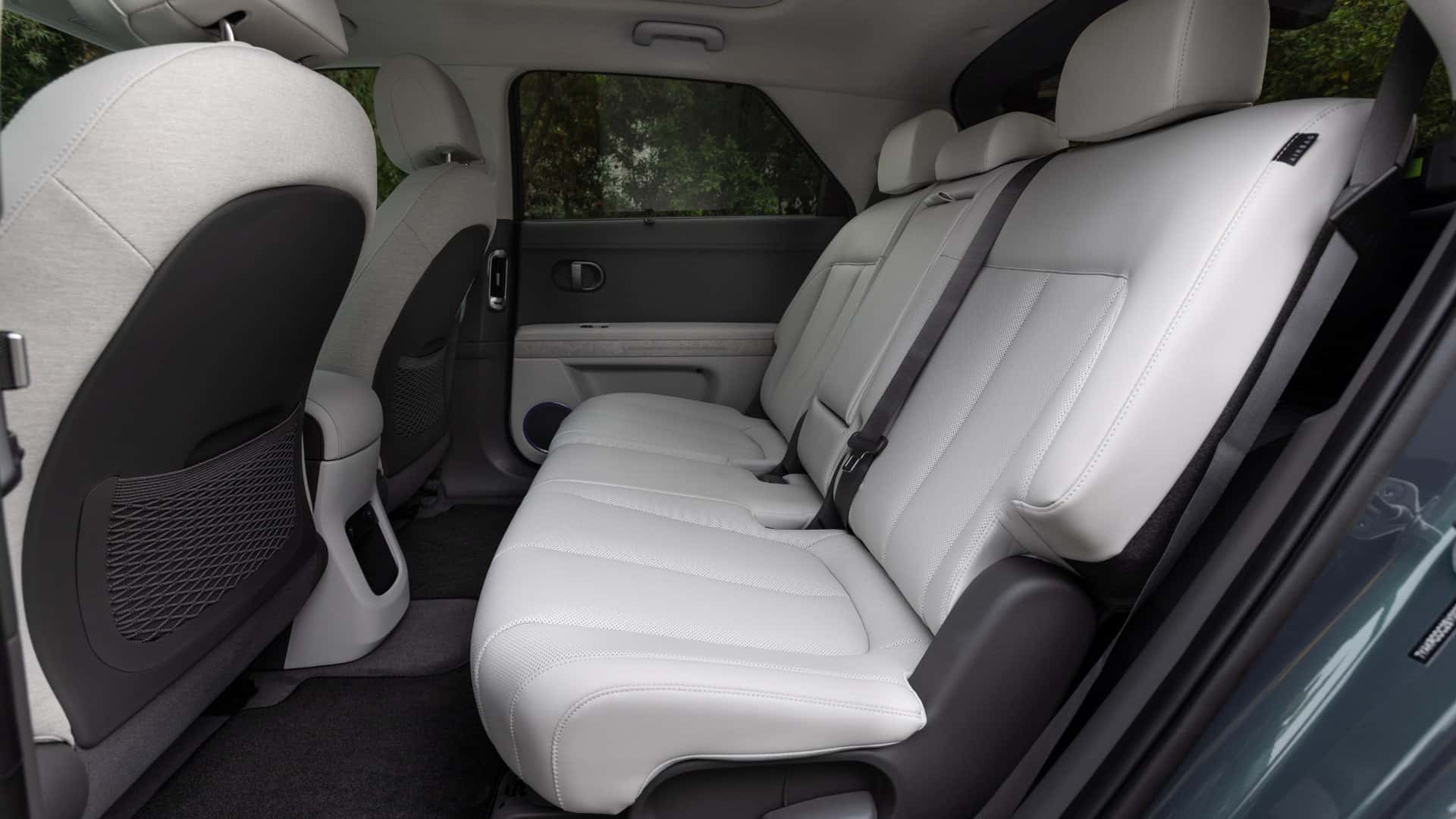
The rear seating features a 60 to 40 split-folding bench with sliding and reclining capability. Heated rear outboard seats are available on higher trims. Interior trim includes metallic-painted door handles, soft-touch panels on select trims, and a sliding center console on higher configurations.
Cargo capacity measures 26.3 cubic feet with rear seats in place and expands to 58.5 cubic feet when folded. A front trunk provides additional storage with a capacity of 0.85 cubic feet.
Infotainment Systems and Digital Interfaces
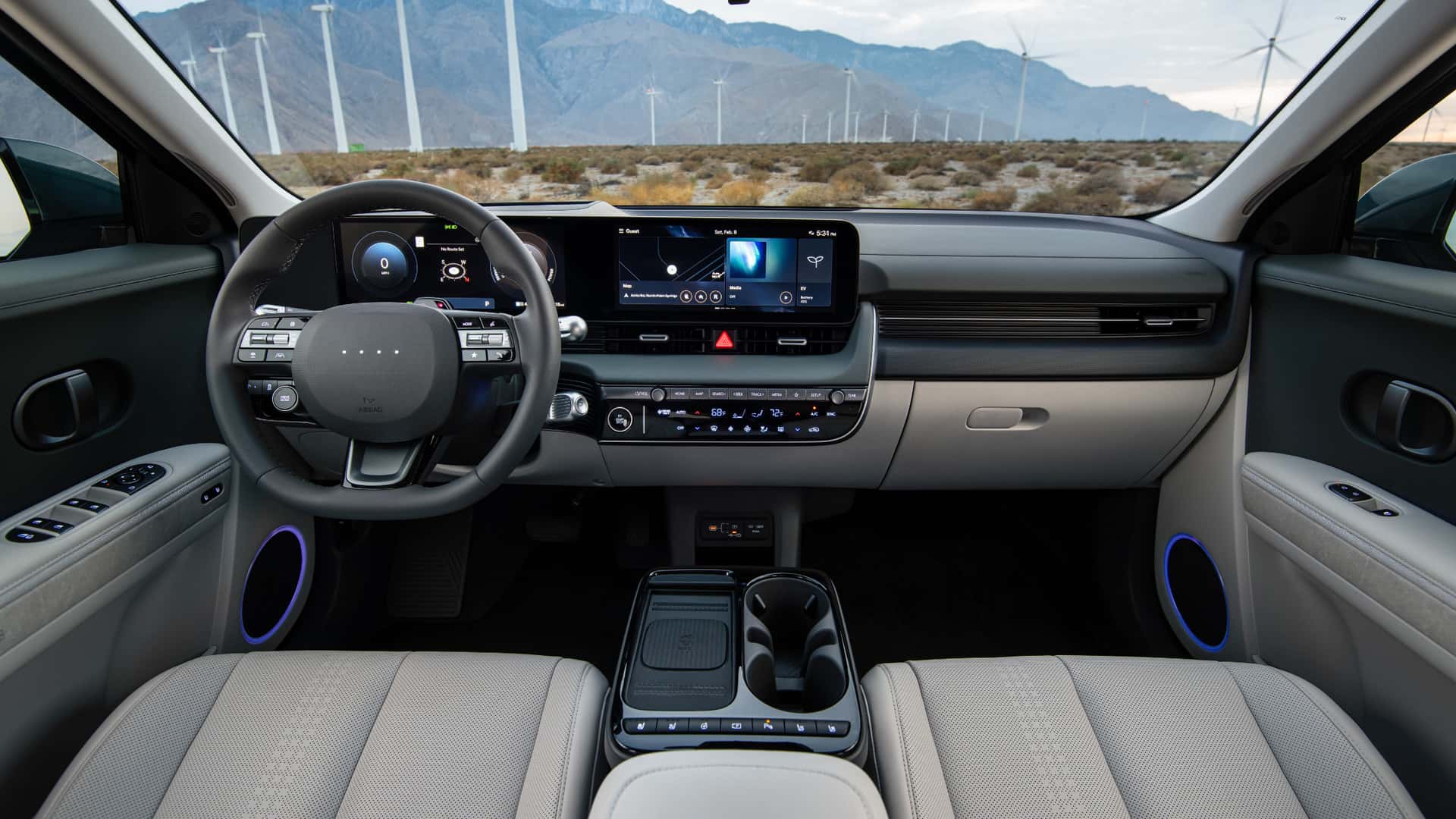
The 2026 Hyundai IONIQ 5 includes a dual 12.3-inch display system consisting of a digital instrument cluster and a touchscreen infotainment interface. The infotainment system supports AM, FM, SiriusXM®, and HD Radio™, along with onboard navigation and traffic data integration. Wireless Apple CarPlay® and Android Auto™ are standard features.
Audio configurations include a six-speaker system on standard trims and a Bose® premium system with eight speakers and an external amplifier on higher trims. A head-up display is available on higher trims, projecting driving information onto the windshield.
Connectivity features include Bluetooth® support for multiple devices, USB-C ports in both front and rear seating areas, and a wireless phone charger with 15W output. The system also includes dynamic voice recognition for hands-free control.
Climate Control and Convenience Technologies
The climate system includes dual automatic temperature control with a driver-only mode. Rear air vents are included for second-row passengers. A heat pump system is available on all-wheel drive models, improving efficiency in temperature regulation. A PTC heater and cabin air filter are standard.
Convenience features include proximity key entry with push-button start, power door locks, and remote keyless entry. Smart cruise control with stop-and-go functionality is included, with machine learning capability on higher trims. Remote smart parking assist is available on select trims, enabling automated parking maneuvers.
The vehicle includes multiple storage compartments, cupholders, and a sliding center console on higher trims. Vehicle-to-load functionality allows external devices to be powered using the vehicle’s battery system. Hyundai Digital Key 2 Premium enables smartphone-based access using NFC, Bluetooth®, and ultra-wideband technology.
Safety Systems and Driver Assistance Technologies
The 2026 Hyundai IONIQ 5 includes a comprehensive set of safety features. The airbag system includes front airbags, side-impact airbags, curtain airbags with rollover sensors, and rear side airbags. Seatbelt systems include pretensioners and load limiters, along with adjustable anchors.
Active safety technologies include forward collision-avoidance assist with detection for vehicles, pedestrians, and cyclists. Enhanced versions include junction turning and crossing detection, lane-change detection, and evasive steering assistance. Blind-spot collision-avoidance assist and rear cross-traffic collision-avoidance assist are included on higher trims.
Lane keeping assist and lane following assist provide steering input to maintain lane position. Highway driving assist systems support controlled driving on highways. Navigation-based smart cruise control adjusts speed based on road curvature. Additional systems include driver attention warning, forward attention warning, and intelligent speed limit assist.
Parking assistance features include parking distance warning, surround view monitor, blind-spot view monitor, and parking collision-avoidance assist. Safe exit assist prevents passengers from opening doors when approaching vehicles are detected.
Visit ALM Hyundai of Athens near Loganville, GA
We encourage you to examine the 2026 Hyundai IONIQ 5 in detail through a scheduled test drive. At ALM Hyundai of Athens near Loganville, GA, our team can provide direct access to its electric powertrain performance, charging systems, and integrated safety technologies. A test drive allows evaluation of acceleration, regenerative braking control, and driver assistance features under standard driving conditions. You can also assess cabin layout, digital interfaces, and comfort-related systems during operation. Contact our team to arrange a test drive and review the full technical capabilities of this model in person.