

2026 Hyundai IONIQ 5 N near Buford, GA
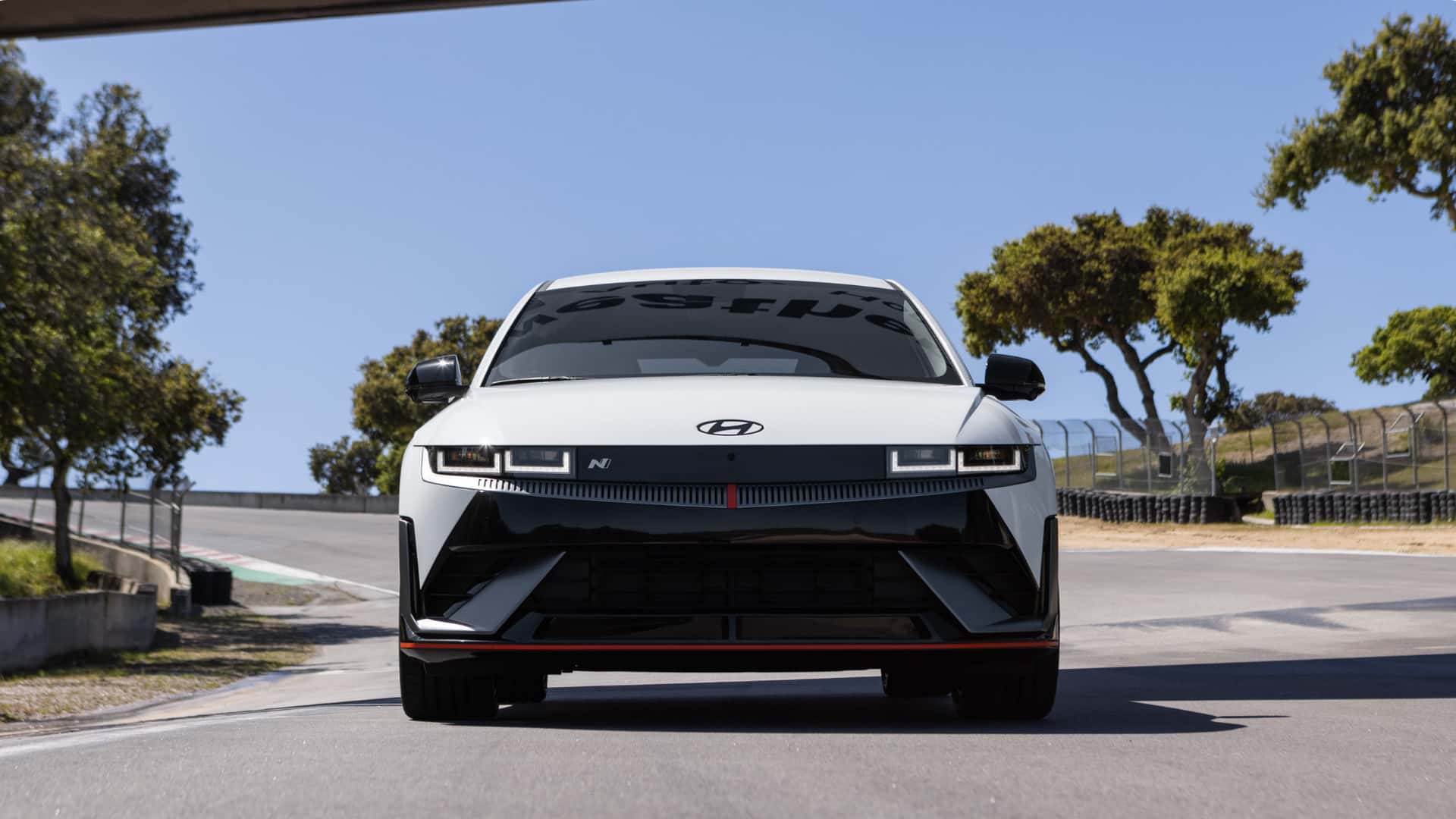
The 2026 Hyundai IONIQ 5 N is a performance-oriented electric crossover engineered with a focus on high-output electric propulsion, advanced chassis control, and integrated driver technologies. Developed under Hyundai’s N performance division, the model applies motorsport-inspired engineering to the electric vehicle platform. The vehicle operates with a dual-motor all-wheel-drive configuration, an 84.0 kWh lithium-ion battery system, and advanced performance control systems designed to enhance acceleration, handling, and braking precision.
The powertrain combines front and rear permanent magnet synchronous motors with a single-speed reduction gear transmission. The system delivers a maximum output of 448 kW, equivalent to 601 horsepower. When the N Grin Boost performance function is engaged, output increases to 478 kW, or 641 horsepower. Torque output reaches 740 Nm, equivalent to 545 lb-ft, and increases to 770 Nm, or 568 lb-ft, with N Grin Boost activation. The vehicle achieves a top speed of 162 miles per hour and accelerates from 0 to 60 miles per hour in approximately 3.25 seconds.
High-Output Electric Motor and Dual-Motor AWD System
The propulsion system uses two permanent magnet synchronous motors positioned at the front and rear axles. This layout enables an electronically controlled all-wheel-drive configuration that distributes torque across both axles for traction and acceleration control. The front motor produces 166 kW under standard operation and increases to 175 kW with N Grin Boost activation. The rear motor produces 282 kW and increases to 303 kW during boost operation.
Combined system output reaches 448 kW during standard performance driving conditions. When the boost system activates, maximum combined output reaches 478 kW. Torque output follows a similar structure. The front motor generates 350 Nm, while the rear motor generates 390 Nm. Boost operation increases the front motor torque to 370 Nm and the rear motor torque to 400 Nm.
Power delivery occurs through a single-speed reduction gear transmission connected to both motors. The front gear ratio is 2.263, and the rear gear ratio is 2.265, with a final gear ratio of 4.706. The front axle includes a dog clutch disconnector system designed to optimize drivetrain efficiency by disconnecting the front motor during low-demand driving conditions. The vehicle uses shift-by-wire electronic gear selection integrated into the steering column. Drive mode selection allows the driver to choose between Eco, Normal, Sport, and dedicated N performance modes, including N and customizable N Custom settings.
Lithium-Ion Battery Architecture and Energy Capacity
The energy storage system consists of an 84.0 kWh lithium-ion battery pack designed for high power output and rapid charging capability. The battery operates at 697 volts and uses a 2P192S cell configuration supplied by SK Innovation. Energy density is measured at 173 Wh per kilogram, allowing the battery to balance high output with structural packaging efficiency. The battery assembly weighs approximately 1,071 pounds.
The battery system supports a discharge output of 535 kW and a charging output of 432 kW. A battery heating and preconditioning system is included to regulate operating temperature and improve charging efficiency under varying environmental conditions. The battery integrates a dedicated 12-volt electrical system for non-traction components and vehicle electronics.
Charging hardware includes an onboard charger with a maximum capacity of 10.9 kW and an output density of 1.4 kVA per liter. The vehicle is equipped with a North American Charging Standard charge port located on the passenger-side rear quarter panel. The system supports both alternating current and direct current charging infrastructure.
Ultra-Fast Charging Capability and Electrical Efficiency
Charging performance is designed to support high-power charging networks. When connected to a 350 kW 800-volt direct current fast charger, the battery can recharge from 10 percent to 80 percent capacity in approximately 18 minutes. When connected to a 150 kW direct current charging system, the same charging interval requires about 30 minutes. Charging with a 50 kW DC fast charger requires about 1 hour and 21 minutes for the same capacity range.
Level 2 alternating current charging with a 240-volt power supply allows the battery to recharge from 10 percent to full capacity in approximately 7 hours and 20 minutes. The vehicle includes Vehicle-to-Load functionality that enables the high-voltage battery to supply electrical power to external devices through an adapter connected to the charge port.
Official MPGe ratings and total driving range figures remain under evaluation at the time of specification release. The electric powertrain produces zero tailpipe emissions and maintains a smog rating of 10, reflecting its classification as a zero-emission vehicle.
Performance Suspension and Steering Engineering
The chassis architecture incorporates performance-oriented suspension components designed to maintain stability and steering precision under high acceleration and cornering loads. The front suspension uses a MacPherson® strut design that integrates electronically controlled dampers. The rear suspension uses a multi-link configuration that also includes electronically controlled dampers.
The electronic-controlled suspension system continuously adjusts damper stiffness in response to road surface conditions and selected drive modes. This system allows the suspension to balance ride comfort with dynamic control during performance driving.
Steering is handled by a rack-and-pinion system supported by motor-driven power steering mounted directly to the steering rack. The system uses a 12.54-to-1 steering ratio and completes 2.29 turns from lock to lock. The vehicle has a turning diameter of 40.7 feet measured curb to curb. The steering wheel measures 14.5 inches in diameter and includes integrated controls for audio, cruise control, and regenerative braking pedal inputs.
High-Capacity Braking System and Regenerative Control
The braking system integrates large, ventilated disc brakes at both axles. The front axle uses 400 mm ventilated discs paired with four-piston fixed calipers. The rear axle uses 360 mm ventilated discs paired with single-piston sliding calipers. The braking system incorporates an integrated electronic brake booster that manages hydraulic pressure distribution.
Electronic braking functions include anti-lock braking, electronic brake-force distribution, and brake assist. Vehicle stability control and traction control systems operate in conjunction with the braking system to maintain directional stability during acceleration and cornering. Hillstart Assist Control is included to maintain braking pressure during incline starts.
The regenerative braking system captures kinetic energy during deceleration and converts it into electrical energy for battery recharging. Drivers can adjust regenerative braking levels using steering wheel-mounted paddles. The vehicle also includes N e-Shift functionality that simulates gear changes during acceleration to provide a structured driving response.
Aerodynamic Exterior Engineering and Lighting Systems
Exterior design elements incorporate aerodynamic and performance considerations. Active grille shutters and active air flaps positioned in the front fascia regulate airflow to reduce drag and support cooling requirements. The vehicle achieves a drag coefficient of 0.313.
The exterior lighting system includes projector-type LED headlights with automatic headlight activation and High Beam Assist functionality. LED daytime running lights and LED taillights improve vehicle visibility. An N-exclusive LED center high-mounted stop lamp is integrated into the rear spoiler.
The vehicle rides on 21-inch forged alloy wheels measuring 9.5 inches in width with a 45 mm offset. These wheels are fitted with Pirelli P ZERO 275/35R21 performance tires designed for high-grip driving conditions. A tire mobility kit replaces a traditional spare tire to optimize weight distribution.
Additional exterior components include gloss black side mirrors with integrated turn signal indicators and blind spot warning indicators. The mirrors include heating and power folding functions. The body structure uses advanced high-strength steel and high-tensile steel to maintain rigidity while controlling vehicle weight.
Digital Cockpit Technology and Infotainment System
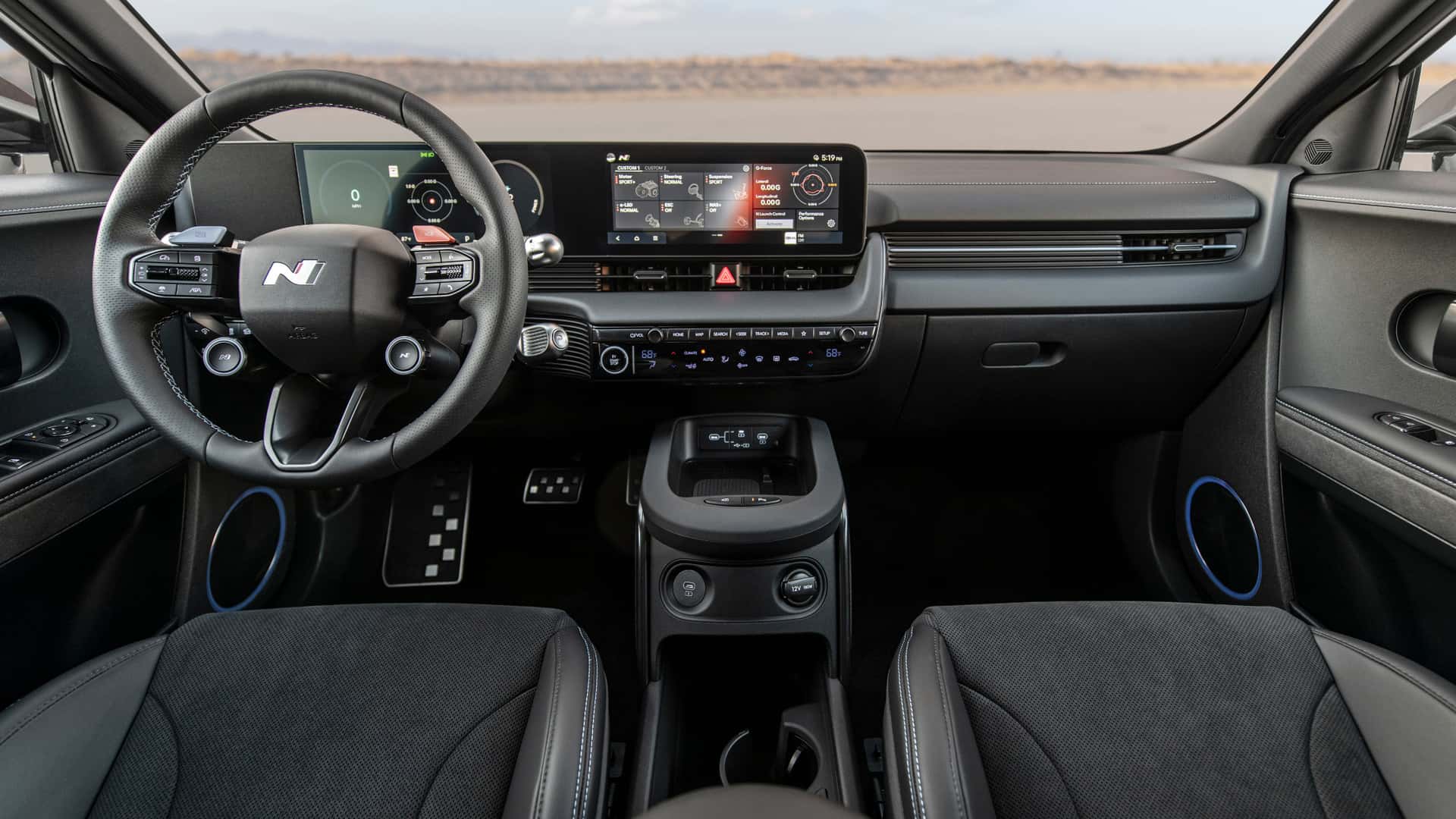
Interior technology integrates digital instrumentation and connected vehicle features. The driver interface includes a 12.3-inch digital instrument cluster paired with a 12.3-inch touchscreen infotainment display. The cluster displays vehicle speed, battery charge level, power usage, drive mode information, and N performance indicators.
The infotainment system supports AM, FM, SiriusXM®, and HD Radio™ audio sources. Wireless smartphone connectivity for Apple CarPlay® and Android Auto™ is included. The system also supports dynamic voice recognition for navigation and media control.
The Bose® premium audio system features an external amplifier and eight speakers for balanced in-cabin audio. Speaker placement includes front door speakers, tweeters, rear speakers, a center channel speaker, and a subwoofer. The vehicle also includes Bluetooth® multi-device connectivity supporting up to two devices simultaneously.
Additional technology features include a wireless smartphone charging pad capable of delivering 15 watts of power and multiple USB Type-C ports positioned across both seating rows. Hyundai Bluelink® Plus connected services provide remote vehicle functions, vehicle diagnostics, and remote charging management through mobile connectivity.
Driver Assistance and Safety Technology Systems
The 2026 Hyundai IONIQ 5 N integrates an extensive set of driver assistance systems designed to improve situational awareness and vehicle control. The vehicle includes forward collision avoidance assist capable of detecting vehicles, pedestrians, and cyclists. The system also supports junction-turning detection and lane-change monitoring functions.
Blind-Spot Collision-Avoidance Assist monitors adjacent lanes and provides steering intervention if necessary. The blind-spot view monitor displays camera feeds in the digital instrument cluster when turn signals activate. Rear Cross-Traffic Collision-Avoidance Assist monitors approaching vehicles during reversing maneuvers.
Lane Keeping Assist and Lane Following Assist maintain the vehicle within lane boundaries using steering inputs. Intelligent Speed Limit Assist monitors posted speed limits and provides speed adjustment alerts. Navigation-based Smart Cruise Control includes curve control that adjusts speed automatically during highway driving.
Highway Driving Assist 2 integrates adaptive cruise control with lane-centering functions to support semi-automated highway travel. Additional systems include Driver Attention Warning, Forward Attention Warning, Safe Exit Assist, Parking Distance Warning, and Parking Collision-Avoidance Assist for reverse maneuvering.
Passive safety equipment includes front airbags, front side-impact airbags, and side curtain airbags with rollover sensors. Seatbelt pretensioners and load limiters are installed in outboard seating positions. Rear seating positions include LATCH anchors for child safety seats. Additional safety components include tire pressure monitoring with individual tire indicators and electronic shift lock systems.
Interior Space, Seating Design, and Climate Control
The cabin of the 2026 Hyundai IONIQ 5 N provides seating for five passengers and incorporates performance-oriented seating structures. The front seats are lightweight sport bucket seats that include illuminated N logos integrated into the seatbacks. Seating materials combine Eco Alcantara and H-Tex® synthetic upholstery.
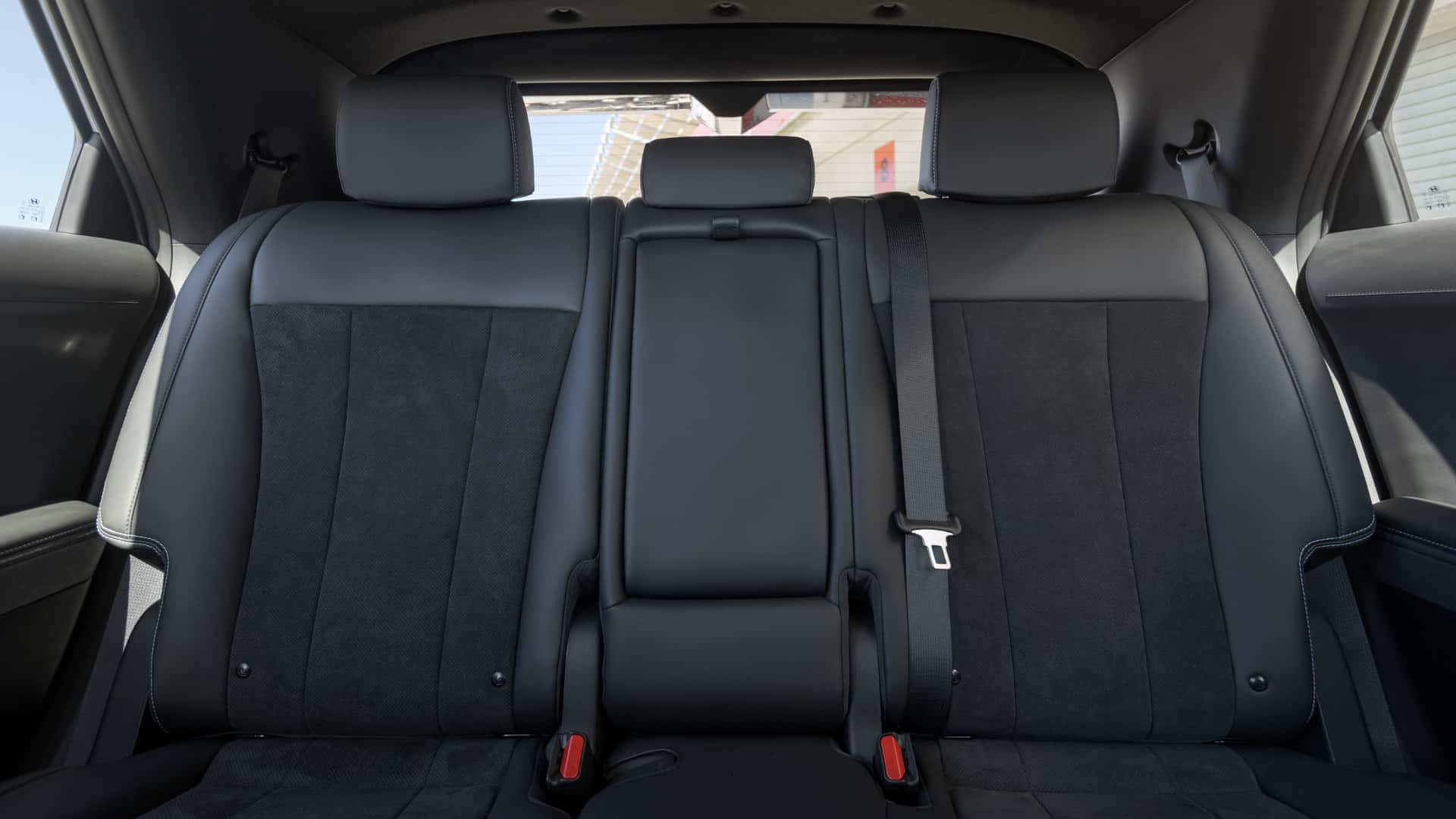
The front seats include heating and ventilation functions. Both seats offer six-way manual adjustment. The rear seating row uses a 60/40 split folding bench with sliding functionality and reclining seatbacks. Adjustable head restraints are provided for the outboard rear seating positions.
Climate control is managed through a dual-zone automatic temperature control system that includes a driver-only operation mode to reduce energy consumption when only the driver is present. The heating system includes a PTC heater and an integrated heat pump for efficient cabin temperature management. Rear passengers receive dedicated air vents and adjustable airflow.
Interior convenience features include a proximity key with push-button start, power windows with automatic up and down functionality, and remote keyless entry. Ambient interior lighting includes a 64-color system integrated into door trim panels and speaker rings. Cargo capacity measures 26.1 cubic feet with rear seats upright and expands to 59.3 cubic feet with rear seats folded.
Visit ALM Hyundai of Athens near Buford, GA
Drivers interested in advanced electric vehicle engineering can experience the 2026 Hyundai IONIQ 5 N in person to evaluate its electric powertrain, chassis tuning, and integrated driver technologies. Our team at ALM Hyundai of Athens near Buford, GA, can assist with scheduling a test drive and explaining the vehicle’s dual-motor all-wheel-drive system, 84.0 kWh battery architecture, and advanced driver assistance features. A test drive allows drivers to observe the acceleration produced by the 601-horsepower system and the temporary 641-horsepower output enabled by the N Grin Boost function. It also provides an opportunity to examine the electronically controlled suspension, regenerative braking system, and digital cockpit interface during actual driving conditions. Contact our dealership to schedule a test drive and review the technical capabilities of the 2026 Hyundai IONIQ 5 N.