

2026 Hyundai Elantra nearby Loganville, GA
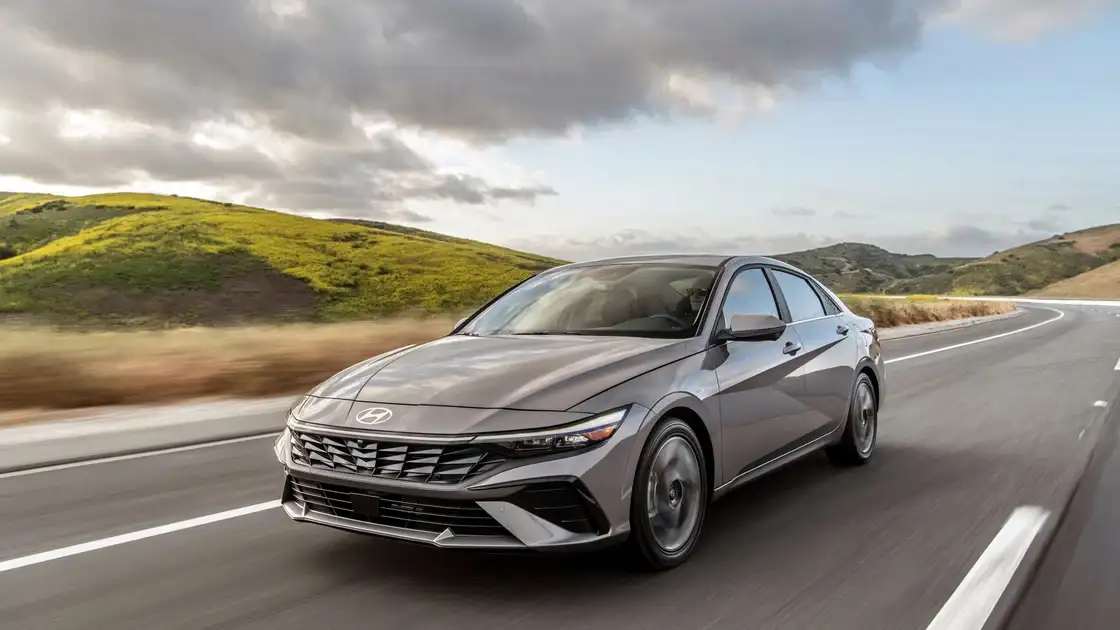
The 2026 Hyundai Elantra is a five-passenger compact sedan available with gasoline, hybrid, turbocharged, and performance-focused powertrains. The lineup combines front-wheel drive with several transmission designs, trim-specific chassis configurations, and wheel sizes ranging from 15 to 19 inches. Interior equipment includes flexible rear seating, available heated and ventilated front seats, digital displays, smartphone connectivity, and multiple charging ports. Standard and available driver-assistance technologies complement a body structure designed with high-tensile steel, crumple zones, and reinforced side sections. This article covers the powertrains, transmissions, chassis hardware, exterior equipment, cabin features, technology, dimensions, and safety systems of the 2026 Hyundai Elantra.
Powertrain and performance engineering
The 2026 Hyundai Elantra lineup includes several engine and transmission combinations designed for different operating requirements. Every configuration uses front-wheel drive, but horsepower, torque, transmission construction, and available drive modes vary by model. The powertrain range begins with a naturally aspirated 2.0-liter engine and extends to a gasoline-electric hybrid system, a turbocharged N Line engine, and the higher-output Elantra N powertrain. Applicable automatic and dual-clutch configurations also provide selectable driving modes. These mechanical variations give each 2026 Hyundai Elantra configuration a distinct combination of output, response, and control.
Gasoline engine and intelligent variable transmission
SE, SEL Sport, SEL Sport Premium, and Limited models use a 2.0-liter MPI Atkinson-cycle DOHC inline four-cylinder engine. This 1,999 cc engine features an aluminum block and cylinder head, Dual Continuously Variable Valve Timing, and a 12.5:1 compression ratio. Its 16-valve arrangement includes swing arms and hydraulic lash adjusters. The engine produces 147 horsepower at 6,200 rpm and 132 lb-ft of torque at 4,500 rpm. A two-step variable induction system and Variable Charge Motion system manage intake airflow.
A Smartstream Intelligent Variable Transmission sends power from the 2.0-liter engine to the front wheels. The transmission supports Normal, Sport, and Smart drive modes across the listed gasoline configurations. These modes give the driver access to different operating calibrations through a single selectable system. The SE also includes Idle Stop & Go as part of its powertrain equipment. The exhaust system uses a single unexposed outlet on the naturally aspirated gasoline models.
Hybrid powertrain and electrical system
Hybrid versions of the 2026 Hyundai Elantra use a 1.6-liter GDI Atkinson-cycle DOHC inline four-cylinder engine. The 1,580 cc gasoline engine has an aluminum block and cylinder head, a 13.0:1 compression ratio, and Dual Continuously Variable Valve Timing. It produces 104 horsepower at 5,700 rpm and 109 lb-ft of torque at 4,000 rpm. A permanent-magnet synchronous motor contributes 32 kW, equivalent to 43 horsepower, and 125 lb-ft of torque. Combined system output reaches 139 horsepower and 195 lb-ft of torque.
The hybrid electrical system uses a 240-volt lithium-ion battery with a capacity of 1.32 kWh. A six-speed EcoShift dual-clutch transmission directs the gasoline-electric system’s output to the front wheels. Available drive modes include Normal, Sport, and Smart. The hybrid braking system uses an electric booster and incorporates regenerative braking. This configuration integrates the gasoline engine, electric motor, battery, dual-clutch transmission, and regenerative brake hardware into one coordinated powertrain system.
Turbocharged N Line and Elantra N configurations
The Elantra N Line uses a 1.6-liter turbocharged GDI DOHC inline four-cylinder engine with Continuously Variable Valve Duration technology. Its 1,598 cc engine produces 201 horsepower at 6,000 rpm and 195 lb-ft of torque from 1,500 through 4,500 rpm. The engine includes an aluminum block and cylinder head, intake and exhaust CVVD, and a 10.0:1 compression ratio. A seven-speed dry dual-clutch transmission provides SHIFTRONIC manual shift control and steering-wheel-mounted paddle shifters. Normal, Sport, and Smart drive modes allow the driver to select among the available operating programs.
The Elantra N uses a 2.0-liter turbocharged direct-injected four-cylinder engine with a displacement of 1,998 cc. This engine produces 276 horsepower from 5,500 through 6,000 rpm and 289 lb-ft of torque from 2,100 through 4,700 rpm. Transmission choices include a six-speed manual and an available N eight-speed wet dual-clutch transmission with paddle shifters. Drive-mode selections include Eco, Normal, Sport, and two N Custom settings. An electronically controlled limited-slip differential, identified as the N Corner Carving Differential, forms part of the Elantra N powertrain and chassis configuration.
Chassis, suspension, steering, and braking
Every 2026 Hyundai Elantra uses unibody construction with high-tensile steel as its primary body material. The suspension, steering, and braking systems change across the lineup to correspond with each model’s powertrain and equipment level. Standard gasoline models use a torsion-beam rear suspension, while hybrid, N Line, and Elantra N versions employ multi-link independent rear designs. Steering-assist placement and overall steering ratios also vary among configurations. These differences affect wheel control, directional response, braking operation, and low-speed maneuverability.
Suspension architecture
Standard gasoline configurations use MacPherson struts at the front and a coupled torsion-beam axle at the rear. Their front suspension incorporates a 22 mm hollow stabilizer bar, hydraulic twin-tube shock absorbers, and coil springs. The rear suspension uses gas-filled hydraulic monotube shock absorbers. Hybrid models retain MacPherson struts at the front but replace the torsion beam with a multi-link independent rear suspension. Their front stabilizer bar measures 23 mm, while listed rear stabilizer-bar specifications vary by hybrid version.
The N Line also combines a MacPherson-strut front suspension with a multi-link independent rear design. It uses a 23 mm front stabilizer bar and a 17 mm rear stabilizer bar. The Elantra N adds electronically controlled suspension hardware at both axles. Its rear multi-link independent suspension includes a 24 mm stabilizer bar. A rear chassis brace provides another model-specific structural component for the Elantra N.
Steering systems and maneuverability
Standard gasoline, hybrid, and N Line models use column-mounted motor-driven power steering. The standard gasoline and hybrid versions have a 12.9:1 overall steering ratio and require 2.5 turns from lock to lock. Their minimum turning radius measures 17.7 feet. The steering wheel measures 14.6 inches in diameter across the listed configurations. Tilt-and-telescopic adjustment is standard throughout the lineup.
The Elantra N replaces the column-mounted steering assist with rack-mounted motor-driven power steering. Its overall steering ratio measures 12.2:1, compared with the 12.9:1 ratio listed for the standard gasoline and hybrid versions. The Elantra N requires 2.2 turns from lock to lock and has a 19.2-foot minimum turning radius. Its steering wheel retains the listed 14.6-inch diameter. These specifications distinguish the Elantra N steering system from the hardware used by the other models.
Brakes, wheels, and tires
Standard gasoline models use 11-inch ventilated front discs and 10.3-inch solid rear discs. Hybrid models use the same listed disc diameters and add an electric booster for regenerative braking. The N Line increases the front-disc diameter to 12 inches while retaining 10.3-inch solid rear discs. All listed brake systems use four-wheel, four-channel, four-sensor anti-lock braking with Electronic Brake-force Distribution. Brake Assist is standard across the entire 2026 Hyundai Elantra range.
The Elantra N uses ventilated brakes at both axles. Its listed braking specifications include 14.2-inch by 1.2-inch front discs and 12.4-inch by 0.8-inch rear discs. Wheel diameters range from 15 inches on the SE to 19 inches on the Elantra N. Corresponding tire sizes extend from 195/65R15 to 245/35R19. The Elantra N uses Michelin Pilot Sport 4 S summer tires in the listed 245/35R19 size.
Exterior equipment and dimensional specifications
The 2026 Hyundai Elantra maintains consistent primary dimensions across most configurations while using trim-specific wheels, lighting elements, mirror designs, and exterior finishes. Its wheelbase measures 107.1 inches, overall length measures 185.4 inches, and overall width measures 71.9 inches. Most versions stand 55.7 inches tall, while the N Line has a listed height of 55.9 inches. Front and rear overhangs measure 35.2 and 41.7 inches, respectively. Minimum ground clearance ranges from 5.3 to 5.5 inches according to configuration.
Lighting and exterior details
LED daytime running lights and dual LED projector headlights are standard across the lineup. Automatic headlamp control and High Beam Assist are also included on every listed configuration. Rear lighting varies by trim, beginning with bulb taillights on several versions and progressing to combined LED-and-bulb assemblies on higher models. The Elantra N uses full LED rear taillights, with bulbs retained for the turn-signal and hazard functions. This arrangement gives every 2026 Hyundai Elantra the same primary front-lighting technologies while allowing the rear hardware to vary by model.
Exterior trim choices include black, glossy-black, and matte-black grille finishes. Window-belt moldings may have black, chrome, or glossy-black finishes, while body-color door handles appear throughout the range. Selected trims add a gloss-black rear lip spoiler and diffuser. The Elantra N uses a gloss-black wing-type spoiler with a matte-black lower bumper and diffuser. Every model carries a centered ELANTRA emblem, and hybrid versions receive additional hybrid identification.
Power-adjustable outside mirrors are standard, with two-tone or glossy-black finishes assigned according to trim. Heating is included on selected configurations, while integrated turn-signal indicators appear on designated higher trims. All models include solar glass and front windshield wipers with two-speed intermittent operation and a mist function. A power tilt-and-slide sunroof is available on specified configurations. The sunroof includes one-touch operation and a safety function.
Passenger and cargo dimensions
The 2026 Hyundai Elantra provides 99.4 cubic feet of passenger volume and 14.2 cubic feet of trunk capacity. Combined passenger and cargo volume totals 113.6 cubic feet. Front headroom measures 40.6 inches without the sunroof and 38.7 inches with it, while rear headroom measures 37.3 inches. Front and rear legroom measure 42.3 and 38.0 inches, respectively. Shoulder room measures 56.5 inches in front and 55.6 inches in the rear, while hip room measures 53.4 and 50.5 inches.
Fuel-tank capacity depends on the selected powertrain. Gasoline models, the N Line, and the Elantra N have a listed 12.4-gallon tank, while hybrid versions use an 11.0-gallon tank. IVT-equipped gasoline models have listed curb weights ranging from 2,725 to 2,868 pounds. The N Line has a listed dual-clutch curb weight of 2,965 pounds. Elantra N curb weight measures 3,186 pounds with the manual transmission and 3,296 pounds with the N dual-clutch transmission.
Interior comfort, utility, and technology
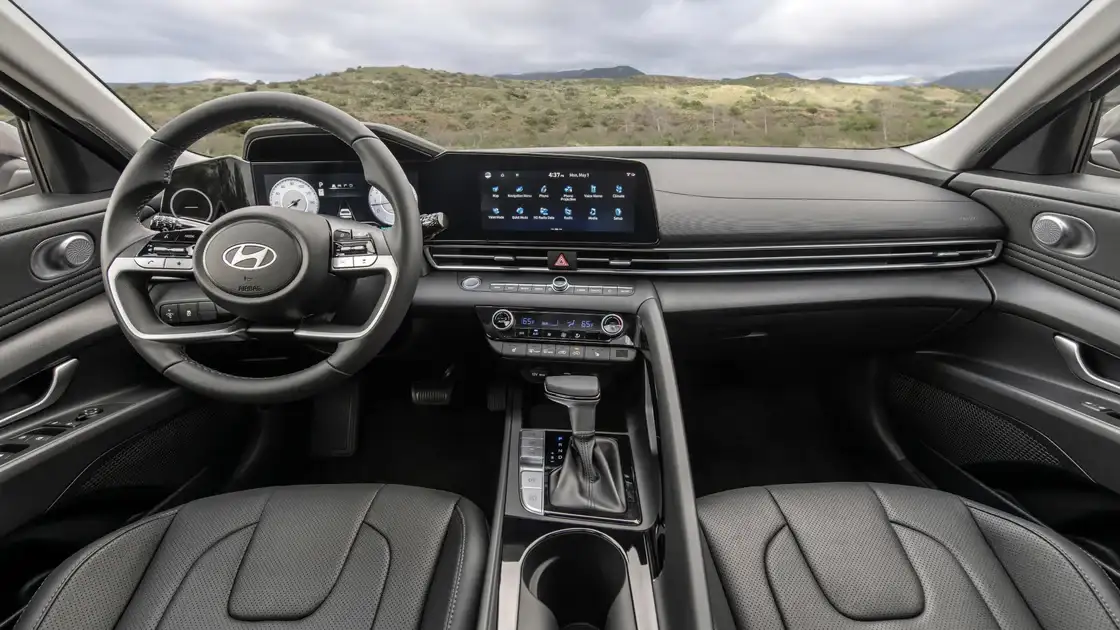
The 2026 Hyundai Elantra cabin combines seating for five with trim-specific upholstery, climate-control equipment, multimedia systems, and access features. Every model includes adjustable front bucket seats, a folding rear seatback, and a trunk-mounted seat-folding release. Available materials range from premium cloth and H-Tex leatherette to leatherette-and-cloth or leather-and-microsuede combinations. Storage areas include front and rear door pockets with bottle holders, a center-console box, dual front cupholders, and a glove compartment. The available equipment supports passenger comfort, cargo flexibility, device connectivity, and routine cabin organization.
Seating and climate control
Every configuration includes a six-way adjustable driver’s bucket seat and a four-way adjustable front passenger seat. The passenger seat provides slide and recline adjustments, while selected higher trims add a power driver’s seat with lumbar support. The Limited HEV includes an Integrated Memory System for the driver’s seat and outside mirrors, a seat-easy-access function, and ventilated front seats. Heated front seats are included on designated Sport Premium, Limited, hybrid, N Line, and Elantra N configurations. The Elantra N uses leather-trimmed and microsuede combination sport bucket seats with an illuminated N logo.
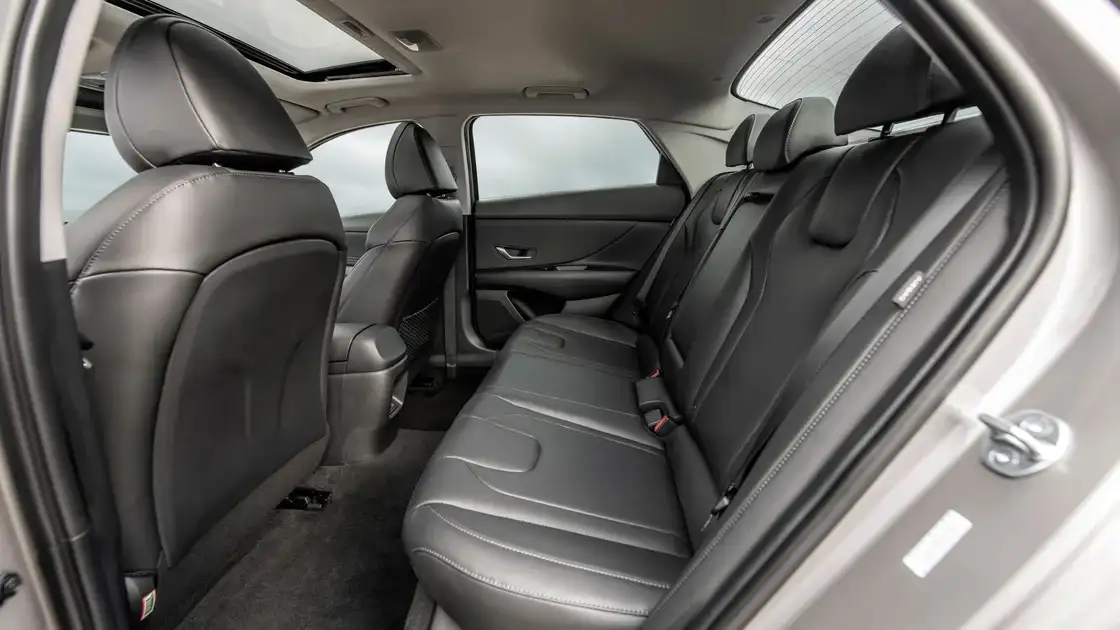
Rear-seat construction varies by configuration. Some versions use a one-piece folding seatback with a fixed center head restraint and outer head restraints. Other trims receive a 60/40 split-folding rear seatback, adjustable head restraints, and a center armrest with cupholders. Every model includes a rear-seat folding release inside the trunk. Higher configurations also provide rear cupholders in the center armrest or at the rear of the center console.
The SE uses manual air conditioning, while the other listed configurations include dual automatic temperature control. Rear-seat heater ducts and a rear-window defroster are standard throughout the lineup. Steering-wheel controls provide access to audio functions, cruise control, and the Bluetooth hands-free phone system. Steering-wheel materials vary among urethane, H-Tex, and leather according to model. All configurations include tilt-and-telescopic steering-wheel adjustment.
Multimedia and connectivity
The standard multimedia system uses an 8-inch high-resolution touchscreen with six speakers. It includes a rearview camera with Dynamic Guidance, AM/FM and HD Radio, wireless Apple CarPlay, and wireless Android Auto. Selected configurations receive a 10.25-inch high-resolution navigation touchscreen with a rearview camera, Dynamic Guidance, SiriusXM satellite radio, and supported data services. Higher models also offer a Bose premium audio system. The Bose system uses eight speakers, including a center channel and subwoofer.
Bluetooth hands-free phone operation with voice recognition is standard across the lineup. Every configuration provides one front USB data-and-charge port, one front USB-C charging port, and two rear USB-C charging ports. Selected trims add Qi-format wireless device charging. Navigation-equipped configurations also include connected-car services and a Wi-Fi hotspot. Speed-sensitive automatic volume control is standard on every listed model.
Instrumentation and convenience equipment
Standard instrumentation includes a speedometer, tachometer, fuel gauge, digital odometer, trip odometer, digital clock, and exterior-temperature display. The trip computer reports distance to empty, average fuel consumption, average vehicle speed, and elapsed time. Automatic-transmission configurations include a digital PRND indicator. The Elantra N adds performance gauges for turbocharger pressure, throttle position, brake pressure, power, oil temperature, and coolant temperature. Warning displays monitor oil pressure, battery charge, airbags, seatbelts, fuel level, brakes, the engine, ABS, tire pressure, and stability control.
Power windows, power door locks, and remote releases for the hood, trunk, and fuel-filler door are included across the lineup. A driver-side automatic-up window function appears on configurations above the base model. Selected trims add proximity-key entry with push-button start and a hands-free smart trunk release. Digital Key 2.0 Touch and an auto-dimming rearview mirror are included on designated higher trims. Interior lighting includes a delay-equipped central dome lamp, front map lights, and a cargo-area light.
Safety technology and test-drive availability
The 2026 Hyundai Elantra combines occupant restraints, reinforced body components, vehicle-control systems, and electronic driver-assistance technology. Standard structural provisions include front and rear crumple zones, body-side reinforcements, rear-door dual beams, a front crash box, and straightened side members. Hyundai also specifies high-tensile steel and a hot-stamping method for the side body. An energy-absorbing steering column forms another part of the passive-safety structure. These elements work with the airbag, seatbelt, braking, stability, and collision-avoidance systems.
Occupant protection and vehicle control
The restraint system includes advanced front airbags for the driver and front passenger, an Occupant Classification System, front side-impact airbags, and side-curtain airbags for front and rear occupants. All seating positions receive three-point seatbelts, and the front seatbelts include pretensioners. Adjustable front shoulder-belt anchors support proper belt positioning. LATCH lower anchors and upper tether anchors accommodate compatible child-restraint systems. Rear child-safety locks and a power-window lockout provide additional controls for rear-seat passengers.
Every configuration includes an Anti-lock Braking System, Vehicle Stability Management, Electronic Stability Control, Traction Control, Hill Start Assist Control, and Brake Assist. A Tire Pressure Monitoring System alerts the driver to tire-pressure conditions. Additional equipment includes a shift-interlock system, an emergency trunk release, and an anti-theft system integrated with remote keyless entry and a panic function. Smart Pedal is also standard throughout the lineup. Instrument-panel warning lights communicate the status of several braking, restraint, tire-pressure, engine, and stability systems.
Driver-assistance systems
Forward Collision-Avoidance Assist with pedestrian detection is included on designated configurations. A sensor-fusion version available on higher trims adds cyclist and junction-turning detection. Blind-Spot Collision Warning with Rear Cross-Traffic Collision-Avoidance Assist is standard throughout the lineup. Lane Keeping Assist, Lane Following Assist, Driver Attention Warning, and Intelligent Speed Limit Assist are also included on every listed model. Safe Exit Warning and Rear Occupant Alert provide additional occupant-related notifications.
Selected configurations add Smart Cruise Control with Stop & Go. Limited gasoline and hybrid models include Highway Driving Assist. Blind-spot status indicators appear in the outside mirrors across the lineup. The Elantra N adds forward and reverse Parking Distance Warning for close-range maneuvering. The exact combination of driver-assistance technologies varies by trim and equipment level.
Visit ALM Hyundai of Athens to Schedule a Test Ride
Schedule a test drive at ALM Hyundai of Athens nearby Loganville, GA, to examine the powertrain response, steering, braking, and suspension behavior of the 2026 Hyundai Elantra. Our team can help you review the technical differences among its gasoline, hybrid, turbocharged, and performance-focused configurations. During the drive, assess the seating comfort, multimedia controls, cabin technology, transmission operation, and handling characteristics of the selected model. You can also become familiar with its safety displays and driver-assistance functions from the driver’s seat. Contact us to arrange a visit and evaluate the 2026 Hyundai Elantra configuration that aligns with your performance, comfort, technology, and functional requirements.