

2026 Hyundai Elantra N nearby Loganville, GA
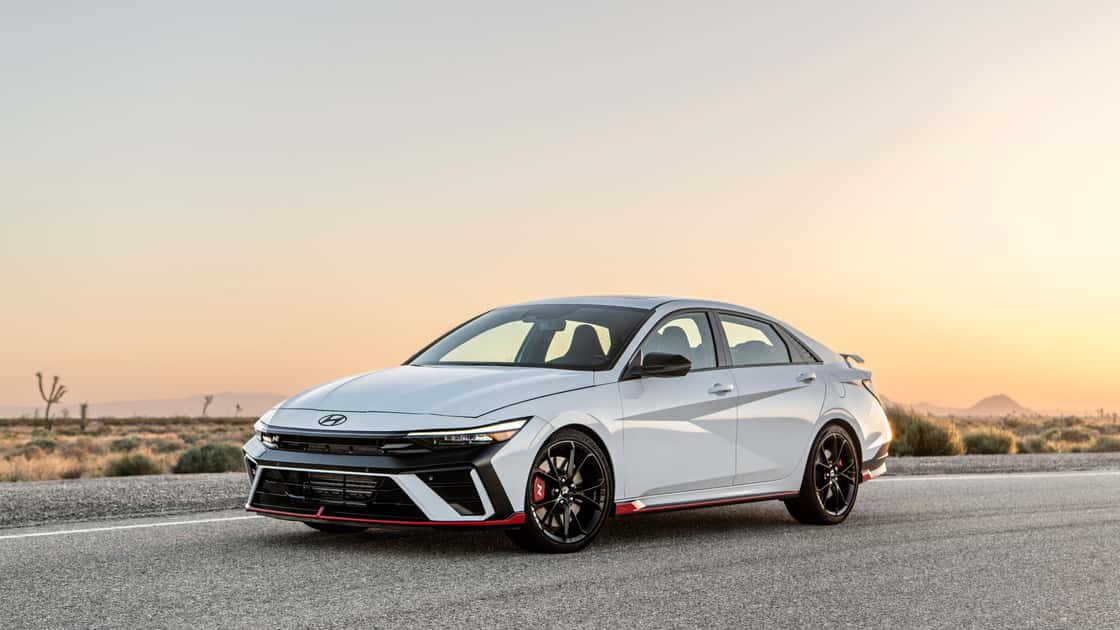
The 2026 Hyundai Elantra N is a five-passenger performance sedan built around a turbocharged powertrain, front-wheel-drive layout, N-specific chassis hardware, and a technology-focused cabin. It uses a 2.0L turbocharged direct-injected “Flat Power” 4-cylinder engine, a dedicated steering system, electronically controlled suspension, enlarged ventilated brakes, and an electronically controlled limited-slip differential. The model also includes functional exterior details, supportive N sport seating, digital instrumentation, connected infotainment, and a broad safety and driver-assistance package. Its technical identity centers on power delivery, handling control, braking capability, cabin usability, and driver-focused information systems.
Powertrain and Driveline Engineering
The 2026 Hyundai Elantra N uses a dedicated performance configuration within the Elantra lineup. Its engine, transmission options, exhaust system, fuel requirements, and drive-mode structure separate it from the standard gasoline, hybrid, and N Line models. Hyundai equips the 2026 Hyundai Elantra N with front-wheel drive and pairs the sedan with either a 6-speed manual transmission or an available N 8-speed wet dual-clutch transmission. The model also uses premium fuel and large-bore exhaust outlets as part of its performance-oriented mechanical package. These systems give the 2026 Hyundai Elantra N a focused technical foundation while keeping its operation tied to measurable specifications and functional hardware.
Turbocharged 2.0L Flat Power Engine
The 2026 Hyundai Elantra N features a 2.0L turbocharged direct-injected “Flat Power” 4-cylinder engine. This engine has a displacement of 1,998 cc and uses an 86 mm bore and 86 mm stroke. Output measures 276 horsepower from 5,500 to 6,000 rpm, with 286 horsepower listed when NGS is active. Torque measures 289 lb.-ft. from 2,100 to 4,700 rpm, giving the engine a broad torque range for strong response across a defined operating band. The engine also uses a 9.5 compression ratio, a 16-valve swing-arm valve system, and an intake system identified as TIS plus VIA.
Fuel, Ignition, Exhaust, and Electrical Specifications
The 2026 Hyundai Elantra N specifies premium fuel, aligning the fuel requirement with its turbocharged performance configuration. Its emissions system is listed as WCC, and its exhaust system uses large-bore exhaust outlets. The ignition system uses a distributorless plug-top coil design, which supports precise ignition operation for the 2.0L turbocharged engine. The starter rating is 13.5V 150A, and the alternator rating is listed at 12V 1.24 kW. These details support the distinct mechanical package of the 2026 Hyundai Elantra N and help define the model separately from other Elantra powertrain configurations.
Manual and N Wet Dual-Clutch Transmission Options
The 2026 Hyundai Elantra N offers a 6-speed manual transmission and an available N 8-speed wet dual-clutch transmission. The N DCT version includes SHIFTRONIC® manual shift mode with paddle shifters, giving the driver direct control over gear selection through steering wheel-mounted controls. Drive Mode Select includes Eco, Normal, Sport, and N Custom 1 and 2 settings, which give the sedan a broader range of operating profiles than the standard Elantra drive mode structure. The manual transmission uses six forward ratios, while the N DCT uses eight forward ratios plus reverse. The transmission data also lists separate final-drive relationships for the manual and N DCT configurations, reflecting the different engineering requirements of each driveline setup.
Chassis, Steering, Suspension, and Braking
The 2026 Hyundai Elantra N supports its performance focus through steering hardware, suspension design, braking equipment, and body structure. It uses a unibody construction with primary high-tensile steel materials, which gives the sedan a defined structural foundation. The model adds N-specific systems that do not appear across the standard Elantra range, including rack-mounted motor-driven power steering, electronically controlled suspension, a rear chassis brace, and an electronically controlled limited-slip differential. Its brake system also uses larger ventilated components than other Elantra configurations. Together, these systems support steering precision, cornering control, stopping performance, and consistent driver feedback.
Steering System and N Corner Carving Differential
The 2026 Hyundai Elantra N uses rack-and-pinion steering with rack-mounted, motor-driven power steering. This setup differs from the column-mounted, motor-driven power steering used on other Elantra models. The overall steering gear ratio is 12.2:1, and the steering system requires 2.2 turns from lock to lock. The steering wheel diameter measures 14.6 inches, while the minimum turning radius is listed at 19.2 feet. The 2026 Hyundai Elantra N also includes a limited-slip differential with electronic control, identified as the N Corner Carving Differential, which supports front-wheel-drive power delivery and cornering traction.
Electronically Controlled Suspension and Rear Chassis Brace
The 2026 Hyundai Elantra N uses a MacPherson® strut front suspension with a 23 mm hollow stabilizer bar. The front suspension also includes ECS, or Electronic Controlled Suspension, as part of the N-specific chassis configuration. At the rear, the 2026 Hyundai Elantra N uses a multi-link independent suspension with a 24 mm hollow stabilizer bar. The rear suspension also includes ECS, giving the vehicle electronically managed suspension control at both ends. A rear chassis brace adds another structural element to the handling-focused hardware package of the 2026 Hyundai Elantra N.
Ventilated Brake System
The 2026 Hyundai Elantra N uses ventilated brakes at the front and rear. The front brake size is listed as 14.2 inches by 1.2 inches, while the rear brake size is listed as 12.4 inches by 0.8 inches. The braking system includes ABS with Electronic Brake-force Distribution, using four wheels, four channels, and four sensors. Brake Assist is standard, and the brake booster is listed as an 11-inch single unit for left-hand-drive vehicles and an 8+8-inch tandem unit for right-hand-drive vehicles. The parking brake uses a mechanical cable type, and the master cylinder is listed with a 23.81 mm diameter.
Exterior Equipment and Functional Design
The 2026 Hyundai Elantra N uses exterior equipment that supports performance identity, visibility, and everyday function. Its wheel and tire package gives the sedan a unique footprint within the Elantra range. Its lighting equipment supports forward and rearward visibility, while the exterior trim helps distinguish the N model from other trims. The sedan also includes heated mirrors, solar glass, automatic headlamp control, and windshield wipers with multiple operating functions. The DCT configuration includes a power glass sunroof with tilt, slide, safety, and one-touch operation.
Wheels, Tires, and Vehicle Dimensions
The 2026 Hyundai Elantra N uses 19 x 8.0 alloy wheels. Its original tire fitment is a 245/35R19 Michelin® Pilot Sport 4 S summer tire. Recommended winter tires are listed as Michelin® Alpin PA4, while the recommended high-performance all-season tire is BFGoodrich Comp-2 A/S Plus based on HATCI testing and not OE applied. The 2026 Hyundai Elantra N includes a Tire Mobility Kit rather than a compact spare tire. Exterior measurements include a 107.1-inch wheelbase, 185.4-inch overall length, 71.9-inch overall width, 55.7-inch overall height, 62.4-inch front track, 62.2-inch rear track, 35.2-inch front overhang, 41.7-inch rear overhang, and 5.5-inch minimum ground clearance.
Lighting, Mirrors, Glass, and Trim
The 2026 Hyundai Elantra N includes LED daytime running lights, dual LED projector headlights, full LED rear taillights, automatic headlamp control, and Automatic High Beam Assist. Its exterior trim includes a matte black grille, glossy black window belt moldings, body-color door handles, a glossy black wing-type spoiler, and a matte black lower bumper and diffuser. The outside mirrors use a dual-power, one-tone glossy black design with heating and turn signal indicators. The front windshield wipers include a two-speed intermittent function and a mist function. Solar glass is also standard, adding another functional element to the exterior package.
Interior Comfort, Seating, and Practical Features
The 2026 Hyundai Elantra N cabin combines performance-focused seating with practical five-passenger packaging. Its interior layout supports everyday use through adjustable seating, cargo access, storage areas, climate control, and driver-oriented controls. The model includes N-specific sport seating surfaces, heated front seats, a full TFT-LCD cluster, dual automatic temperature control, and rear-seat heater ducts with a rear window defroster. Interior materials and trim details include high-density non-woven roof trim, metal-painted door handles, integrated door armrests, and metal door scuff step plates. These features give the 2026 Hyundai Elantra N a cabin that supports comfort, control access, and functional usability.
N Sport Seating and Cabin Materials
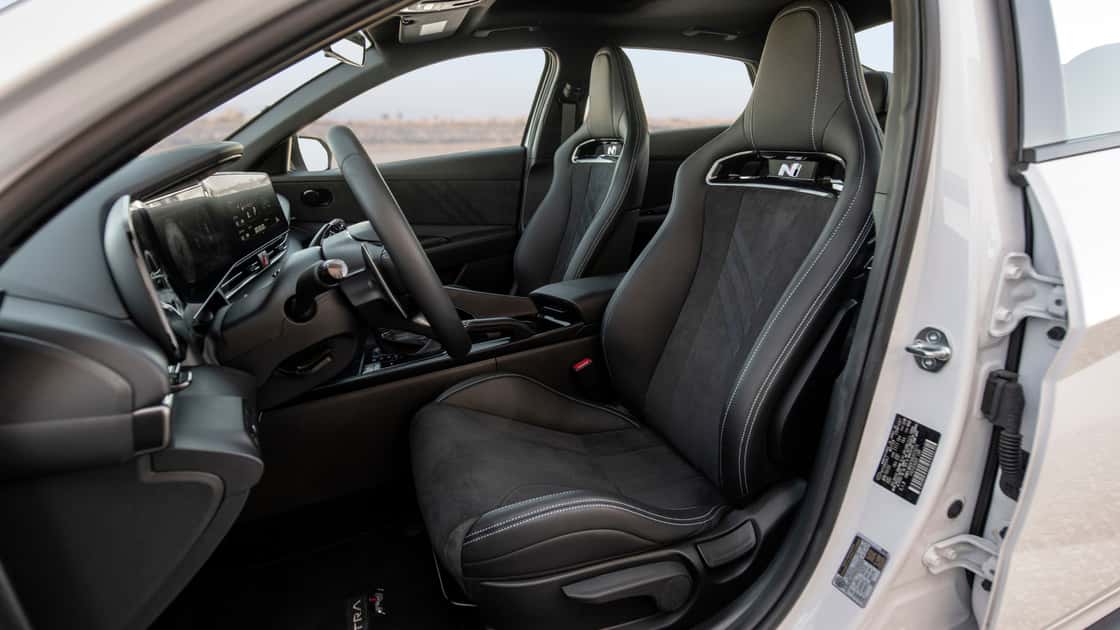
The 2026 Hyundai Elantra N uses leather-trimmed and microsuede combination N light sport bucket seats with an illuminated N logo. The cabin has seating capacity for five passengers. The front seats include a 6-way adjustable driver’s bucket seat and a 4-way adjustable passenger bucket seat. The front passenger seat also includes slide and recline adjustment, and heated front seats are standard. The rear seat uses a one-piece folding rear seatback with a fixed center headrest and outer headrests, and a seat-folding release in the trunk supports cargo flexibility.
Climate Control, Storage, and Driver Controls
The 2026 Hyundai Elantra N includes dual automatic temperature control, rear-seat heater ducts, and a rear window defroster. Its steering wheel is leather-wrapped and includes tilt and telescopic adjustment. Steering-wheel controls include audio controls, cruise control, and Bluetooth® hands-free phone system functions with voice recognition. Convenience features include a trip computer, power windows with driver auto-down, illuminated power window switches, driver-side auto up, power door locks, and remote releases for the hood, trunk, and fuel filler door. The cabin also includes a trunk inner cover, console storage below the HVAC controls, a fixed front center console armrest storage box, dual front cupholders, a 12-volt outlet below the HVAC controls, auxiliary and USB inputs, a rear coat hanger, a glove compartment without dampers, proximity key entry with push-button start, hands-free smart trunk release, Digital Key 2.0 Touch, a central dome light, front map lights, cargo area lighting, and two standard keys.
Infotainment, Connectivity, and Instrumentation
The 2026 Hyundai Elantra N includes infotainment, audio, connectivity, and instrumentation systems that support communication, entertainment, navigation, charging, and performance monitoring. The model uses the larger navigation-based multimedia configuration rather than the base display audio system. It also includes a premium audio system and multiple USB charging points in the cabin. Connected services and Wi-Fi hotspot capability are tied to the navigation system. The instrument cluster combines standard vehicle readouts with N Performance gauges that display additional performance-related information.
Navigation, Audio, Wireless Charging, and Connected Services
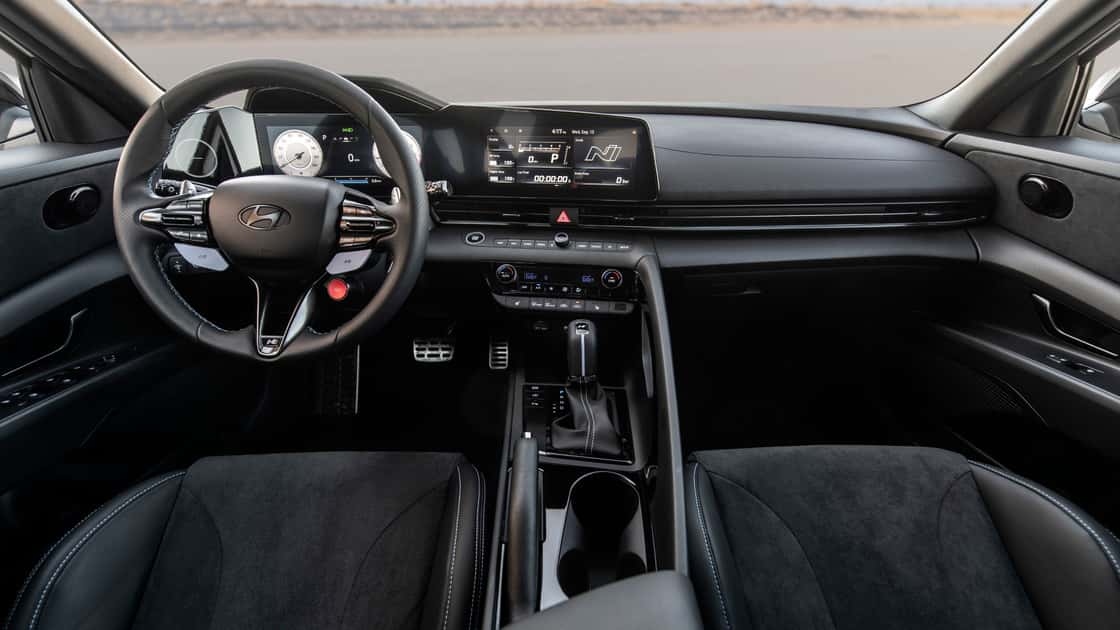
The 2026 Hyundai Elantra N includes a 10.25-inch navigation system with a high-resolution touchscreen. The system includes a rearview camera with Dynamic Guidance, AM/FM/HD Radio™, SiriusXM® Satellite Radio, Android Auto™, Apple CarPlay®, and SiriusXM® Data Services with NavTraffic, NavWeather, Sports, and Stocks listed with a three-month trial. The 2026 Hyundai Elantra N also includes Bose® premium audio with eight speakers, including a center channel and subwoofer. Bluetooth® hands-free phone operation with voice recognition and Dynamic Voice Recognition are standard. Additional technology includes Qi wireless charging, dual front USB ports with one USB charge and data port plus one USB-C charge port, two rear USB-C charge ports, Blue Link Connected Car Services, a Wi-Fi hotspot tied to navigation, an in-glass AM/FM antenna, a roof-mounted XM antenna, and speed-sensitive automatic volume control.
Digital Cluster and N Performance Gauges
The 2026 Hyundai Elantra N includes a full TFT-LCD cluster and a complete set of standard meters and warning indicators. The instrumentation includes a speedometer, tachometer, fuel level display, digital odometer, trip odometer, digital clock, and external temperature display. N Performance gauges provide additional readouts such as turbo psi, throttle percentage, brake psi percentage, power, oil temperature, coolant temperature, and related performance data. Indicator functions include digital PRND for automatic versions, cruise control, turn signal and hazard indicators, high beam status, and blind-spot detection indication on the outside mirrors. Warning lights include oil pressure, battery charge, door ajar, airbag, seatbelt, low fuel, trunk lid open, brake, check engine, ABS, TPMS, ESC, and water temperature, while warning chimes include key-in-ignition with door ajar and driver seatbelt reminder.
Safety Systems, Dimensions, and Capacity
The 2026 Hyundai Elantra N includes passive safety systems, active safety systems, restraint features, driver-assistance technologies, and practical dimensional data. Its restraint package includes advanced airbags, side-impact protection, side air curtains, seatbelt systems, and child-seat anchor hardware. The model also includes structural and electronic systems designed to support occupant protection and vehicle control. Passenger and cargo measurements define its sedan utility, while listed fuel, lubricant, cooling, curb weight, and gross vehicle weight specifications support technical evaluation. These details help position the 2026 Hyundai Elantra N as a performance sedan with daily-use space, safety equipment, and measurable capacity.
Passive Safety and Structural Protection
The 2026 Hyundai Elantra N includes advanced driver and front passenger airbags, an Occupant Classification System, driver and front passenger side-impact airbags, side air curtains for front and rear passengers, and an Event Data Recorder. Seatbelt equipment includes a 3-point ELR driver seatbelt, 3-point CLR front passenger and rear seatbelts, adjustable front-seat shoulder belt anchors, front seatbelt pretensioners, and a front seatbelt anchor pre-tensioner. Additional safety systems include LATCH lower anchors and upper tether anchors, a power window lock-out button, rear child safety locks, an energy-absorbing steering column, front and rear crumple zones, body side reinforcements, and a shift interlock system. The model also includes an anti-theft system integrated with remote keyless entry and panic, an emergency trunk release, a front crash box and straightened side members, high-tensile steel and a hot-stamping method for the side body, rear door dual beams, and Smart Pedal. These features support occupant protection, controlled vehicle operation, and security functions.
Active Safety and Driver-Assistance Technology
The 2026 Hyundai Elantra N includes an Anti-lock Braking System, Vehicle Stability Management, Electronic Stability Control with Traction Control System, Hill Start Assist Control, Brake Assist, and Tire Pressure Monitoring System. Advanced safety technology includes Forward Collision-Avoidance Assist with Pedestrian Detection, Blind-Spot Collision-Warning with Rear Cross-Traffic Collision-Avoidance Assist, Lane Keeping Assist, Lane Following Assist, Driver Attention Warning, High Beam Assist, Safe Exit Warning, Parking Distance Warning for forward and reverse, Intelligent Speed Limit Assist, and Rear Occupant Alert. These systems support braking, stability, lane guidance, parking awareness, speed-limit information, and occupant monitoring. The driver-assistance package also complements the standard lighting and mirror systems by supporting awareness around the vehicle. The result is a safety specification set that addresses both active control and passive protection.
Interior Volume, Cargo Space, and Technical Capacities
The 2026 Hyundai Elantra N provides 99.4 cubic feet of passenger compartment volume and 14.2 cubic feet of cargo volume. Total interior volume measures 113.6 cubic feet, giving the sedan both passenger space and trunk utility. Interior dimensions include 40.6 inches of front head room, or 38.7 inches with a sunroof, and 37.3 inches of rear head room. Leg room measures 42.3 inches in front and 38.0 inches in the rear, while shoulder room measures 56.5 inches in front and 55.6 inches in the rear. Hip room measures 53.4 inches in front and 50.5 inches in the rear, while fuel tank capacity is 12.4 gallons, lubricant capacity with an oil filter is 4.8 liters, cooling capacity is 3.1 liters, curb weight is listed at 3,020 pounds for the manual configuration and 3,296 pounds for the N DCT configuration, and GVWR is listed at 4,101 pounds for the manual configuration and 4,178 pounds for the N DCT configuration.
Visit ALM Hyundai of Athens to Schedule a Test Ride
Our team can help drivers evaluate how the 2026 Hyundai Elantra N combines turbocharged performance, responsive handling, advanced technology, supportive comfort features, and driver-assistance systems in one sedan. A test drive gives shoppers the opportunity to assess the 2.0L turbocharged engine, transmission response, N Performance gauges, sport bucket seats, steering feel, and brake system in person. We can also walk through key safety features, infotainment functions, cabin controls, and cargo access so shoppers can understand how the 2026 Hyundai Elantra N supports daily driving needs. Visit ALM Hyundai of Athens, nearby Loganville, GA to schedule a test drive and review the 2026 Hyundai Elantra N with our team. Our goal is to provide a clear, practical look at the vehicle’s performance, technology, comfort, handling, and safety features without overcomplicating the process.