

2025 Tucson Plug-in Hybrid Trim Level in Athens, GA
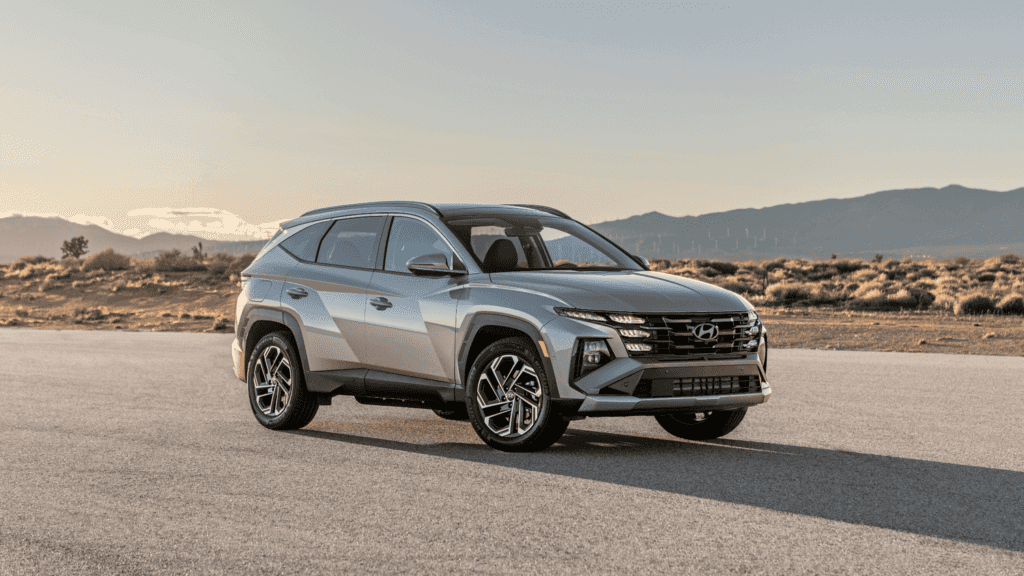
The 2025 Hyundai Tucson Plug-in Hybrid is engineered to provide a combination of powertrain efficiency, advanced safety systems, and modern technology within a compact SUV platform. This model addresses the demands of drivers who require environmental efficiency alongside reliable performance and functional utility.
Powertrain and Performance: Technical Breakdown
The 2025 Hyundai Tucson Plug-in Hybrid utilizes a hybrid system that integrates a 1.6-liter turbocharged inline-4 gasoline engine with an electric motor powered by a 13.8 kWh lithium-ion polymer battery. The total system output is 261 horsepower, which allows for strong acceleration and adequate power for various driving conditions. The powertrain is mated to a 6-speed automatic transmission designed for smooth and efficient gear shifts.
The electric motor provides an all-electric driving range of approximately 33 miles on a full charge. When the battery is depleted, the vehicle automatically transitions to hybrid mode, combining gasoline and electric power to extend the driving range. The regenerative braking system captures kinetic energy during deceleration and braking, converting it into electrical energy that recharges the battery and improves energy efficiency.
Battery and Charging System: Technical Details
The lithium-ion polymer battery in the 2025 Hyundai Tucson Plug-in Hybrid supports both Level 1 and Level 2 charging. Level 1 charging utilizes a standard household electrical outlet and is suitable for overnight charging with longer charge times. Level 2 charging requires a 240-volt supply and significantly reduces charging time to approximately 2.5 hours for a full battery charge.
The vehicle’s onboard charging system manages the battery’s state of charge, thermal conditions, and overall health, optimizing performance and longevity. Drivers have access to an EV drive mode selector, which allows selection between different driving modes to adjust the vehicle’s energy usage and driving dynamics based on specific needs.
Interior Technology: System Capabilities and Features
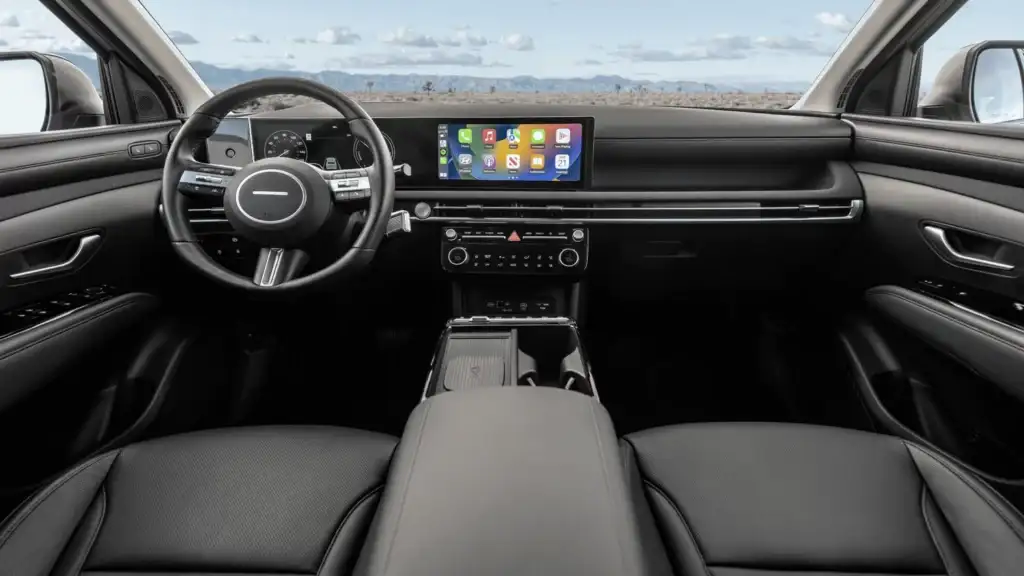
The cabin of the 2025 Hyundai Tucson Plug-in Hybrid is equipped with technology that integrates information, connectivity, and entertainment systems. Standard equipment includes an touchscreen infotainment display compatible with Apple CarPlay® and Android Auto™, enabling users to access smartphone applications, navigation, and audio controls through the vehicle’s interface.
Wireless charging for compatible devices and multiple USB ports are provided to support modern connectivity needs. The availability of a premium Bose® sound system on selected trims offers improved audio quality. Hyundai’s Blue Link connected services allow remote vehicle monitoring, remote start, and climate control adjustments through a mobile application, adding convenience and operational control.
Safety Systems: Functional Assessment
Hyundai has integrated its SmartSense suite of driver-assistance technologies into the 2025 Hyundai Tucson Plug-in Hybrid to enhance occupant safety and situational awareness. The Forward Collision-Avoidance Assist system uses radar and camera sensors to detect vehicles and pedestrians ahead and applies braking assistance if a potential collision is detected. Lane Keeping Assist provides corrective steering inputs to maintain lane positioning and reduce unintentional lane departures.
Blind-Spot Collision-Avoidance Assist monitors areas beside and behind the vehicle, providing warnings and active intervention to avoid collisions during lane changes. Additional systems include Rear Cross-Traffic Collision-Avoidance Assist, which alerts drivers to approaching traffic when reversing, and Driver Attention Warning, which monitors driver behavior to suggest breaks during extended operation. Safe Exit Assist warns occupants of approaching vehicles before exiting, enhancing passenger safety.
Visual aids include a rearview camera standard across all trims and an optional surround-view monitor system that uses multiple cameras to provide a 360-degree view of the vehicle’s surroundings.
Exterior Design and Practical Utility
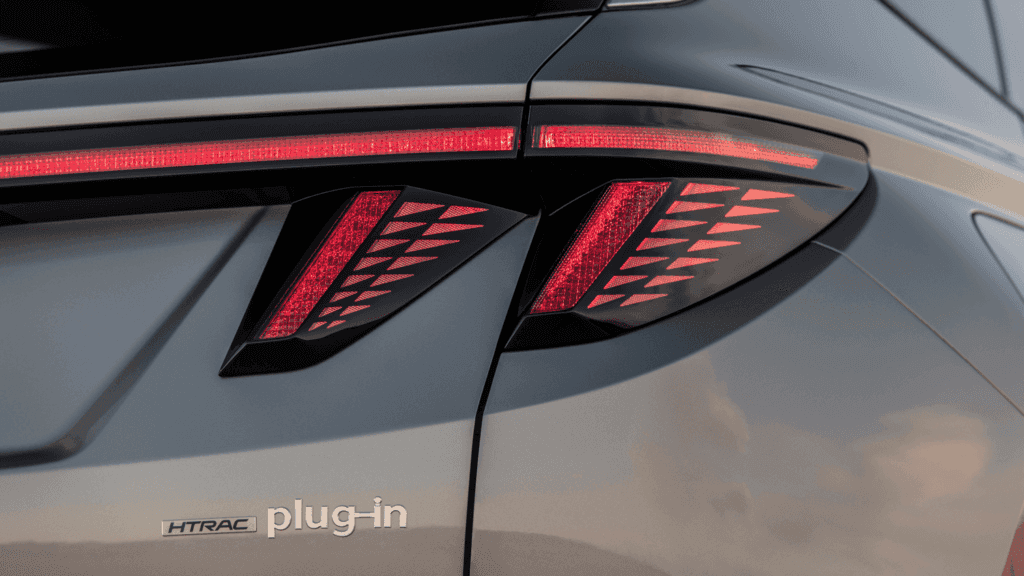
The 2025 Hyundai Tucson Plug-in Hybrid retains the overall design language of the Hyundai Tucson series but introduces specific aerodynamic adjustments to optimize efficiency. The front grille has a unique pattern to facilitate airflow management, contributing to lower drag coefficients. The exterior lighting system includes LED headlights and taillights, which offer improved illumination and longer service life compared to traditional bulbs.
Cargo space is functional, with a rear liftgate that opens electronically to allow easy access to the storage area. The rear seats feature a split-fold design, allowing flexible configurations for passengers and cargo. Roof rails are standard, providing additional options for securing larger items or recreational equipment. The vehicle’s ride height and seating position allow for improved forward visibility and driver control, factors that contribute to operational safety and comfort.
Driving Dynamics and Control Systems
The drivetrain management of the 2025 Hyundai Tucson Plug-in Hybrid supports different driving modes tailored to varying conditions and driver preferences. The all-wheel-drive system, known as HTRAC, enhances traction by distributing torque between the front and rear wheels.
Drive modes include Electric, which relies solely on the electric motor; Hybrid, which blends gasoline and electric power; and Sport, which prioritizes performance and throttle responsiveness. Attention to noise, vibration, and harshness control results in a quieter cabin during electric-only operation, reinforcing the vehicle’s dual role as a low-emission commuter and a capable SUV for longer trips.
Schedule a Test Ride Today
To assess the performance and capabilities of the 2025 Hyundai Tucson Plug-in Hybrid, consider scheduling a test drive at ALM Hyundai of Athens in Athens, GA. The model’s 268-horsepower hybrid powertrain offers efficient and responsive driving dynamics. Its suite of safety systems, including Forward Collision-Avoidance and Blind-Spot Collision-Avoidance, contributes to a secure driving experience. The advanced infotainment and connectivity features allow you to evaluate the vehicle’s technological integration in real-world use. Testing this model provides an opportunity to experience how its electric range and hybrid functionality operate across various driving conditions.