

2025 Hyundai IONIQ 5 N near Lexington, GA
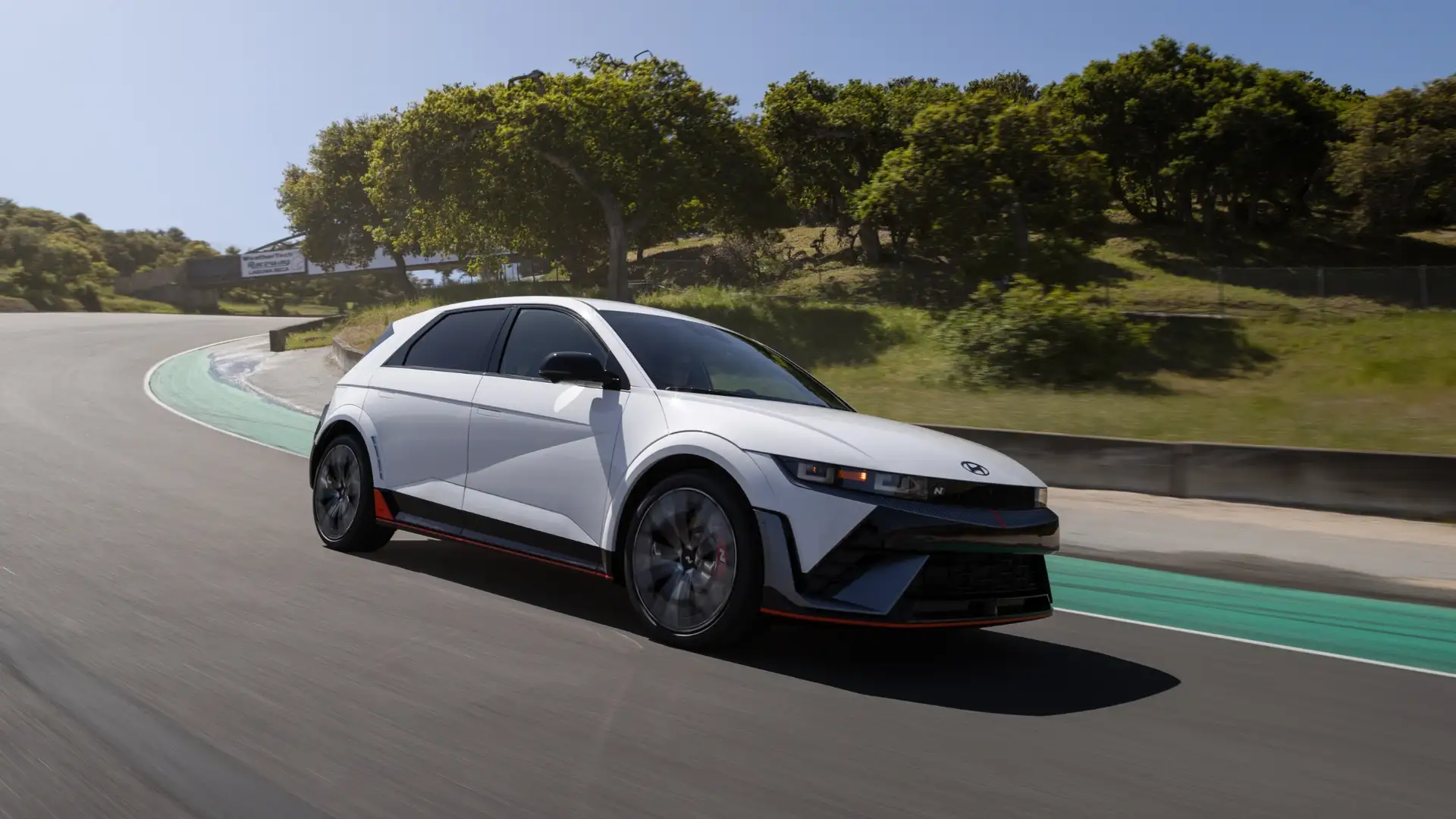
The 2025 Hyundai IONIQ 5 N demonstrates the progression of high-performance electric mobility. Designed by the N division from Hyundai, it combines dual-motor power, structural precision, and advanced control systems within a refined all-electric framework. Built on the E-GMP platform and engineered with the rigor of motorsport development, the 2025 Hyundai IONIQ 5 N focuses on responsiveness, range efficiency, and control accuracy. Its specifications represent a detailed balance between dynamic capability and long-distance electric practicality.
Dual-Motor Powertrain and Electric Architecture
The 2025 Hyundai IONIQ 5 N features a dual Permanent-Magnet Synchronous Motor (PMSM) configuration delivering a total output of 448 kW (601 horsepower). When N Grin Boost mode is engaged, output increases to 478 kW (641 horsepower), while torque rises from 740 Nm (545 lb.-ft.) to 770 Nm (568 lb.-ft.). This powertrain provides immediate torque distribution through all four wheels using an all-wheel-drive configuration supported by a single-speed reduction gear transmission. Power delivery remains stable, and acceleration is consistent across drive modes.
The 84.0 kWh lithium-ion battery pack, operating at 697 volts, supplies high current capacity for sustained discharge and rapid charging. Its system supports 535 kW discharge power and 432 kW charging capability, with an energy density of 78.5 Wh per pound. Charging flexibility is built in, with 800V ultra-fast capability enabling a 10% to 80% charge in approximately 18 minutes using a high-power DC charger. Level 2 home charging at 240V completes from 10% to full in 7 hours and 20 minutes.
Range is measured at 221 miles on a full charge, and the vehicle achieves a maximum speed of 162 mph. Battery management includes thermal preconditioning for optimal charge efficiency, a battery heating system, and a power output stabilization function. The system’s supplier, SK Innovation, provides high-performance cell modules optimized for temperature control and voltage stability.
Disclaimer: Approximately 18 minutes to charge from 10% to 80% on a 350-kW, 800V DC ultra-fast charger. Actual charging time varies based on a number of factors, including current battery charge level, output of the charging unit, vehicle and battery settings, battery temperature and outside temperature. Ultra-fast charging stations are provided by independent companies and availability is not guaranteed.
Drivetrain, Transmission, and Control Integration
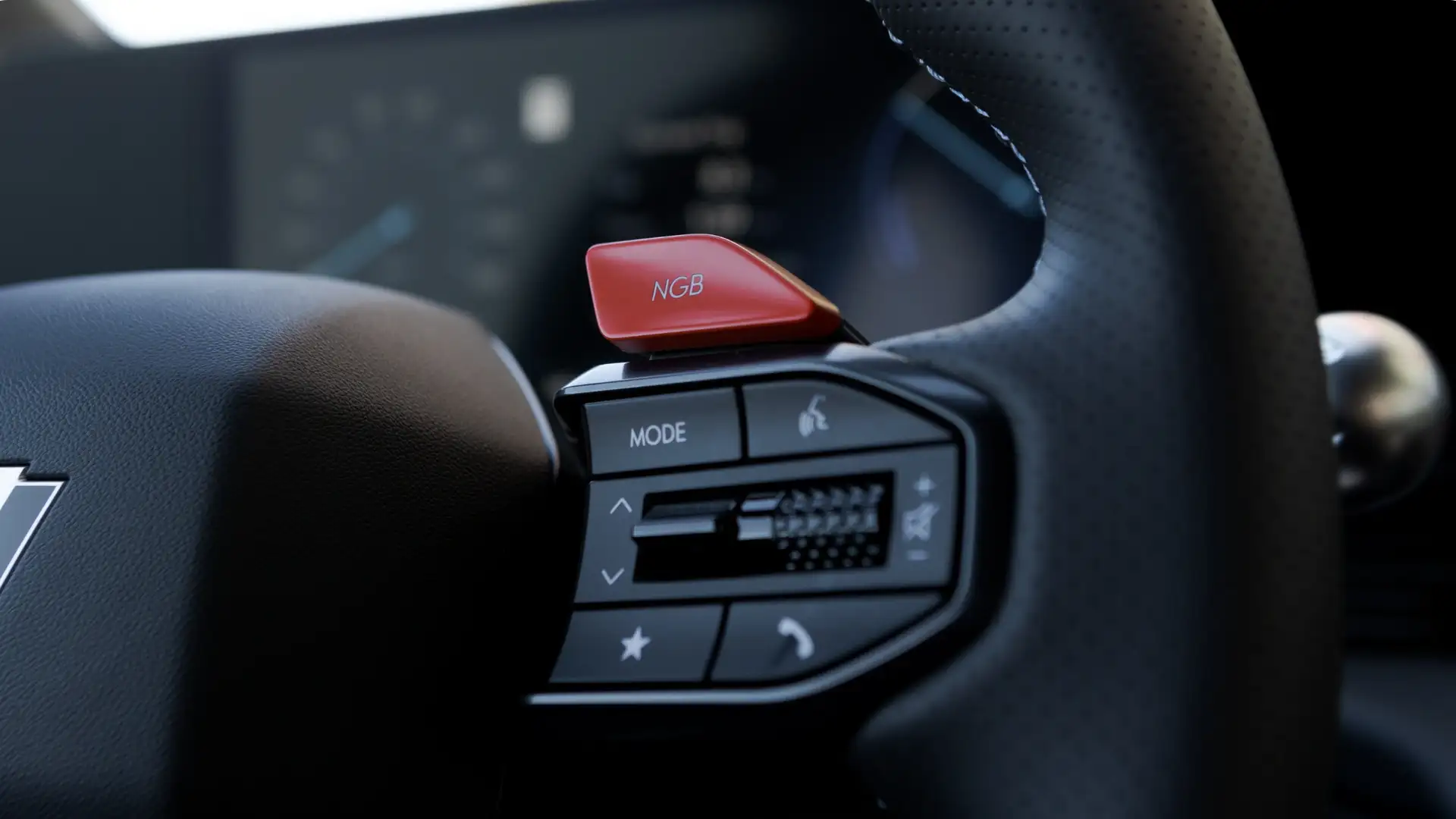
The drive configuration operates through all-wheel drive with precise modulation via shift-by-wire controls. The system integrates multiple selectable modes: Eco, Normal, Sport, and N-specific configurations, including N, N Custom 1, and N Custom 2, accessible through steering-mounted controls. These modes adjust power response, steering feedback, and regenerative braking intensity for adaptable performance across conditions.
Front and rear gear ratios measure 2.263 and 2.265, respectively, with a final gear ratio of 4.706. A front dog clutch enables motor disengagement to reduce drag and enhance efficiency when full power is not required. The Motor Driven Power Steering (R-MDPS) system delivers direct input response through a 12.54:1 steering ratio and 2.29 turns lock-to-lock, maintaining consistent control during high-speed maneuvers or low-speed adjustments.
Chassis Design and Suspension Systems
Structural integrity is achieved through a unibody frame composed primarily of advanced high-strength steel and high-tensile steel. The result is a lightweight yet rigid body optimized for performance handling. The front MacPherson® strut suspension and rear five-link multi-link system each incorporate Electronic Controlled Suspension (ECS) dampers. These adaptive units continuously adjust damping levels for comfort and stability.
The braking system includes 15.7-inch ventilated front discs and 14.2-inch ventilated rear discs, supported by a four-channel ABS system with Electronic Brake-force Distribution (EBD). Regenerative braking control allows seamless energy recovery and can be adjusted using N e-Shift paddles, simulating gear changes. Hillstart Assist Control (HAC), an integrated electronic brake booster, and an electronic parking brake with vehicle hold ensure smooth operation across gradients and stop-and-go conditions.
Exterior Form and Aerodynamic Precision
The exterior of the 2025 Hyundai IONIQ 5 N is shaped for both performance and efficiency. A 0.313 drag coefficient reflects the aerodynamic refinement achieved through active air flaps, shuttered grille designs, and optimized underbody flow. The car rides on 21 x 9.5J forged alloy wheels, each weighing 32 pounds, fitted with 275/35R21 Pirelli P ZERO HN-spec tires featuring PNCS noise reduction technology. This configuration ensures traction, thermal endurance, and reduced cabin noise.
Design elements unique to the N variant include gloss black bumpers, luminous orange accents, and N-exclusive side sills. Functional elements such as flush door handles, a power-operated charge door, and a hands-free smart liftgate enhance efficiency and convenience. LED projector headlights, high beam assist, and N-specific LED stop lamps ensure high visibility. The Vision Roof panoramic glass panel and acoustic laminated glass improve cabin light and sound insulation.
Driver Interface and Interior Systems
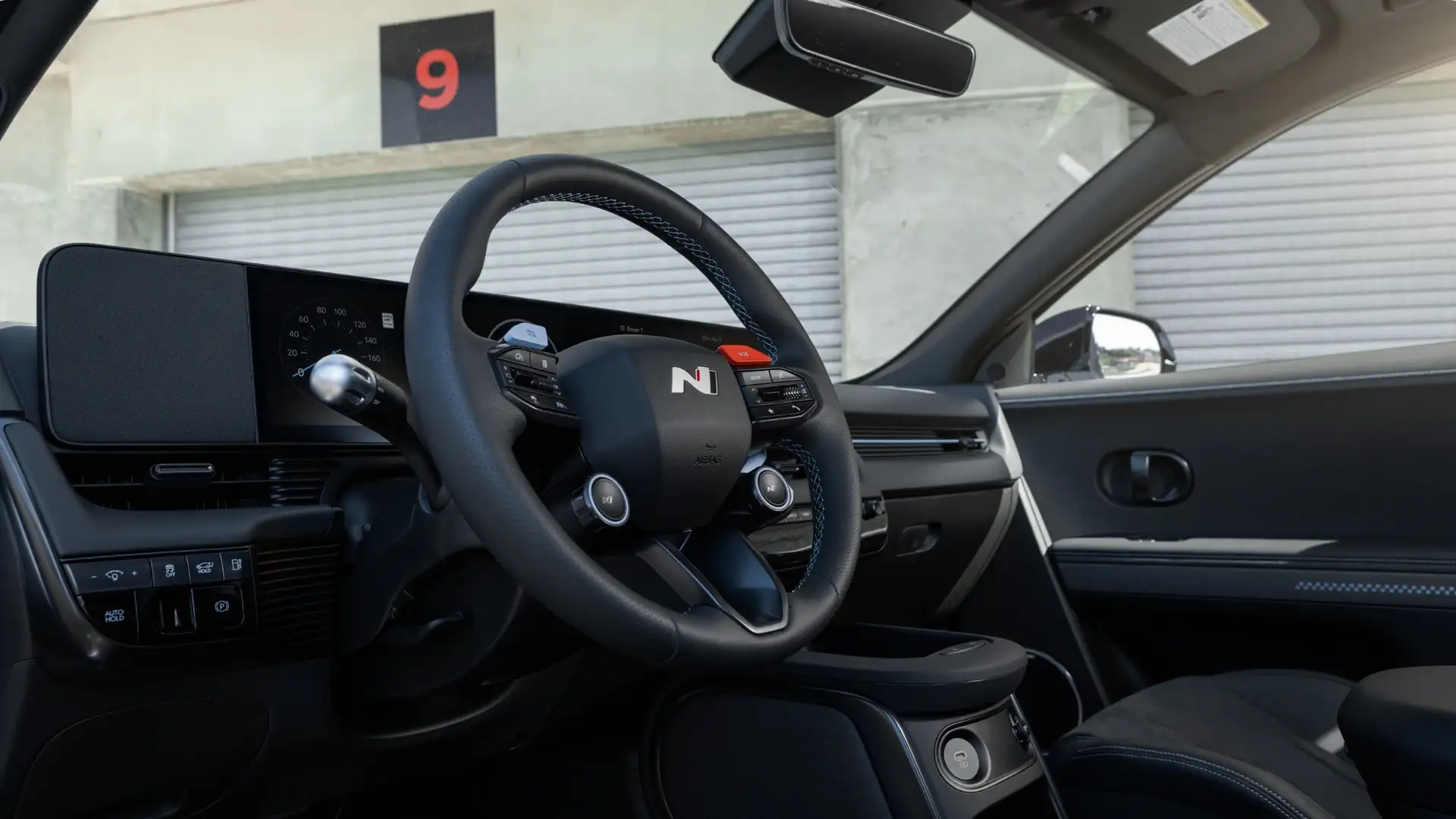
Inside, the 2025 Hyundai IONIQ 5 N maintains a technical layout emphasizing control precision. Seating surfaces combine Eco Alcantara® and H-Tex® materials for reduced weight and grip stability. N sport bucket seats with illuminated logos are designed for lateral support, while front seat ventilation and heating enhance occupant comfort. The rear bench seat, featuring a 60/40 folding mechanism and manual sliding function, provides variable cargo flexibility up to 59.3 cubic feet with the seat folded.
Instrumentation includes a 12.3-inch digital cluster displaying N Mode graphics, regenerative braking levels, and EV-specific data. The 12.3-inch central touchscreen integrates the Hyundai ccNC infotainment system with navigation, wireless Android Auto™, and Apple CarPlay®. A Bose® premium eight-speaker system with an external amplifier ensures high-fidelity sound quality. Connectivity is further supported through Bluetooth® multiple device pairing, five USB-C ports, and a 15W wireless charging pad.
Convenience systems include Smart Cruise Control with machine learning, proximity key access with push-button start, and Hyundai Digital Key 2 Premium supporting NFC, BLE, and UWB. Additional features such as an auto-dimming rearview mirror with HomeLink®, dual-zone automatic climate control, a heat pump system, and 64-color ambient interior lighting contribute to efficiency and usability.
Cabin Efficiency and Environmental Control
Climate and air management in the 2025 Hyundai IONIQ 5 N prioritize performance retention and energy efficiency. The dual automatic temperature control system features a Driver Only mode that limits HVAC use to the driver’s area to conserve power. A PTC heater, heat pump, and cabin preconditioning system sustain thermal balance across environments, while the battery heating function ensures consistent output in colder temperatures.
A rear window defroster with a timer, solar front glass, and rear privacy glass improve temperature regulation. The heated steering wheel, rear seat sunshades, and soft-touch door panels enhance interior comfort during extended use. Integrated storage within the center console and fixed armrest compartment offers practical space management without compromising driver focus.
Integrated Safety and Stability Systems
Safety engineering in the 2025 Hyundai IONIQ 5 N extends across active and passive protection. The cabin is equipped with front, side, and curtain airbags supported by rollover sensors and an Occupant Classification System (OCS). Three-point seatbelts with pretensioners and load limiters are installed for all outboard positions. Structural reinforcements, crumple zones, and 2.5-mph bumpers absorb energy during impact while preserving cabin integrity.
Active safety systems include Forward Collision-Avoidance Assist 2 (FCA 2) with pedestrian, cyclist, and junction detection; Blind-Spot Collision-Avoidance Assist (BCA) with haptic steering feedback; and Rear Cross-Traffic Collision-Avoidance Assist (RCCA). Parking is supported by Surround View Monitor (SVM) and Parking Collision-Avoidance Assist (PCA-R).
Driver assistance technology integrates Lane Keeping Assist (LKA), Lane Following Assist (LFA), and Highway Driving Assist 2 (HDA 2), combining adaptive steering and speed control for consistent highway stability. The Driver Attention Warning (DAW) and Advanced Rear Occupant Alert (AROA) systems utilize radar sensors to monitor cabin activity and driver awareness. Stability and traction are maintained through Electronic Stability Control (ESC), Traction Control System (TCS), and Vehicle Stability Management (VSM).
The Tire Pressure Monitoring System (TPMS) includes individual tire readouts and automatic tire fill alerts. Collectively, these systems operate continuously to maintain balance between dynamic performance and occupant security.
Dimensions, Cabin Volume, and Efficiency Metrics
The 2025 Hyundai IONIQ 5 N measures 185.6 inches in length, 76.4 inches in width, and 62.4 inches in height, supported by a 118.1-inch wheelbase. Interior passenger volume totals 107 cubic feet, while total interior space, including cargo, reaches 133.2 cubic feet. Cargo storage behind the rear seats measures 26.1 cubic feet and expands to 59.3 cubic feet with the seats folded.
Curb weight is 4,861 pounds, while gross vehicle weight rating stands at 5,864 pounds. The vehicle is not rated for towing applications. Fuel economy ratings are 84 MPGe city, 72 MPGe highway, and 78 MPGe combined, with zero tailpipe emissions and a greenhouse gas rating of 10 out of 10. The aerodynamic profile and battery management systems ensure consistent energy consumption across driving environments.
Schedule a Test Ride near Lexington, GA
The 2025 Hyundai IONIQ 5 N demonstrates what is possible when precision engineering meets electric performance. Its dual-motor layout, adaptive suspension, and advanced safety systems form a cohesive platform focused on stability and control. Every feature serves a technical purpose, from the high-density battery pack to the aerodynamic structure designed for efficiency. Drivers seeking measurable capability can schedule a test drive at ALM Hyundai of Athens near Lexington, GA, to experience the responsiveness, refined handling, and advanced driver-assist technologies of the 2025 Hyundai IONIQ 5 N. Exploring its engineering firsthand provides the most accurate perspective on how Hyundai defines modern electric performance.